
Ever wondered if your bird is actually in love with you? Birds don’t show love like humans do, but they absolutely display affection and trust in their own quirky ways. If your bird cuddles up to you, preens your hair, or even tries to regurgitate food, it’s showing you a pretty deep bond.
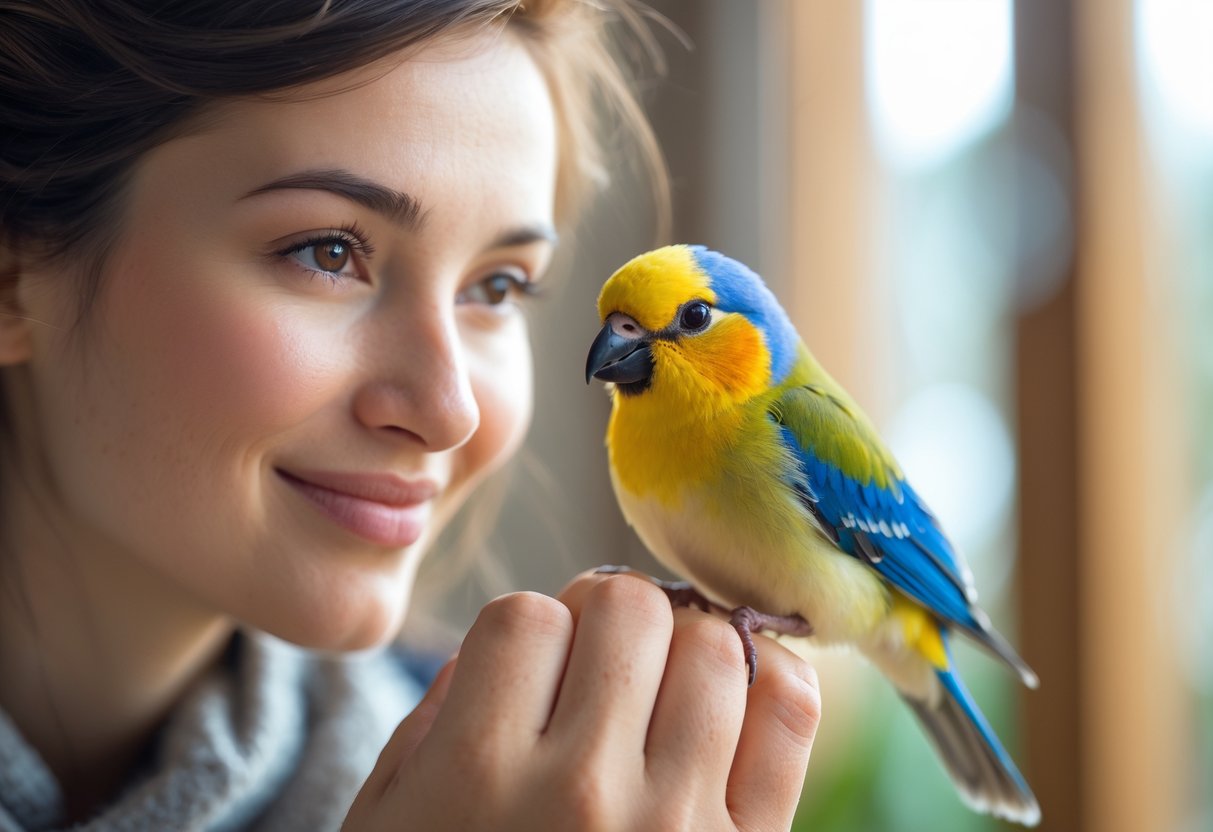
Your bird’s body language and little habits say a lot about how it feels. If you pay attention to the way your bird interacts with you, you’ll start to see whether it sees you as more than just the person who fills its food bowl.
It’s not exactly a human-style romance, but it’s still real love—just a different flavor.
If you’re curious about what to watch for, you’re in the right place. These behaviors will help you spot the signs your feathered buddy is showing you every day.
Key Signs Your Bird May Be in Love With You
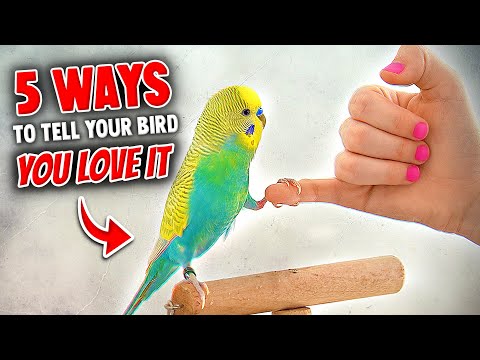
Birds express love with actions—touch, noises, and body language. Watch how your bird moves and communicates, and you’ll start to understand the depth of your bond.
Affectionate Body Language and Physical Contact
When your bird trusts and loves you, it relaxes around you. You might notice soft feathers and a calm, easy stance.
Your bird could lean into your hand or nuzzle against you, which really means it feels safe and happy.
If your bird lets you hold or pet it, that’s a big sign of trust. Some birds even cuddle up or sit close while you relax.
Physical contact like this means your bird feels secure with you. Sometimes, your bird will lift a foot as you approach or gently groom you.
This is its way of saying it wants your attention. If your bird’s eyes look soft or half-closed, that’s another hint it’s content near you.
Preening and Allopreening Behaviors
Preening is a huge sign of affection in birds. If your bird starts cleaning your hair or skin, it’s showing love and trust.
Birds call this allopreening, and it’s what they do with their closest flock members.
You might feel your bird gently nibble or smooth your hair, just like it would for a mate. That’s a pretty strong sign of closeness.
If your bird preens while sitting next to you or invites you to preen it back, it wants to bond. This is common when your bird feels safe and sees you as part of its flock.
Vocalizations and Mimicking
Birds talk with their voices. If your bird chirps, whistles, or sings when you’re around, it probably feels happy and safe.
When your bird mimics your voice or words, it’s showing affection. That means it recognizes you as part of its social group.
If your bird repeats pet names or phrases you say often, that’s a big sign of trust. Listen for soft coos or gentle sounds—those are like little love notes.
Following, Dancing, and Excitement
If your bird follows you from room to room, it wants to stay close. That’s a real sign of trust and affection.
You might see your bird do a little dance or bob its head when you walk in. It’s excited to see you.
Sometimes, your bird will flap its wings gently or shake out its feathers when you’re near. These happy gestures show you make its day better.
Distinguishing Love, Trust, and Mating Behavior in Birds

Birds show affection, trust, and mating signals in ways that can look pretty similar. If you know what to look for, you can care for your bird more confidently.
Pay attention to your bird’s actions, its species, and how often certain things happen.
Understanding Species Differences in Affection
Every bird species has its own way of showing love. Parrots and cockatoos often use beak rubbing or gentle preening to show they care.
This mimics how they groom each other in the wild. Cockatoos might nuzzle or lean into you for some extra attention.
Smaller birds like finches or budgies use soft chirps or sit close to show affection. If you know what’s normal for your bird, you can spot genuine trust.
Watch how your bird reacts to your voice and touch. That’s how you’ll notice real affection.
Common Mating Signals vs. Affection
Mating behavior can look a lot like affection, but there are some differences. Birds ready to mate might shred stuff to build a nest or do humping motions.
They may also make louder or special calls that sound different from their usual noises.
Affectionate birds usually stay relaxed, with soft feathers and calm movements. Beak rubbing can mean either thing, but during mating, it lasts longer and gets more intense.
Here’s a quick table to help you tell the difference:
| Behavior | Affection | Mating Behavior |
|---|---|---|
| Beak rubbing | Gentle, short duration | Persistently focused |
| Vocalizations | Soft chirps or whistles | Loud, repetitive, or unique mating calls |
| Nesting behavior | None or minimal | Active, shredding or arranging materials |
| Body posture | Relaxed, calm | Puffing up feathers, restless |
Setting Boundaries and Encouraging Healthy Bonding
When your bird starts showing mating behavior toward you, try to guide it gently. Hand over some toys or set up playtime to help burn off that extra energy and keep things from getting out of hand.
Use calm voice commands to set clear boundaries. This approach stops unwanted mating actions, but it doesn’t break your bird’s trust.
Stick to a daily routine for feeding and interaction. Birds seem to feel more secure—and honestly, less confused—when they know what to expect.
If your bird gets a little too fixated on you, try cutting back on things like mirrors or nesting materials. Sometimes, just offering a cozy hiding spot or giving your bird the chance to hang out with other birds can help balance things out.
Managing these behaviors takes patience, but it really does help you build a happier, stronger bond with your feathered friend.
If you want more details on spotting mating behavior, check out this guide: Is My Bird Trying to Mate with Me?


