
So, you notice a big red spot after a bee sting and start to wonder—should you worry? Redness and swelling around a bee sting are actually pretty normal and can hang around for a few days. Your skin reacts to the venom, and honestly, that’s just part of healing.
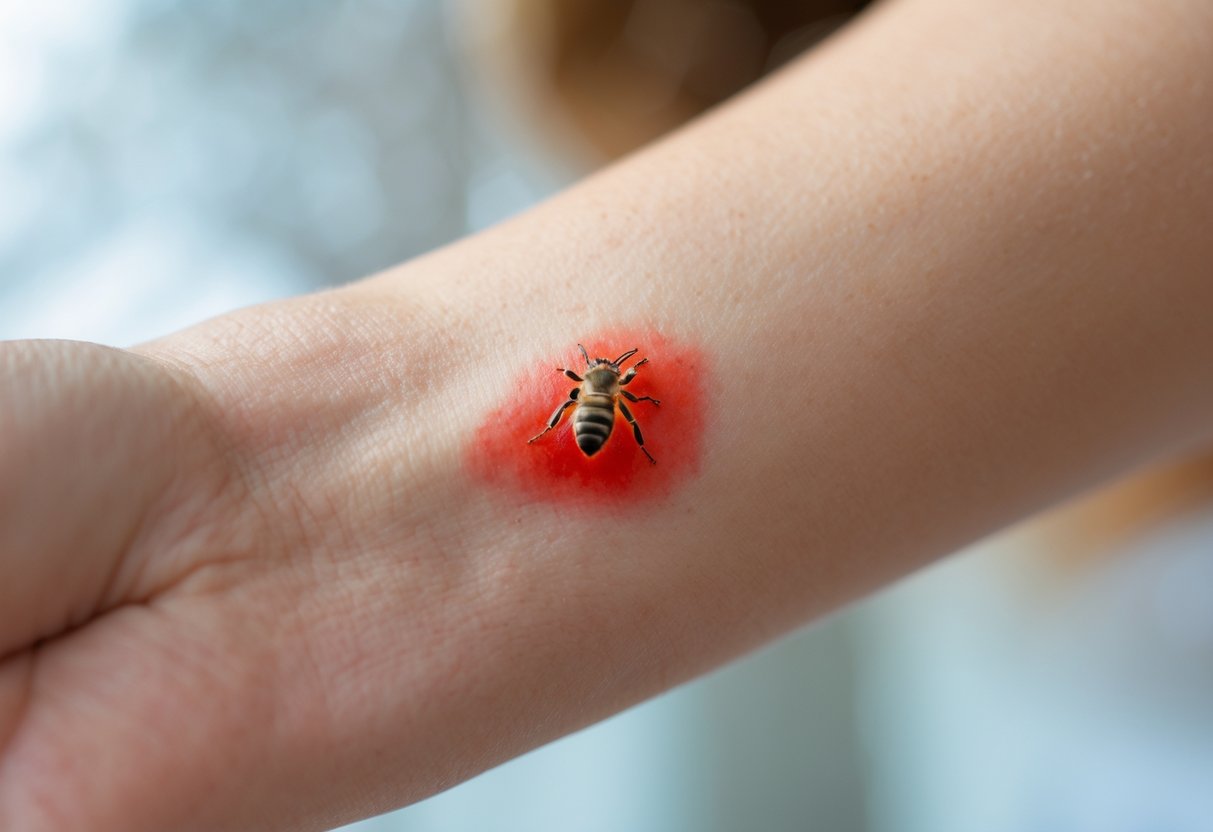
Sometimes, the red spot grows bigger, feels warm, or gets itchy. That can be a bit alarming.
Usually, this just means your body is handling the sting, but if the redness keeps spreading or you notice signs of infection, you should get some medical advice.
Knowing what’s normal can help you stay calm and figure out when you actually need to act.
Let’s take a look at why that red spot shows up and what you can do to treat it at home.
Understanding Red Spots After a Bee Sting

When a bee stings you, you’ll probably see a red spot or swelling around the area.
This spot can change in size and shape as time passes.
If you know what to expect, it’s easier to tell if you’re healing normally or if something’s off.
Normal Skin Reactions and Size
A red spot after a bee sting is almost always a normal reaction.
Your immune system jumps into action because of the bee venom.
The redness might look like a welt or bump, and it could feel warm or a bit itchy.
Some people just get a tiny red dot, while others end up with a bigger patch.
Swelling can spread beyond the sting site, sometimes a few inches across.
Typical symptoms:
- Redness
- Swelling
- Itching or mild pain
Usually, these just mean your body is doing its job.
Timeline of Redness and Swelling
Redness and swelling show up fast—sometimes within minutes, sometimes within the hour.
Swelling can keep growing for up to two days.
You might see the red area and bump get a bit bigger before they start shrinking.
The whole reaction can last a few days, sometimes up to a week.
It’s pretty normal for things to still look a little red or feel sore after a week, but it should get a bit better every day.
If you notice the swelling or redness spreading quickly or getting worse after a few days, you should probably check in with a healthcare provider.
Signs of Infection Versus Normal Healing
Most bee stings heal up without infection, but sometimes things go sideways.
If you notice anything that seems different from regular swelling or redness, pay attention.
Watch out for:
- More pain instead of less
- Pus or yellowish fluid
- Red streaks moving away from the sting
- Fever or chills
If you see any of these, it’s time to get medical help.
During normal healing, redness fades and itching or pain gets better over time.
If your sting still looks super red and swollen after a week with no improvement, maybe have a doctor take a look.
For extra tips on treating swelling and redness, check out this bee sting reactions and symptoms guide.
When to Worry: Severe and Unusual Reactions

Every now and then, a bee sting causes more than just a red spot or swelling.
Sometimes, you need to act fast to stay safe.
Warning Signs of Severe Allergic Reactions
Look out for things like trouble breathing, a tight throat, or swelling that spreads beyond the sting.
If you see hives—those raised, itchy bumps—or you feel dizzy, nauseous, or start throwing up, that’s serious.
These signs could mean you’re having a severe allergic reaction called anaphylaxis.
That’s an emergency, since it can close your airway or drop your blood pressure dangerously low.
If these symptoms show up after a bee sting, get help immediately.
What to Do If Symptoms Worsen
If things start getting worse, call 911 or emergency services right away.
Use an EpiPen (injectable epinephrine) if you’ve got one, since it can help reduce swelling and open your airways fast.
Try to stay calm and keep the person lying down with their legs slightly elevated.
Don’t give food or drink if swallowing or breathing is difficult.
Treatment Options for Relief
For mild reactions, you can grab some over-the-counter pain relievers like ibuprofen or acetaminophen to help with the pain.
Try putting on some hydrocortisone cream or an antihistamine to calm down the itching and swelling.
Make sure you keep the sting site clean. Try not to scratch it, since that can make things worse or even lead to an infection.
If you see more swelling or redness after 48 hours, or if you spot pus or get a fever, it’s time to check in with a doctor. That could mean there’s an infection or a delayed reaction that needs attention.
Anyone with a history of severe reactions should talk to their doctor about carrying an EpiPen. It’s better to be safe than sorry.


