
Ever wondered if a gorilla-chimp hybrid could actually exist? These two great apes look a bit alike and sometimes share the same forests in Africa. That makes the idea kind of fascinating, doesn’t it?
But here’s the thing: gorillas and chimpanzees can’t breed because their genetics are just too different.

Some stories and photos stoke curiosity about possible hybrids. Scientists, though, haven’t found any real evidence that gorillas and chimps can make babies together.
The whole hybrid ape idea usually comes from mistaken identity or natural differences within each species. People sometimes see an odd-looking ape and start guessing.
If you want to know why these animals can’t mix—and what science actually says about the rumors—stick around. There’s some weird history and a few mysteries still floating around.
Can Gorillas and Chimpanzees Produce Hybrids?

You might be curious if gorillas and chimpanzees could ever create hybrid offspring. Sure, they share some traits. But their genetic and reproductive differences make that nearly impossible.
Let’s dig into why that is.
Understanding Great Ape Hybrids
Hybrids show up when two different species mate and have offspring. This mostly happens between close relatives—think horses and donkeys making mules.
People have tossed around rumors about great ape hybrids, like the Koolakamba—a supposed cross between a gorilla and a chimp. But nobody’s found solid proof of a real hybrid.
Gorillas and chimpanzees both belong to the great ape family. Their evolutionary paths split millions of years ago, though, which created some big biological barriers.
Over all this time, their DNA drifted apart. That’s a huge obstacle for hybrids.
Genetic Compatibility and Chromosome Barriers
Both gorillas and chimpanzees have 48 chromosomes. That sounds promising, right? But it’s not just about the number—how those chromosomes are arranged matters way more.
Chimpanzees share about 99% of their DNA with humans. Gorillas are about 98% similar to us. Oddly enough, the differences between chimps and gorillas themselves are enough to stop hybrids from forming.
Chromosome mismatches mess up fertilization or embryo development. Even if fertilization starts, the embryo usually can’t develop, so hybrid growth ends early.
Scientists haven’t seen gorilla-chimp hybrids in the wild or in labs. The genetic gap is just too wide.
Reproductive Biology and Hybridization Limits
Gorillas and chimpanzees don’t just look different—they act different, too. Their mating habits and reproductive systems don’t really line up.
Gorillas live in groups with one dominant male and several females. Chimpanzees have more complicated social lives, with lots of partners.
Their reproductive cycles, hormones, and even the way sperm and eggs work aren’t a match. So even if mating happened, the odds of sperm and egg fusing are basically zero.
All these biology and genetic differences mean hybridization between gorillas and chimps doesn’t happen naturally.
Famous Hybridization Claims and Apes in Myth and Science
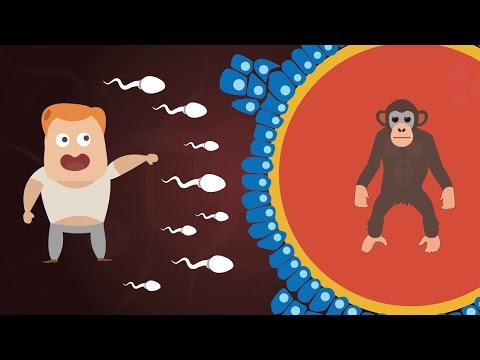
Over the years, people have told stories about hybrids between different great apes, especially gorillas and chimpanzees. These tales mix science, myth, and sometimes just plain confusion.
It’s hard to tell what’s real and what’s not.
The Koolakamba Legend
You might hear about the Koolakamba—a supposed hybrid of chimpanzees and gorillas. Some folks claim they’ve seen apes with big heads like gorillas but faces and bodies closer to chimps.
Scientists have checked out the Koolakamba stories, but so far, there’s no clear proof it’s an actual hybrid. Most experts think it’s just a chimpanzee variation, maybe a rare subspecies or a regional difference.
Still, the legend sticks around because these apes look unusual and their origins are a bit murky.
The Story of the Humanzee
Then there’s the “humanzee”—a rumored mix of humans and chimps. The idea is that crossbreeding could make a creature that’s part human, part chimp.
In the 1920s, Soviet scientist Ilya Ivanov tried to create such hybrids using artificial insemination. He didn’t succeed.
Other scientists have whispered about similar experiments, but nobody’s ever produced a verified humanzee. These stories stir up a lot of ethical questions and curiosity about what’s possible in biology.
But at the end of the day, the humanzee is just a myth—no scientific proof, just speculation.
Historical Hybridization Attempts
Back in the 1920s, Ilya Ivanov made headlines for trying to hybridize humans with apes. He traveled to Africa, chasing chimpanzees for his experiments.
He had funding and put in a lot of effort. Still, none of his attempts worked out.
Some folks have reported hybrids among great apes, like supposed crosses between chimpanzees and gorillas. Researchers have pointed out that these apes share similar chromosomes, so maybe such hybrids could be possible.
But honestly, nobody has ever confirmed a hybrid offspring in nature or in any lab.
| Experimenter | Attempt | Outcome |
|---|---|---|
| Ilya Ivanov | Human-chimp artificial insemination | No successful hybrid |
| Various researchers | Gorilla-chimp hybrids | No confirmed cases |


