
Ever wondered if chimpanzees are monkeys or apes? You’re definitely not the only one. It gets confusing since both monkeys and chimps are primates, all tucked under the same big animal kingdom family.
But here’s the thing: chimpanzees are apes, not monkeys. This isn’t just a technicality—there are some real, important differences in how they look and act.
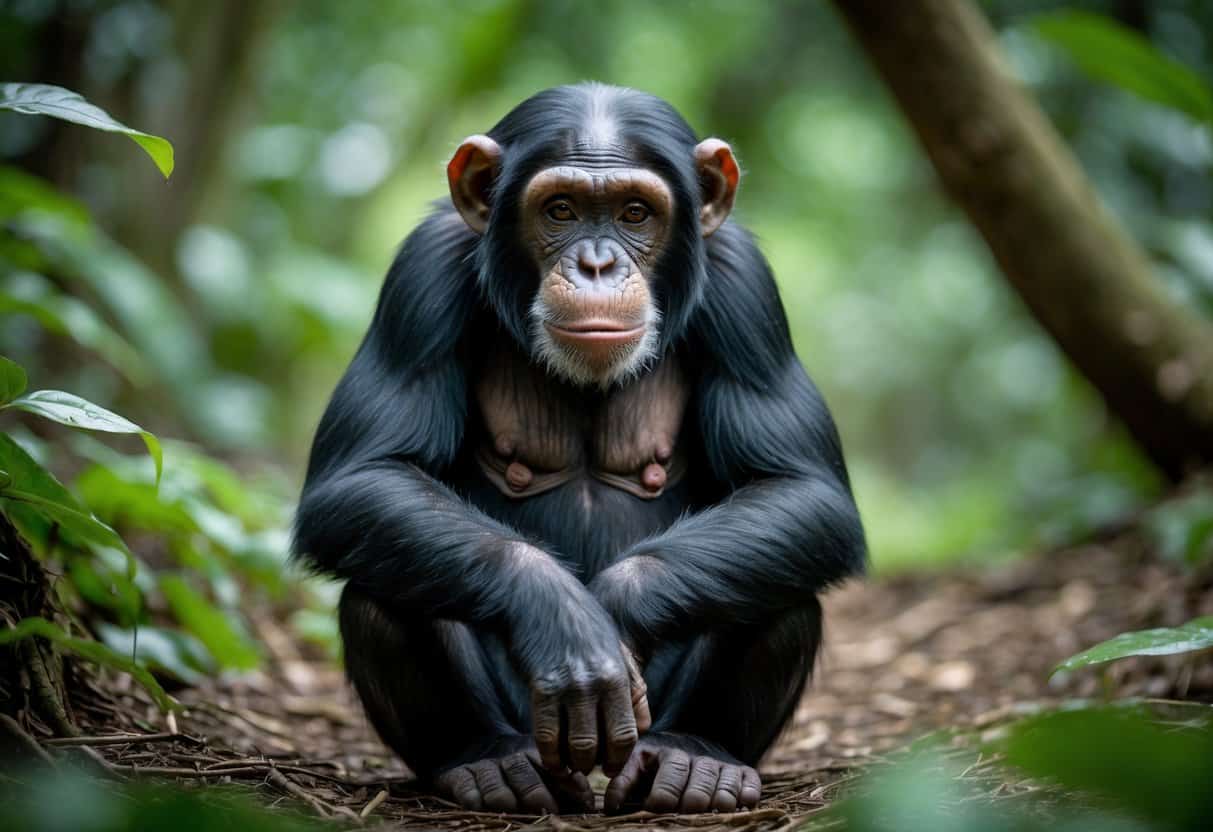
One easy clue? Most monkeys have tails. Chimpanzees, like all apes, don’t. Apes also tend to be bigger, with broad chests and those seriously strong arms built for swinging.
They’re actually a lot more like humans, too—smarter, more social, and just… different.
Once you know where chimpanzees belong, you can really start to appreciate all the wild variety in the primate world. Each one’s got its own thing going on, honestly.
Are Chimpanzees Monkeys or Apes?
At a glance, chimps and monkeys do look a lot alike. You might even mix them up if you’re not paying close attention.
But when you dig into their family trees, bodies, and how they live, the differences start to pop out.
Primate Classification
Primates cover a huge group—monkeys, apes, humans, all in the mix. Think of it as one big, branching family.
Monkeys usually come with tails. There are two main monkey groups: Old World monkeys from Africa and Asia, and New World monkeys from South America.
Apes? No tails. Not ever.
So chimpanzees sit firmly on the ape branch. That means they’re actually closer to us than to monkeys.
The Ape Family and Chimpanzee Relatives
Chimpanzees hang out in the great ape family, which scientists call Hominidae. That includes gorillas, orangutans, bonobos, gibbons, and us humans.
Great apes usually have bigger brains, strong shoulders, and arms that are longer than their legs. These features help them swing around in trees and also move on the ground.
Here’s something wild—chimps share about 95% of their DNA with humans! They use tools, talk with gestures and sounds, and have surprisingly complex social lives.
Monkey Species and Key Differences
Monkeys are smaller, and you’ll almost always spot a tail. Some monkeys, especially those from South America, have tails so flexible they can grab onto things like a fifth hand.
There’s a ton of monkey species out there—baboons, macaques, marmosets, tamarins, capuchins, you name it. They move by leaping and running through the trees.
Chimps, though, don’t have tails. They swing from branch to branch with their arms—a movement called brachiation. Their brains are bigger, and their social groups get pretty complicated compared to most monkeys.
| Feature | Monkeys | Chimpanzees (Apes) |
|---|---|---|
| Tail | Yes (often prehensile) | No |
| Brain size | Smaller | Larger |
| Movement | Run and leap in trees | Swing and climb |
| Social structure | Less complex | Larger, complex groups |
Why Classification Matters
Knowing that chimps are apes changes how you see their intelligence and behavior. Apes, including chimps, use tools, communicate in pretty advanced ways, and have social skills you just don’t see in monkeys.
Scientists use these differences to study evolution and figure out how humans fit into the picture. Chimps offer some of the closest clues we’ve got about where we came from.
So next time you see an animal swinging through the trees without a tail, you’re probably looking at an ape like the chimpanzee—not a monkey. It’s a small thing, but it really helps you tell them apart.
Curious? You can read more about the differences between monkeys and apes.
Physical Traits and Behaviors
If you put chimpanzees and monkeys side by side, you’ll spot some obvious differences. Tails, body shape, intelligence, even where they hang out—it’s all a bit different.
These traits affect how they move, use tools, and basically survive out there.
Tail Differences and Prehensile Tails
The tail is a dead giveaway. Most monkeys, like baboons, macaques, and capuchins, have tails. Some monkeys have prehensile tails—they can grab things with them, which is pretty handy for swinging and balancing in the treetops.
Chimps don’t have tails at all. That’s a big sign you’re looking at an ape. Without a tail, chimpanzees use their strong arms and hands to get around in the trees and on the ground.
If you spot an animal with no tail—like a chimp, gorilla, or orangutan—it’s probably not a monkey.
Body Structure and Grasping Hands
Chimpanzees have broad chests and arms that are longer than their legs. This helps them swing from branch to branch, especially in those dense rainforests.
Their shoulders move in all kinds of directions, which is perfect for climbing.
You’ll notice chimps have grasping hands with long fingers and opposable thumbs. This makes grabbing food or holding tools a breeze.
Monkeys have grasping hands too, but their thumbs are usually smaller.
Both chimps and monkeys have forward-facing eyes, so they can judge distances well. But chimps are usually bigger and stronger. Male chimps can weigh anywhere from 90 to 120 pounds, while monkeys tend to be smaller.
| Trait | Chimpanzee (Ape) | Monkey |
|---|---|---|
| Tail | No tail | Tail, sometimes prehensile |
| Body size | Larger (up to 120 lbs) | Smaller |
| Arms vs. legs | Arms longer than legs | More balanced limb length |
| Hands | Opposable thumbs, strong grip | Grasping hands, smaller thumbs |
Intelligence and Tool Use
Chimpanzees have complex brains and some real problem-solving skills. You can watch them use sticks to fish for termites or rocks to crack open nuts.
That’s not something you see every day with monkeys.
Monkeys are smart, no doubt, but apes like chimps usually take it to another level. Some chimps even learn a bit of sign language.
Their communication gets pretty advanced, too. Chimps use all kinds of sounds and gestures, and they’re surprisingly flexible in how they share ideas and feelings.
Habitats and Natural Environments
Chimpanzees mostly live in tropical rainforests and savannas in Central Africa. They build their nests up in the trees and spend time both on the ground and high above.
Monkeys show up all over the world—from thick forests to rocky mountains. Baboons like hanging out in savannas. Capuchins, on the other hand, usually stick to the rainforests in South America.
Their prehensile tails really help them swing through the trees. Still, some monkeys just seem to prefer the ground.
Chimpanzees find plenty of food in their habitats, like fruits, leaves, and insects. They search for meals up in the trees and down on the forest floor.
Where they live really shapes how they act and survive.


