
Ever wondered just how aggressive chimps really are? Well, they definitely show some pretty intense behavior, but that’s just one side of their daily lives.
Chimpanzees can turn violent—especially when they’re defending territory or fighting over food and mates. But honestly, they also spend a ton of time just hanging out, socializing, and grooming each other.
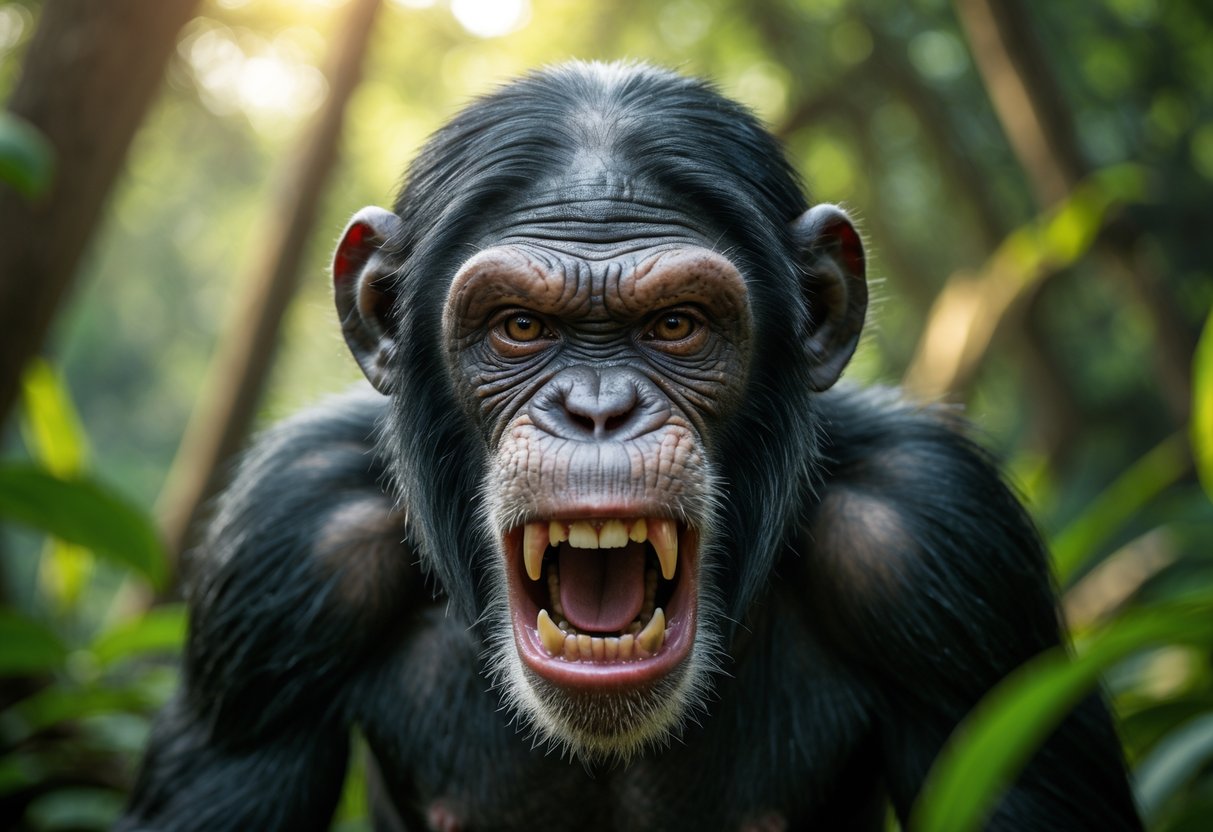
You might not expect it, but their aggression comes from their biology and social structure, not just anything humans have done. This makes chimps complicated, with calm moments and, yeah, some fierce ones too.
If you stick around, you’ll see what really sparks their aggression and how it fits into their natural world. It might even shift the way you look at these close relatives of ours.
How Aggressive Are Chimps Compared to Other Animals?

Chimps show all sorts of aggression, and you can actually measure and compare it to what other animals do. Their actions range from squabbles inside their group to deadly attacks.
Where and how often these things happen really matters if you want to get their behavior.
Observed Rates of Violence in Wild Chimpanzees
In the wild, you’ll see chimps get violent both within their own group and with outsiders. Researchers have tracked tons of incidents over the years, and they’ve noticed that violence pops up more when there are a lot of males in a group.
If a community has more males and the group is crowded, fights break out more often.
But it’s not the same everywhere. Some chimp groups seem pretty chill, even when humans live nearby.
That tells us their violence isn’t just because of people interfering—it’s actually part of their natural lives. If you’re curious, there’s more about this in the Nature study on chimpanzee violence.
Types of Aggression: Lethal and Non-Lethal Incidents
Chimps can get lethal, where one ends up killing another, or non-lethal, like showing off, chasing, or biting without anyone dying.
Most of the time, it’s non-lethal stuff—mainly to keep order or sort out arguments. Lethal attacks happen less often, but they do crop up, especially when chimps fight over territory or mates.
Usually, they react fast to threats, so their aggression is pretty reactive instead of carefully planned. Unlike humans, who sometimes plot things out, chimps just go with the moment.
Comparison with Bonobos and Humans
If you compare chimps to bonobos, chimps are definitely the more aggressive bunch. Bonobos have steadier groups and use social bonding to keep things peaceful.
They almost never kill each other.
Humans actually share some of the same reactive aggression with chimps. But we’re also known for planned aggression, which isn’t so common in other primates.
This probably has roots in evolution. Chimps evolved to fight hard for mates and resources, sometimes violently.
Bonobos, on the other hand, took a different path and focused on keeping the peace.
Looking at chimps, bonobos, and humans together really gives you a new angle on how aggression shows up in different species.
Factors Influencing Aggressive Behavior in Chimpanzee Communities

A few main forces shape chimpanzee aggression. Their fights usually revolve around defending their homes, social bonds, and handling changes in their world.
Territoriality and Resource Competition
Chimps fiercely defend their land and the food they need. You’ll often spot males patrolling the edges of their territory, keeping rivals at bay.
When food or space runs low, tensions rise and aggression between groups ramps up.
Sometimes, male coalitions from one group will attack neighbors to grab land or get access to females.
These fights can get deadly, especially during surprise attacks on isolated rivals at the edge of their territory.
By fighting like this, chimps protect their resources and boost their odds of survival. Territorial battles really drive a lot of the violence you see among chimps.
Role of Male Coalitions and Group Dynamics
Male chimps stick together and build tight bonds, which shape how they compete and work as a team.
You’ll see them grooming each other and making alliances to climb the social ladder.
These coalitions help them control the group and win mates.
But when those bonds break or others challenge them, things can get ugly.
Sometimes, groups inside a community split when tensions get too high.
Splits like this have even led to deadly fights between chimps who used to be close.
So, the strength—and the breakdown—of male relationships really explains a lot about why chimps get aggressive.
Impacts of Human Activity and Environmental Changes
People shape chimp behavior in all sorts of ways, especially when they move in or change the land. When logging or farming takes over, chimps end up with less space and food.
That pressure pushes them into tighter spots. You’ll often notice more aggression as groups get crammed together.
Researchers sometimes step in, and sure, human contact can have an effect. But honestly, most studies point to natural instincts as the main reason chimps act violently.
Even so, things like climate shifts or losing their homes stress out chimp communities. That stress just makes conflict more likely.
If you’re curious, you can dig into more details about chimpanzee violence and what drives it in this chimpanzee communities and aggression research.


