
People love to say chimpanzees are just as smart as a 5-year-old kid. But honestly, it’s not that straightforward. Chimps have some wild memory skills and can tackle certain problems like a young child, but 5-year-olds usually win when it comes to language, social smarts, and flexible thinking.
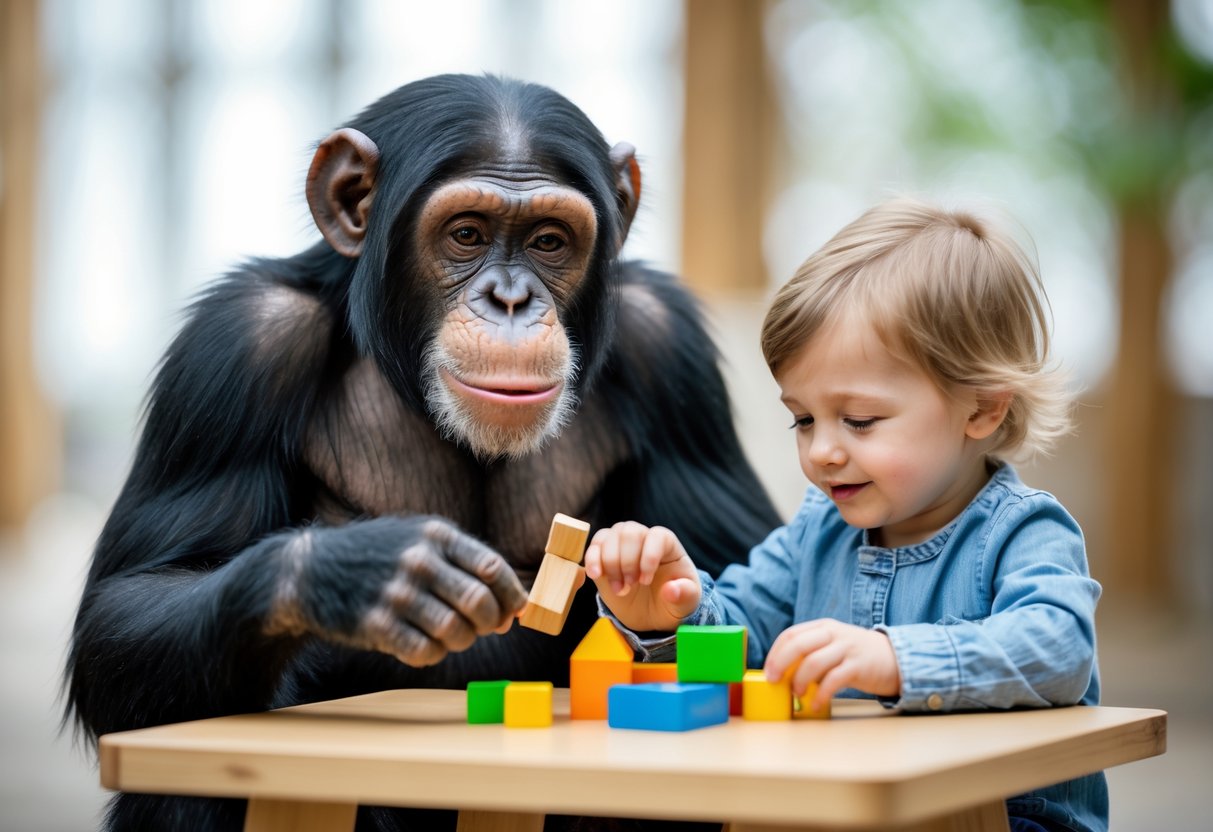
By five, your brain can already switch attention pretty fast, pick up on how others feel, and use words to get your ideas across. Chimps show off their own kind of cleverness, especially with memory and using tools. Still, they don’t really develop the kind of language or social thinking that kids do.
If you’re curious about how chimps and 5-year-olds really stack up, it’s worth digging into memory, problem-solving, and the way each learns. You might be surprised by both the differences and the weird similarities between us and our closest animal relatives.
Comparing Chimpanzee and 5-Year-Old Human Intelligence

Chimps and 5-year-olds approach memory, problem solving, and social learning in their own ways. Each has strengths, but the way they think and learn really sets them apart.
Key Cognitive Abilities: Memory and Problem Solving
Chimpanzees absolutely crush short-term memory tests. Sometimes, they remember numbers and patterns faster than adults do. Their brains snap up info and hold it quickly.
But when you ask them to switch tasks or think on their feet, 5-year-olds usually come out ahead. Kids at this age can jump between tasks and roll with new rules. Chimps, on the other hand, tend to get stuck on one thing and don’t shift gears so easily.
When chimps solve problems, they’ll grab a stick to fish out food or use rocks to crack nuts. They plan for these things, but they rarely invent new solutions. Five-year-olds tend to get creative, mixing ideas and coming up with new ways to tackle puzzles.
Social Intelligence and Learning Differences
Chimps learn by watching and copying simple actions, like using a stick as a tool. They know faces, form friendships, and communicate with gestures. Still, language isn’t their thing.
At five, you can use words to share what you think and feel. You get what others want and feel, which helps you learn from them. Chimps just don’t have the same grasp of language or culture, so their social skills, while impressive, stay pretty basic.
Kids can imitate complicated behaviors and even learn the reasons behind them. Chimps mostly copy actions without really understanding the “why.” That makes it tough for them to solve new problems together.
Real-Life Tests: What Studies Show
In experiments, 5-year-olds beat chimps at tasks that need quick rule changes or flexible thinking. Kids get these right about 80% of the time. Chimps manage it around 50%.
Chimps often stick with old rules or get distracted and mess up. They have a tough time setting mental rules and switching focus fast.
Memory tests show chimps can outdo adults at holding info for a moment, but they don’t use that skill for more complex reasoning like kids do. These studies make it clear: by age five, your brain can handle language, attention, and problem solving way better than a chimp’s.
If you want to dive deeper, check out studies on chimp memory and child cognition here.
How Chimpanzee Intelligence Develops and What It Means

Chimpanzee intelligence grows thanks to both biology and experience. Their brains develop in ways that look a bit like young kids, but some skills—like language and flexible thinking—never quite get there. You’ll spot both limits and some surprising strengths when you compare chimps to 5-year-olds.
Evolutionary Factors Influencing Intelligence
Chimpanzees and humans share a common ancestor from about 6 to 9 million years ago. That shaped both brain size and abilities.
Chimp brains develop in stages, just like yours did as a child. They learn from watching others, solve problems, and use tools.
Genetics shape how smart each chimpanzee can get. Memory and problem-solving skills often pass from parent to offspring.
But chimp brains don’t grow as much in areas needed for language and complex thinking. This difference pushed their intelligence to focus more on practical survival skills than on things like symbolic thought.
Limits and Unique Strengths of Chimpanzees
Chimpanzees hit some real limits when you stack them up against a 5-year-old kid. They just can’t speak or use complex language, no matter how hard they try.
You’ll probably notice they have trouble switching quickly between new ideas or tasks. Kids around five seem to do that without even thinking.
But let’s give chimps some credit—they have strengths that might surprise you. Their short-term memory can actually beat adults in certain tests.
Chimps also know their group pretty well. They recognize faces and use gestures to get their point across.
When it comes to tools, they get creative. Chimps use sticks to fish for termites or grab stones to crack open nuts.
That kind of hands-on problem-solving shows real planning. They learn by doing, which honestly is a pretty smart way to handle the wild.
Their intelligence doesn’t line up with a child’s in every way, but chimps really shine at skills that matter for their own survival. If you want to dig deeper, here’s a detailed comparison to young children.


