
Dealing with bat feces can be a challenging task for any homeowner.
To effectively get rid of bat feces, you need to ensure proper safety measures are in place and follow clear steps for cleanup. Bat droppings, also known as guano, can pose health risks, including disease transmission if not handled correctly.
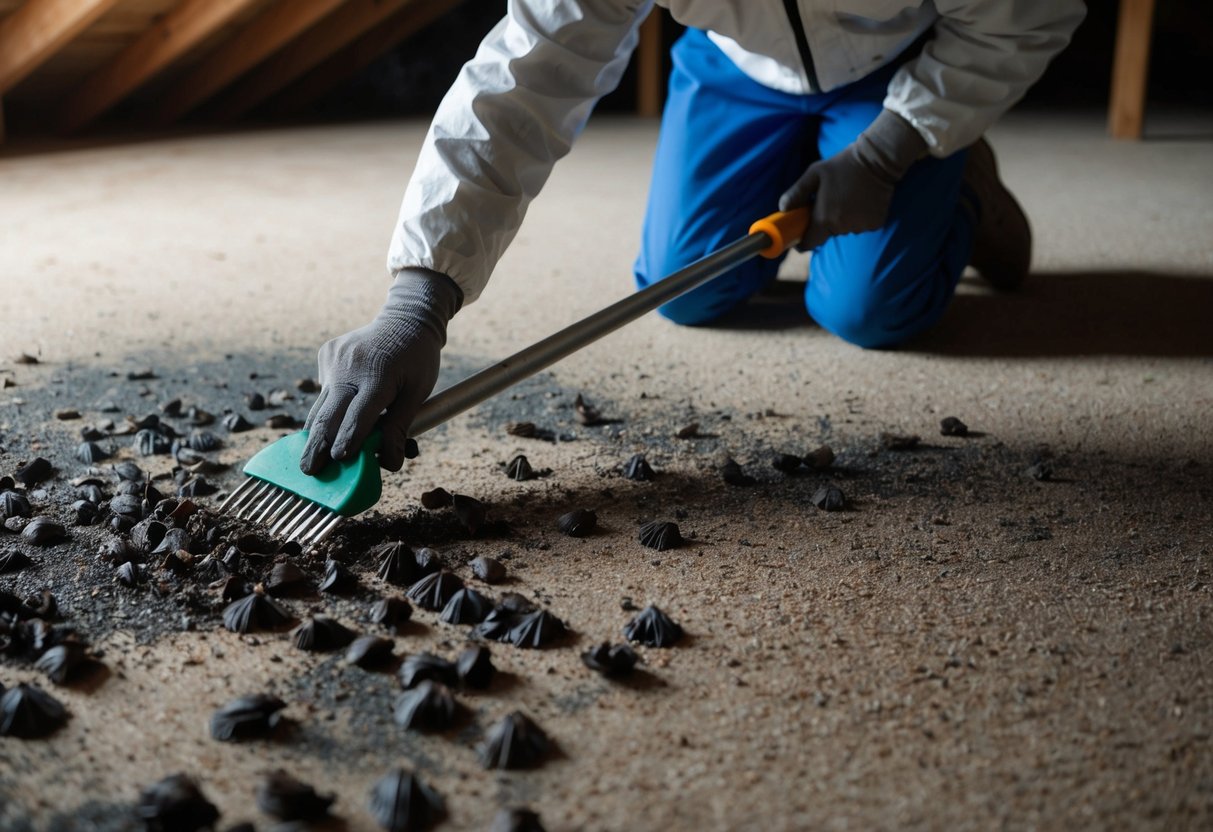
Before you start the cleanup process, it’s vital to identify where the bat droppings are located and confirm that all bats have been removed from your space.
Proper protective gear is essential to protect yourself from harmful pathogens. With the right tools and techniques, you can safely clean up bat droppings and restore your environment.
Taking action quickly will help you maintain a healthy home. It’s important to address the issue with care, making sure you understand the risks and best practices for cleanup. Following a step-by-step approach can make the process smoother and safer.
Understanding Bat Guano

Bat guano, or bat droppings, is important to understand due to its health risks and its usefulness as a natural fertilizer. Recognizing these aspects can help you manage it safely and effectively.
Health Risks of Bat Droppings
Bat guano can pose serious health risks. One major concern is histoplasmosis. This lung infection is caused by inhaling spores from the Histoplasma capsulatum fungus found in bat droppings.
When bat guano dries out, it can release spores into the air. If you breathe them in, you could develop flu-like symptoms, such as fever, cough, and chest pain.
To minimize risks, always wear protective gear when cleaning bat areas. This should include masks and gloves. It’s also wise to ensure the area is well-ventilated to limit exposure.
Bat Guano as a Natural Fertilizer
Bat guano is rich in nutrients, making it an excellent natural fertilizer for gardens. It contains high levels of nitrogen, phosphate, and potassium, which are essential for plant growth.
Using bat guano can enhance soil quality and promote healthy plant development. You can mix it into the soil or use it as a top dressing.
Just remember to use it in moderation, as excessive amounts can harm your plants. Always follow the recommended guidelines for applying bat guano to ensure the best results for your garden.
Safe Removal and Cleanup Process

Cleaning up bat feces requires careful planning and execution to ensure your safety and the environment. Taking the right precautions can protect you from diseases, like histoplasmosis and rabies, while making the cleanup process efficient.
Personal Safety Precautions
Before you begin the cleanup, prioritize your safety by wearing proper protective gear. This includes gloves, a mask, and goggles. These items help shield you from harmful particles in bat guano.
Avoid direct contact with the droppings. If possible, clear the area of pets and family members to prevent exposure to diseases. Always consider that bat feces can carry fungi that may lead to respiratory issues.
Keep the area well-ventilated. Open windows and use fans to reduce airborne particles. If you feel uncomfortable at any point, it’s best to stop and seek help.
Professional Bat Removal Services
If you’re facing a larger bat guano cleanup or ongoing bat issues, consider hiring professional services.
Experts specialize in wildlife removal and know the proper techniques to safely manage bats and their waste. Professionals are trained to handle potentially dangerous situations, reducing risks to you and your home. They can also identify entry points and give you tips to prevent future infestations.
Look for services that offer guaranteed follow-up inspections. This way, you can ensure that your home remains bat-free after cleanup.
DIY Bat Droppings Cleanup Tips
If you decide to tackle the cleanup yourself, start by assessing the extent of the mess.
Gather your protective gear first. Make sure you have disinfectants, sealed trash bags, and a small shovel or scoop ready.
- Wet the Area: Lightly spray the droppings with water. This minimizes dust and prevents spores from getting into the air.
- Scoop Carefully: Use the shovel to collect the droppings. Place them in a sealed bag for disposal.
- Clean the Surface: After removal, disinfect the area with a suitable cleaner. Follow the cleaning product instructions for safe use.
Dispose of the waste properly, following local regulations. Always wash your hands after cleanup, even if you wore gloves.
Preventing Bat Infestation
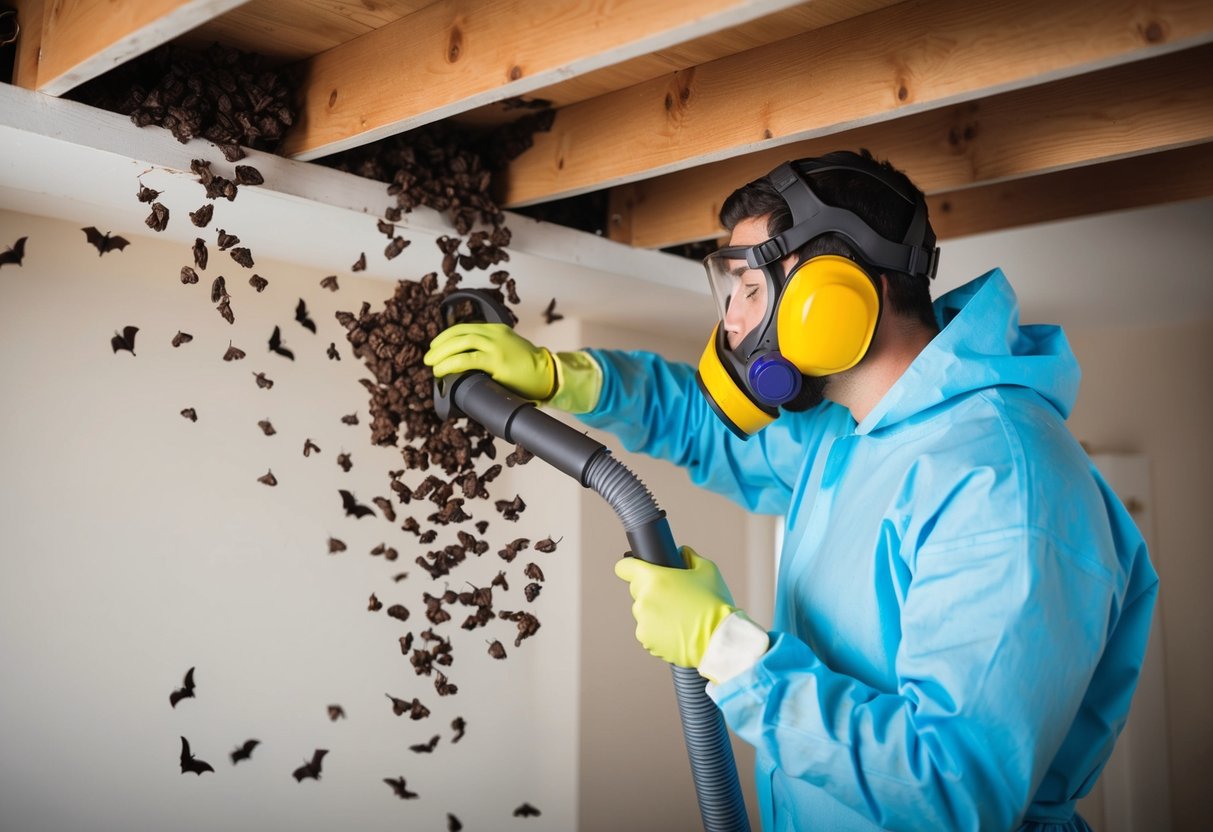
To keep bats from invading your space, it’s essential to take proactive steps. This includes installing bat houses to provide an alternative roosting spot and sealing entry points to your home or building. Both methods can help control bat populations while minimizing structural damage.
Installing Bat Houses
One of the best ways to prevent a bat infestation is to create an inviting home for these helpful creatures. Bat houses allow bats to roost away from your house.
When choosing a bat house, look for plans that meet specifications suitable for your area. A typical bat house should be about 2 feet tall and 1 foot wide, with an entrance at the top.
Consider placing bat houses at least 12 feet off the ground, facing south or southeast, to catch warmth. You can also install multiple houses to attract more bats. Remember, bats are insectivores that can help control pests in your yard.
Sealing Entry Points
Another critical step is sealing any entry points that bats might use to enter your home.
Inspect your property for gaps in walls, roofs, and around windows. Common entry areas include eaves, vents, and chimneys.
Use materials like caulk, foam, or steel mesh to close these gaps. Make sure to do this work during daylight hours. This way, you can ensure bats are not inside before you seal.
Regularly checking your property for new openings can also help prevent infestations.
Taking these steps will protect your home while also supporting the local wildlife in a safe way.


