
Ever wondered just how powerful a chimpanzee’s bite really is? Honestly, the answer might shock you. A chimpanzee’s bite force clocks in at about 1,300 pounds per square inch (PSI)—that’s roughly ten times stronger than a human’s bite.
Their jaws pack some serious punch. They can crush bones and cause real damage if they want to.
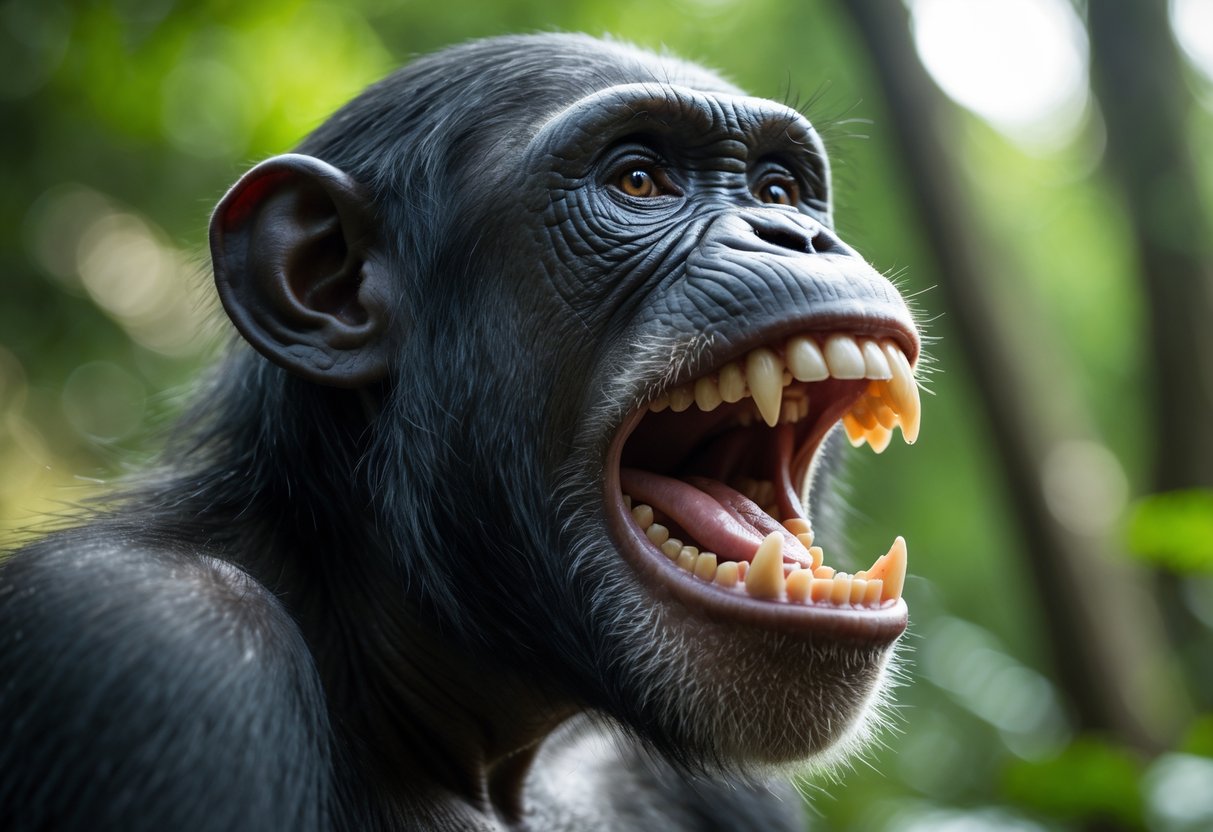
Chimps use their strong bite, sharp teeth, and those thick jaw muscles to hunt and protect themselves.
It’s honestly wild to realize just how much force sits behind those jaws. Makes you appreciate why these animals seem so fascinating—and, let’s be real, a little bit scary.
Chimpanzee Bite Strength Explained

Chimps bite way harder than humans do. Their jaw strength comes from the way their jawbones and muscles work together, plus the shape of their teeth.
Let’s dig into how strong their bite actually is, how scientists figure that out, and what makes their bite so powerful.
Typical Bite Force in PSI
A chimpanzee’s bite force is about 1,300 pounds per square inch (PSI). That means when they bite down, the pressure on a single spot can hit 1,300 pounds.
For comparison, a human bite force is only about 162 PSI. Pretty weak next to a chimp’s.
Chimps owe this difference to their bigger jaw muscles and those sharp, large canine teeth. Their jaws are built for speed and power.
With that kind of force, they can crack nuts, crush bones, and defend themselves if they need to.
How Chimpanzee Bites Are Measured
Scientists use special tools to measure a chimp’s bite force. They set up sensors, and the chimp bites down on them.
Usually, the researchers train chimps to safely bite a pressure plate or device. The reading in PSI shows how much force lands on one spot.
These measurements help us understand just how strong their jaws are. It also explains why chimps can eat foods that would be tough for most other animals.
Factors Influencing Bite Strength
Several things make a chimp’s bite so strong. Their jaw bones are thick and sturdy, so they can handle high pressure.
Those big canine teeth add even more power and act as built-in weapons. Their jaw muscles have lots of fast-twitch fibers, which contract quickly and let them snap their jaws shut with real force.
Wide jaws give more space for muscles to attach, boosting their bite strength even more.
All these features work together to give chimps that impressive bite power. It’s useful for eating and for protection.
If you want more details on chimpanzee bite force, check out What Is the Bite Force of a Chimpanzee?.
How Chimpanzee Bites Compare
Chimp bites are much stronger than most people expect, especially compared to humans and even other animals.
Their jaw muscles and teeth shape the real power behind their bite, which matters a lot for their behavior and how careful you should be around them.
Chimpanzee vs Human Bite Force
Chimps bite way harder than humans do. Their bite force is around 1,300 PSI, while the average human manages about 162 PSI.
That’s almost eight times harder than your bite. The main reason for this big gap? Chimps have bigger jaw muscles and much larger canine teeth.
Human jaws just aren’t built for that kind of force, but chimps’ jaws are. If you ever find yourself close to a chimp, it’s smart to remember their bite can do serious damage.
Chimpanzee Bite vs Other Animals
A chimp’s bite is powerful, but it’s not the strongest in the animal kingdom. Animals like lions and hyenas have even higher bite forces for hunting and crushing bones.
Still, chimps rank above many other primates thanks to those sharp, strong canine teeth. Their bite helps them defend themselves and show dominance when needed.
They can crack nuts and break into tough foods, but their jaws aren’t as specialized as those of animals built strictly for hunting or defense.
Role of Jaw Musculature in Power
The real power behind a chimp’s bite comes from their jaw muscles. They’ve got more fast-twitch muscle fibers than humans do.
These fibers let them generate quick, strong bursts of force. Because of this, chimps can bite fast and hard, which helps them protect themselves or fight off rivals.
Their skulls support these muscles well, so they can use all that force without hurting their own jaws. Human jaw muscles just don’t have the same build, so matching a chimp’s bite is pretty much impossible.
Implications for Behavior and Safety
Knowing just how strong a chimpanzee’s bite is really matters for safety. Chimps don’t just nibble—they use those powerful jaws to defend their territory or fight over mates.
Sometimes, they’ll bite to scare off anything they see as a threat. Their teeth do more than just chew; they’re tools for social behavior and conflict, too.
If you ever run into a chimp, keep in mind their bite can cause serious harm in seconds. Deep wounds from a chimp bite need medical attention right away.
It’s smart to keep your distance and avoid anything that might make them feel cornered or aggressive. Honestly, their bite strength alone should tell you just how risky it is to provoke them.


