
Most tree squirrels go from mating to birth in about 38 to 46 days. For many common species, it’s usually around 40–45 days.
That’s a pretty short gestation, so squirrels can pull off two litters a year. Knowing the timing really helps if you want to spot when nests will get busy.

If you’re curious about squirrel life from mating to early days, you’re in the right place. I’ll walk you through the main milestones and what’s worth noticing at each stage.
You’ll see when mothers build their nests, how long kits stay helpless, and when the little ones start poking around on their own.
Squirrel Reproduction Timeline and Key Milestones
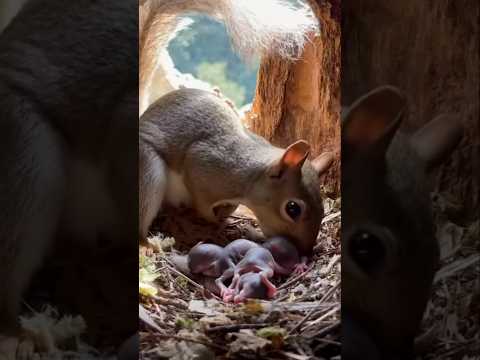
You’ll find out how long pregnancy lasts, when squirrels mate, how many babies they usually have, and how mothers look after the nest and kittens.
I’ll stick to clear time frames for familiar species like eastern gray, red, and fox squirrels.
Gestation Period by Squirrel Species
Gestation runs about 4 to 8 weeks, depending on the species. Eastern gray squirrels and fox squirrels usually carry their young for around 6 weeks.
Red squirrels and some smaller tree squirrels tend to have slightly shorter pregnancies, closer to 4–5 weeks.
Ground squirrels and flying squirrels mostly fall in that range too, though some ground squirrels vary with climate. That gestation length really affects when you’ll see litters in spring and summer.
If you stumble across a nest that smells like hair and urine, births probably happened within the last few weeks.
Breeding Seasons and Mating Behavior
Most tree squirrels breed twice a year: once in late winter (around February–March) and again in late spring or summer (around May–July).
Eastern gray and fox squirrels usually stick to this two-cycle rhythm. Red squirrels sometimes only breed once, or skip a season if food is tight.
Males track down females by scent and then chase them through the trees. That wild chasing and leaping basically counts as courtship.
After mating, the male leaves and doesn’t help care for the young. For ground squirrels, mating happens after hibernation and lines up with food availability.
Litter Size and Frequency
Litter size for tree squirrels usually ranges from 2 to 5 kittens. Eastern gray squirrels and fox squirrels tend to have 2–4 per litter.
Red squirrels often have 3–4, but that can change if food is abundant. Ground squirrels sometimes have bigger litters, while flying squirrels usually have 2–3.
Tree squirrels can manage up to two litters per year. If food runs low or the female’s young, she might only have one. Litter frequency connects directly to gestation and those breeding windows.
A winter mating brings spring litters, and late spring mating means summer babies. Not all the young make it, though—weight and survival rates bounce around a lot.
Nesting and Maternal Care
Females build dreys—those messy-looking leaf-and-twig nests—in tree cavities or sometimes take over abandoned bird nests. Ground squirrels dig burrows lined with grass.
You’ll spot nests stuffed with shredded leaves, fur, and any soft material the mother can find by late pregnancy. Tree squirrels usually pick high branches, while flying squirrels like cavities.
Mothers nurse and groom their kittens for about 6–10 weeks, until weaning. Babies arrive hairless and blind, and their eyes open around 4–6 weeks.
By 8–10 weeks, most young start leaving the nest, and by 3–4 months, they’re usually ready to head out on their own. The mother stays protective—she’ll even move the young if something disturbs the nest.
Adult males? They don’t lift a finger for care.
If you want more details, there’s some good reading on squirrel life cycles and reproduction and guides on squirrel growth from birth to adulthood.
Baby Squirrel Development Stages

Let’s look at what baby squirrels are like, when they start eating solid food, and how they eventually become independent.
You’ll see milestones like their birth state, when fur and eyes appear, their first nest explorations, weaning, and when they finally reach sexual maturity.
Newborn Squirrel Characteristics
Newborn squirrels show up blind, hairless, and honestly, they’re tiny—about the size of a walnut. They can’t regulate their body temp, so they depend on mom for warmth and milk.
Tree squirrel litters usually have 2 to 6 babies, so mothers split their attention and feeding between them.
Within a week, you’ll notice some thin fur and darker skin. By 3–4 weeks, their eyes open and fur starts to fill in.
They don’t move much at first—just some wiggling—then they begin crawling and gripping the nest walls. No teeth or strong nails at birth, so they can’t eat solids or safely leave the nest for a while.
Weaning and Independence
Around 4–6 weeks, mothers start bringing in tiny bits of nuts and seeds to introduce solid food. Kits will try these while still nursing.
Nursing usually wraps up between 6 and 8 weeks for most tree squirrels.
At about 6 weeks, the young take short, supervised trips outside the nest and try climbing or jumping on nearby branches.
By 8–10 weeks, most can feed themselves and spend a lot of time outside the nest. They still pick up foraging tricks, predator smarts, and social cues from mom and their siblings.
Full independence usually comes between 10 and 16 weeks, depending on species and what food’s around. Ground squirrels and a few others might be on a slightly different schedule.
Sexual Maturity and Life Cycle
Female tree squirrels usually hit sexual maturity first. That often happens somewhere between 9 and 12 months old.
Males tend to mature a bit later, maybe around 10 to 16 months. This gives young squirrels a shot at joining the next breeding season, which is kind of neat if you think about it.
A lot of tree squirrel species actually have two breeding seasons in a year. So, if a squirrel matures within its first year, it can already take part in the next cycle.
Once they’re mature, females might produce one or even two litters each year. For common species like the eastern gray, gestation usually lasts about 38 to 46 days.
Males? They don’t stick around to help with the babies. Females handle raising the kits on their own, usually in a drey or a cavity.
If you know these ages, you can get a better sense of when populations might spike and when young squirrels will start needing more space and food.


