
Getting stung by a bee hurts—a lot—and it’s natural to wonder how long that venom hangs around in your body. Usually, your immune system clears out most of the bee venom within a few days as it breaks down the toxins and helps ease that swelling and pain.
For most people, the discomfort fades pretty fast, but honestly, the timeline can shift depending on how your body reacts and just how much venom the bee left behind.

Bee venom mixes up proteins and enzymes that really get your body’s defenses going. Some folks just end up with a bit of redness and itching.
Others—especially anyone with allergies—might see symptoms that stick around or feel a lot worse. If you know how bee venom leaves your body, you can handle the sting better and maybe worry a little less.
Ever wonder why the pain seems to stick around or when you’ll actually feel normal again? Let’s dig into the usual timeline for bee venom to leave your system and what can change that.
If you want even more details, check out this helpful guide for a deeper dive.
How Bee Venom Leaves Your System

When a bee stings you, it injects venom under your skin and the stuff spreads out pretty fast. Your body jumps into action, breaking down those toxins and flushing them out.
How quickly you feel better really depends on your immune system and how fast your body gets rid of the venom.
Immediate Effects After a Sting
Right after the sting, you’ll likely feel a sharp pain and notice redness and swelling. That’s because the venom contains things like melittin, phospholipase A2, and hyaluronidase.
These chemicals irritate your skin and push your cells to release histamine. That’s what causes all the itching and swelling, and it basically tells your immune system to get moving.
Your white blood cells rush to the sting, trying to fight off the venom. This is what makes your skin feel warm and look red.
The pain might last a few minutes or even a couple hours, but other symptoms can stick around longer.
Venom Breakdown and Elimination Process
Your body uses enzymes and your immune system to break down bee venom. Since the venom dissolves in water, it travels through your bloodstream and lymph system.
White blood cells grab and neutralize toxins like phospholipase A and apamin. Your body then gets rid of the venom through urine and sweat.
Your immune system also makes antibodies to recognize the venom if you get stung again. This helps cut down on bad effects and speeds up your recovery.
Most of the venom usually leaves your system within a few days.
Duration of Symptoms and Recovery
Most people see pain, swelling, and redness fade within 1 to 3 days. Itching sometimes sticks around a bit longer, maybe up to a week.
If you get a stronger reaction, swelling and irritation might last 5 to 10 days. Fever or a big reaction could mean a longer healing time.
During recovery, you could notice a little tenderness or sensitivity where you got stung. That’s pretty normal while your body finishes healing.
Keeping the sting clean and taking care of the area can help you feel better sooner.
Factors Affecting Venom Clearance
Several things can change how long the venom stays in your system:
- Immune response: A stronger immune reaction can make symptoms last longer.
- Number of stings: More venom means your body needs more time to clear it.
- Allergy: Allergic reactions can cause worse symptoms and a slower recovery.
- Sting location: Stings on arms or legs might swell more and take longer to heal.
- Age and health: Older people or anyone with a weaker immune system might need extra time to bounce back.
If you know what affects recovery, you can set more realistic expectations after a sting.
For more details on how your body gets rid of bee venom, check out biology insights.
Reactions to Bee Venom and Complications
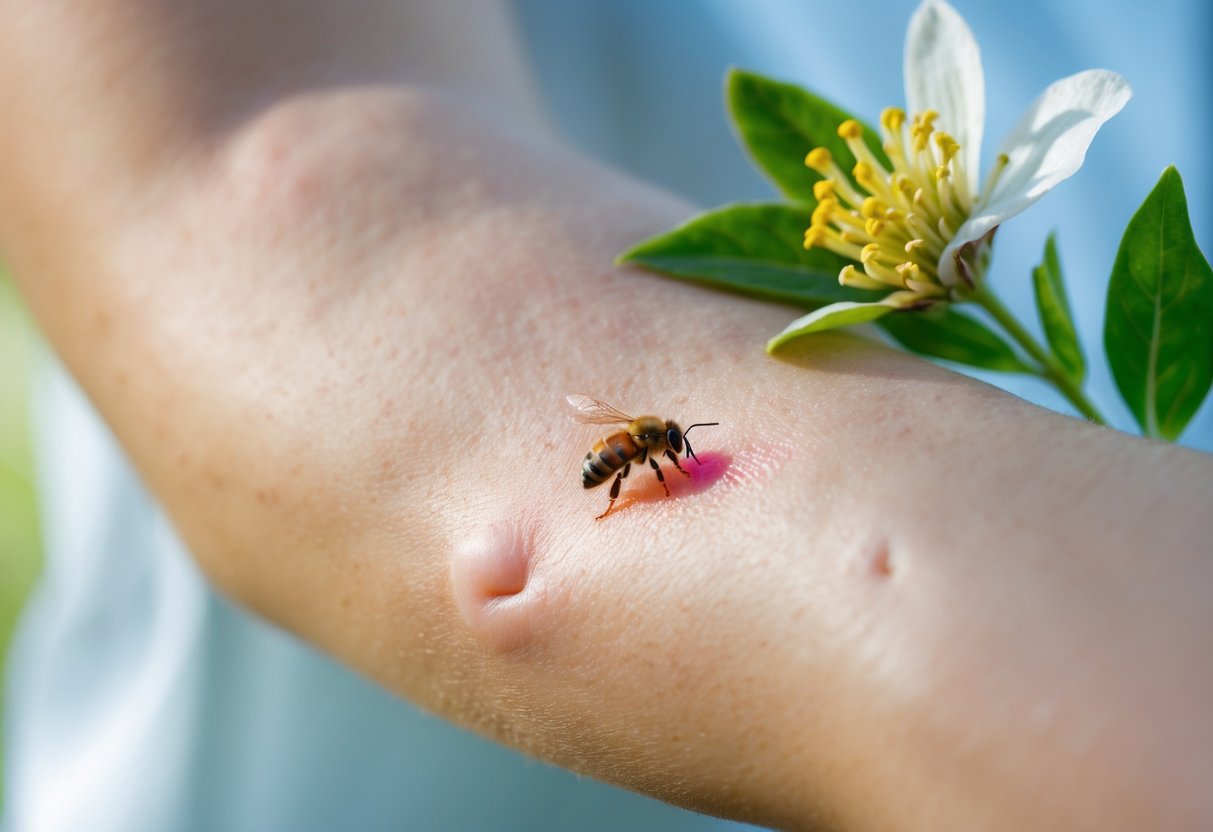
When you get stung by a bee, your body responds in its own way depending on your sensitivity and immune system. Some people just get mild, local symptoms, but others might have a more serious reaction that affects their whole body.
It’s important to know how to spot these reactions so you can handle them safely.
Non-Allergic Local Reactions
Most bee stings cause mild reactions right where you got stung. You’ll usually see pain, redness, swelling, and itching around the spot.
This swelling can last a few hours or maybe a couple of days. Cold compresses and over-the-counter pain meds can help with the pain and swelling.
These minor reactions usually clear up by themselves. Sometimes, you might notice swollen lymph nodes nearby, but that tends to fade pretty quickly.
A little rash or mild itching is also pretty normal and doesn’t mean anything serious is going on.
Allergic Reactions and Anaphylaxis
If you’re allergic to bee venom, your immune system can really go into overdrive. You might see a rash spreading, swelling that goes beyond the sting, trouble breathing, dizziness, or a fast heartbeat.
This kind of reaction can show up in just minutes and needs emergency help.
Anaphylaxis is a severe, life-threatening allergic reaction. If your throat swells, you can’t swallow, or you’re having trouble breathing after a sting, grab an epipen and call 911 right away.
Allergy shots or immunotherapy might help lower your risk over time.
Delayed and Systemic Responses
Sometimes, you might not notice a reaction until days or even weeks after the sting. Joint pain, fatigue, swollen lymph nodes, or a rash that pops up somewhere other than the sting site can all show up later.
In rare cases, if you get stung multiple times, your body might respond with more serious problems like serum sickness or even autoimmune issues—think rheumatoid arthritis or, in some cases, multiple sclerosis.
If you keep feeling symptoms after a bee sting—maybe your joints ache, or you just can’t shake the tiredness—it’s worth a chat with a healthcare professional. They might suggest anti-inflammatory meds to help ease these problems and keep things from getting worse.


