
Ever wondered how long a queen bee can actually fly? You might be surprised. A queen bee’s flight usually lasts anywhere from five to thirty minutes, mostly when she’s mating or leading a swarm to a new home. Unlike worker bees, she doesn’t buzz around all day.
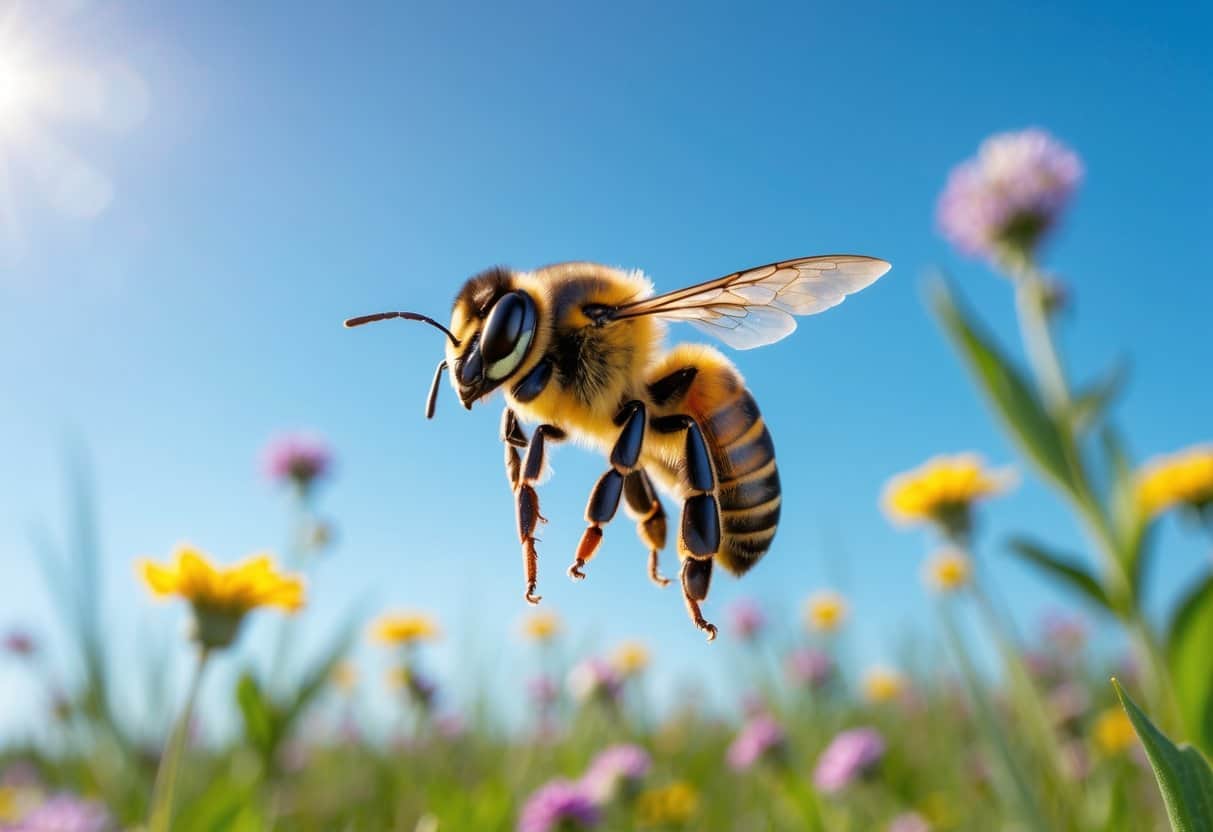
She doesn’t take off very often, but every flight matters a lot—for her and for the whole colony. When you realize how far and how long she goes, you start to appreciate just how much work goes into keeping a hive healthy.
How Long and How Far Can a Queen Bee Fly?
Queen bees only take flight at a few key moments in their lives. Mostly, it’s for mating or when they’re leaving with a swarm.
These flights aren’t long, but they cover just enough ground to find drones or scout out new hive spots. If you know how far and how long they fly, you’ll get a better sense of what your bees need.
Typical Duration of Queen Bee Flights
Most queen bee mating flights last between 5 and 30 minutes. In that short window, she mates with several drones to collect enough sperm for her lifetime.
The whole process can stretch over a few days, since the queen might fly out more than once.
You’ll only see queens outside the hive for mating or swarming. The rest of the time, she stays inside.
This limited schedule helps her save energy and focus on laying eggs, which is her main job.
Average and Maximum Distances Traveled
On average, a queen bee flies about half a mile to three-quarters of a mile away from her hive for mating.
In some rare cases, queens have flown as far as 15 miles or more. That’s pretty impressive for such a small insect.
Drones usually stick closer, around half a mile from their own hive. The queen’s longer flights help her find drones from other colonies, which keeps your honeybee genetics diverse.
Factors Affecting Flight Distance and Duration
A few things change how far and how long a queen bee will fly. Weather has a big impact—queens pick warm, calm, sunny days for flying since it’s safer and easier.
The time of day matters too. Most mating flights happen between 1 pm and 4 pm, when conditions are just right.
Young queens usually fly farther and faster, especially on their first trips out.
The landscape can also change her route. Trees or buildings might make her fly a bit farther or take a different path.
Queen Bee Flight Purposes and Impact on the Hive
Queen bees really only fly for two big reasons, and both affect the whole hive. These flights handle reproduction, create new colonies, and help keep your bees healthy.
If you can manage these flights well, you’ll see a big difference in your beekeeping results.
Mating Flights and Colony Reproduction
The queen bee leaves the hive to mate with drones in midair. Usually, her flight lasts about 5 to 30 minutes, and she might travel up to 8 kilometers.
During that short window, she mates with around 10 to 15 males.
This is a huge deal because she stores all the sperm she collects, and it lasts her for years.
That stored sperm lets her lay fertilized eggs, which become worker bees. The more drones she mates with, the healthier and more diverse your colony will be.
If she doesn’t have a successful mating flight, she can’t keep the hive going.
Swarming and Hive Expansion
Queen bees also fly when the hive gets crowded or conditions change. We call this swarming.
The old queen leaves with some of her workers to look for a new place to live.
Swarming is how hives grow naturally. It makes new colonies and stops the original hive from getting too packed.
If you’re a beekeeper, you’ll probably spot swarming in spring or summer, often triggered by weather or lots of pollen. While it means fewer bees in your first hive, it also spreads your bees around your yard or even into the wild.
Role of Beekeepers in Managing Queen Bee Flights
You play a big part in helping queen bees during their flights. Before expecting a mating flight, make sure you check for good weather—warm, calm days usually work best.
You can support the queen by keeping hives strong. Plenty of worker bees and solid pollen sources really make a difference.
If you notice a queen isn’t mating well or seems weak, you’ll probably need to replace her. That way, you keep the colony healthy and avoid bigger problems down the line.
Managing swarming matters too. Try giving your bees more space or splitting hives when needed—these steps help control the queen’s flight behavior and, honestly, make your beekeeping life easier.
If you keep an eye on queen flights, your hive’s more likely to thrive and grow. Curious for more? Check out Queen mating flights – The Apiarist and Mastering Queen Bee Mating Flights for Colony Success.


