
Ever wondered if bees recognize you when you walk up to their hive? Turns out, bees can actually learn to recognize your face and remember you for a few days. They don’t see faces like humans do, but they notice patterns in your features. It’s pretty wild to think about.
This skill helps them tell different people apart, especially beekeepers who hang around the hive a lot.
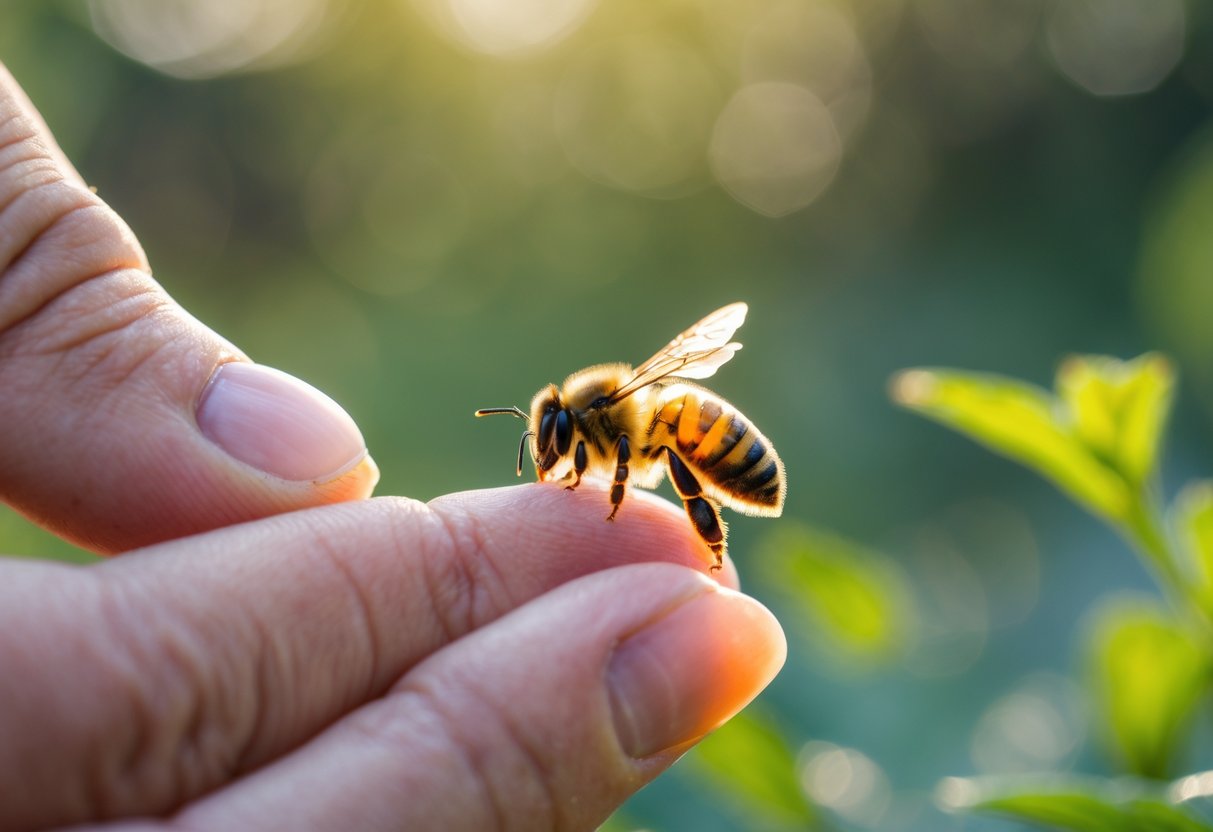
Bees have sharp memories. They use their senses to connect what they see with other details, like how you act or how you smell.
If you work closely with bees, they’ll pick up on your look and behavior. You might notice they treat you differently than strangers—maybe they’re calmer or just less bothered. Honestly, these little insects are smarter than most folks realize.
Learning about how bees recognize you can totally change how you see them. Their memory is surprisingly strong.
How Bees Recognize Humans

Bees have a few tricks for telling people apart. They mostly rely on how you look and how you smell.
This helps them spot friends or strangers, especially if they see humans pretty often.
Facial Recognition Abilities in Bees
Honeybees really can recognize human faces. Even though their brains are tiny, they focus on parts like your eyes, nose, and mouth.
Scientists call this holistic face recognition. Bees see your face as a whole, not just a bunch of parts.
They remember your face if they meet you again. This skill helps them tell beekeepers apart from others.
Recognizing faces shapes how bees act around you. If they know you’re a friendly beekeeper, they might chill out a bit.
You can read more about this in studies on bees recognizing human faces.
Role of Scent and Personal Pheromones
Bees don’t just use their eyes—they rely a lot on smell. You’ve got a unique scent made up of natural body odors and pheromones.
Bees pick up on these right away. They start to link your scent with good or bad experiences.
If you visit a hive often, bees get used to how you smell. That can make them more relaxed when you’re around.
Wearing strong perfumes or lotions? That might throw them off. Your natural scent sticks with you, and bees use it to decide if you’re safe or not.
Scent works with memory of your face, making it easier for bees to know who you are.
Beekeeper and Bee Interactions
Beekeepers spend a lot of time with their bees. Over time, bees pick up on the beekeeper’s face and scent.
This builds a kind of trust. Bees often sting less when their usual beekeeper shows up.
They act differently with strangers—sometimes they get more defensive. When the beekeeper is gentle and familiar, bees seem to notice.
If you want to dig deeper, check out more on bee and beekeeper interactions.
Social Intelligence and Communication in Honeybees

Honeybees live in tight-knit societies. Each bee knows its job and communicates in some pretty clever ways.
Their social smarts keep the hive running, from sharing food info to caring for the queen. You’ll notice these little insects use smart tricks to recognize each other and get things done.
Recognition Among Hive Members
Inside the hive, bees mostly recognize each other by smell. Every bee carries a special scent made up of pheromones.
This lets them spot hive mates and keep strangers out. Worker bees know the queen by her unique pheromones.
They use their antennae to pick up these chemical signals. It’s kind of amazing how well they do this.
So, bees don’t really recognize you personally, but in their world, chemical signals and close contact are everything.
Waggle Dance and Communication
When a honeybee finds good flowers, she comes back and does the waggle dance. It’s a wild move that shares directions about where to find food.
She dances in a figure-eight, shaking her body in the “waggle” part. The direction tells other bees where to fly, and the length shows how far to go.
This dance isn’t just about food. It shows how bees coordinate and share complex info—without saying a word.
That’s a big part of how the hive gathers pollen and nectar so well.
Worker Bees and Their Tasks
Worker bees really keep the hive running. Their roles shift as they age, which is pretty fascinating.
Young workers start by cleaning cells or feeding the hungry larvae. Later on, they’ll guard the hive, build honeycomb, or head out to gather pollen and nectar.
Every job matters. When bees collect nectar, they’re actually making honey for the whole colony to eat during winter. Guard bees stand watch and chase off intruders, while comb builders create space for eggs and food.
If you watch a hive, you’ll notice a kind of organized chaos—worker bees seem to know just what needs doing. Their teamwork honestly shows off how clever they are as a group.
Want to see how bees talk and coordinate? Check out the page about honeybee communication.


