
If you’re looking to provide a safe haven for barn owls on your property, knowing how high to place a barn owl box is essential. The ideal height for a barn owl box is between 12 to 18 feet above the ground. This height helps keep the owls safe from predators while ensuring they can access their new home easily.
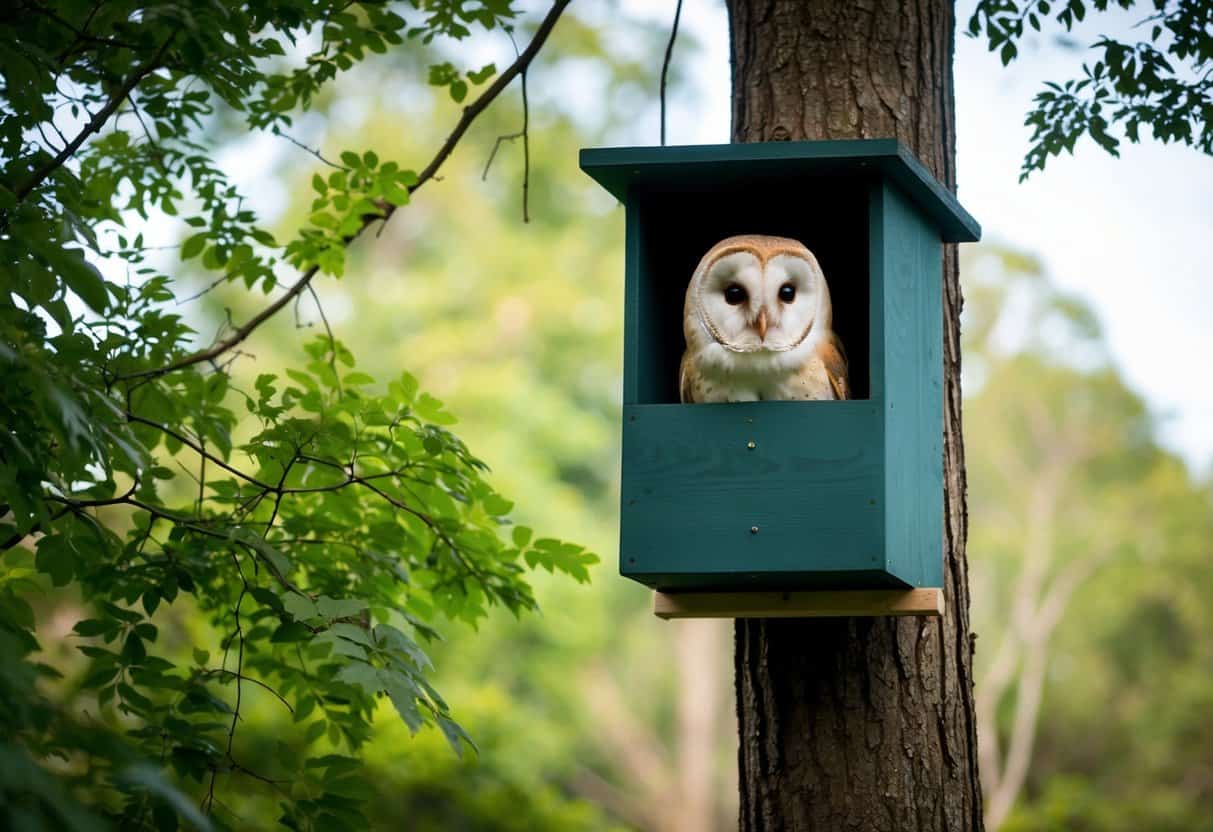
By positioning the box at the right height, you’re not only inviting these beautiful birds to nest but also enhancing natural rodent control. Barn owls are known for their hunting skills, making them effective partners in managing pests on your land.
Whether you’re in an open field or a wooded area, finding that perfect height can greatly increase your chances of attracting barn owls to your box.
As you set out to create this nesting space, remember that having the right setup can lead to successful breeding seasons. With a little knowledge, you can become a crucial part of supporting barn owl populations in your area.
Optimal Placement for Barn Owl Boxes
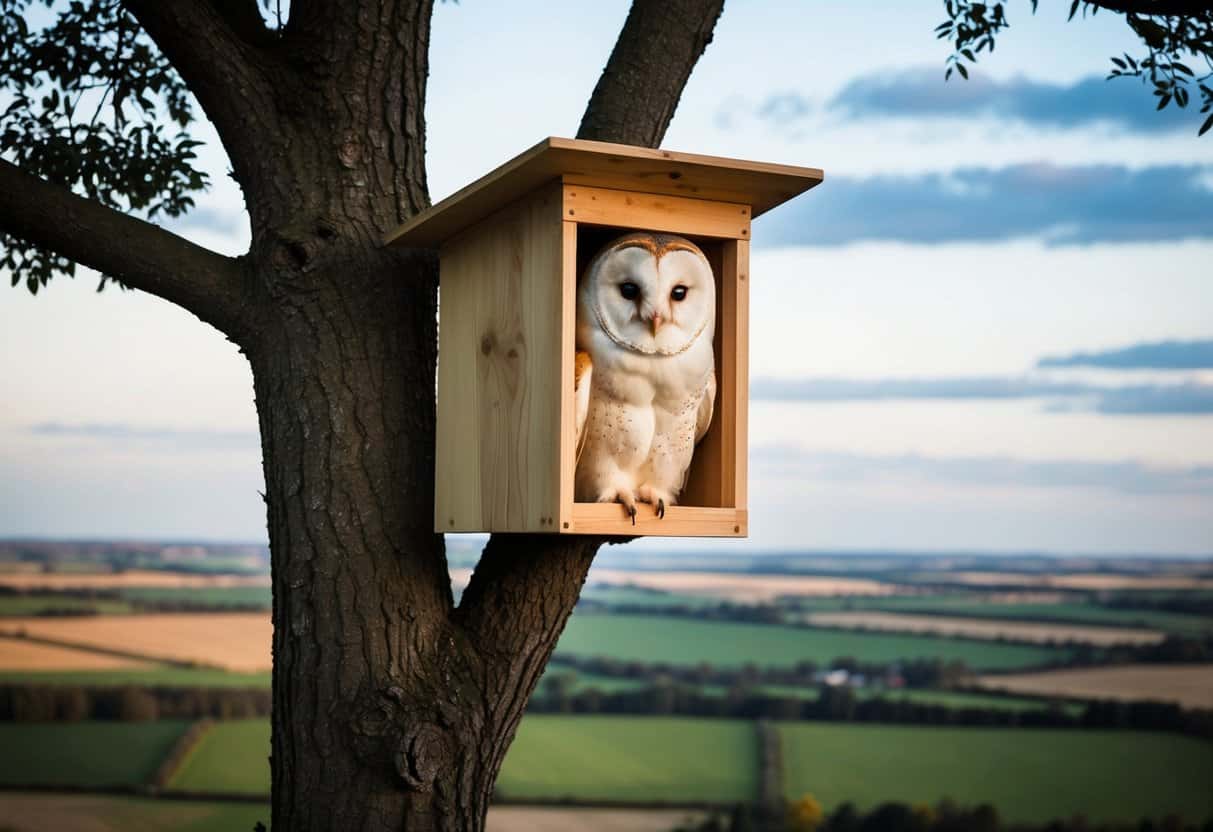
Placing barn owl boxes correctly is essential for attracting these beneficial birds. Consider the location, height, and surroundings to ensure safety and comfort for the owls.
Tree Versus Outbuilding Locations
When choosing a location for your barn owl box, consider whether to place it in a tree or an outbuilding. Trees can provide natural cover and a sense of security. However, make sure the tree is sturdy and has a canopy that offers some shade. This helps protect the birds from harsh sunlight and predators.
Outbuildings, like barns, are another great option. They provide shelter from the elements and can be easier to access for maintenance. If you choose this option, make sure there’s an entry point at least 10-15 feet high to keep owls safe from ground predators.
Height Considerations
The height at which you install your barn owl box is crucial for safety. Aim for a minimum height of 10-15 feet. The ideal height is between 12-18 feet for open areas, such as fields. In wooded locations, you can install the box slightly lower, around 10-12 feet.
Higher boxes reduce the risks of predation. This placement gives the owls a better vantage point and a sense of security. If possible, consider using posts or poles to create additional height. Whatever height you choose, ensure it’s secure and stable.
Ensuring a Safe Flight Path
Creating an unobstructed flight path is vital for your barn owl box. Ensure that there are no large branches, wires, or other obstacles that could hinder the owls when they enter or exit the box. A clear path allows them to fly safely to the entrance.
Nearby structures should also be considered. Keep your barn owl box at least 100 feet away from human dwellings. This distance helps reduce disturbances and keeps the owls comfortable. By providing a nearby open space, you allow the owls to hunt and navigate easily without interference from predators or other threats.
Design and Construction of Barn Owl Boxes
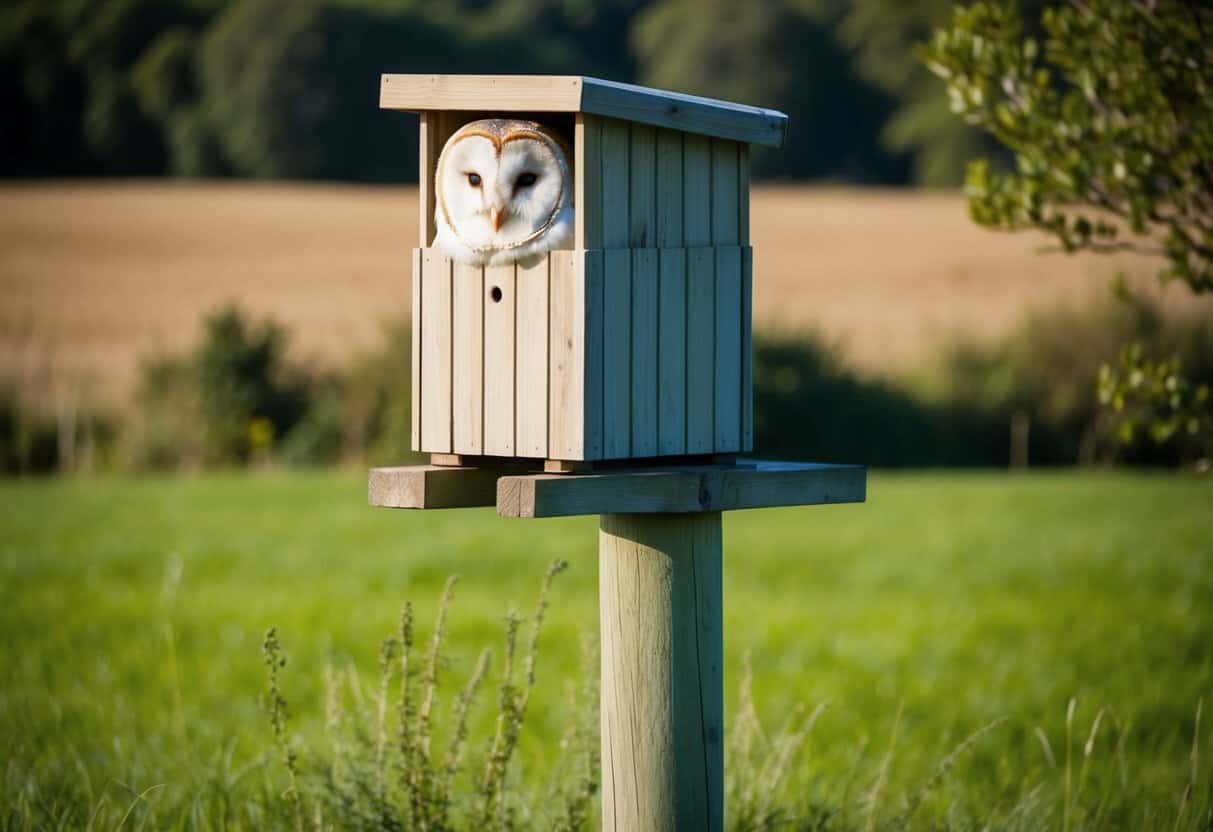
When building barn owl boxes, it’s essential to focus on specific design aspects. Key features include the entrance hole size, the materials used, and installation tips. These factors will help ensure the safety and comfort of the owls.
Entrance Hole Specifications
The entrance hole is crucial for attracting barn owls. The ideal size for the hole is approximately 130 mm x 130 mm. This size allows owls to enter comfortably while preventing larger predators from gaining access.
You should place the entrance hole at least 3 meters (10 feet) above the ground. This height offers safety from ground predators and provides a clear view of the surrounding area. If you’re building in a more urban environment, consider adding a predator guard around the entrance to keep raccoons and other threats at bay.
Materials and Durability
Choosing the right materials is key to your owl box’s success. Use sturdy wood, such as cedar or plywood, which can withstand various weather conditions. Make sure the wood is untreated to avoid harmful chemicals that could harm the owls.
You will also want to use screws or nails to securely assemble the box. Avoid using plastic or flimsy materials, as these may not last long in outdoor conditions. Ensure all joints are well-sealed to keep out moisture. A well-constructed box can last for years, providing shelter for multiple generations of owls.
Installation Tips
Proper installation is essential in providing a safe home for barn owls. Aim to place the box at a height of 10 to 15 feet above ground, with 12 to 18 feet being ideal in open areas. This height will help deter predators and offer a sense of security for the owls.
When installing, ensure the box is mounted securely to prevent swaying or falling due to wind. You can use brackets or sturdy wooden supports to hold it in place. Always choose a location that overlooks open land, as this will benefit barn owls in hunting for food.
Attracting and Protecting Barn Owls
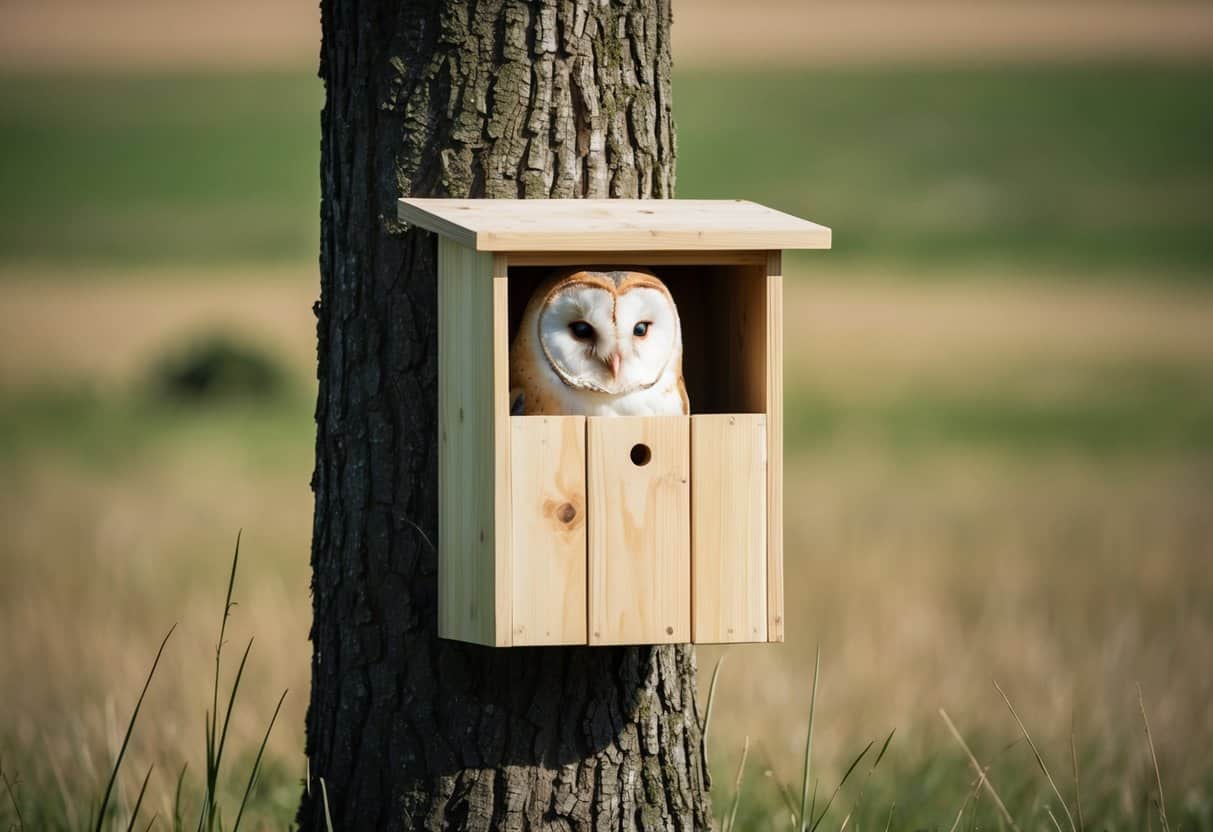
To attract barn owls and ensure their safety, it’s vital to manage their food sources, avoid harmful chemicals, and reduce competition and predation. Focusing on these areas can help create a welcoming environment for these beneficial birds of prey.
Managing Rodents and Providing Food Sources
Barn owls primarily feed on small mammals such as voles, pocket gophers, and other rodents. By maintaining healthy rodent populations, you create a reliable food source for your owls. Consider using natural methods to manage rodents, like encouraging their natural predators.
When designing your landscape, keep areas such as grasslands and fields intact, as these are prime hunting grounds. You might even install barn owl boxes near these habitats. Remember, barn owls tend to hunt actively at night, making it easy for them to locate food in open spaces.
Avoidance of Pesticides and Rodenticides
Using pesticides and rodenticides can harm barn owls and disrupt their food supply. When rodents consume these chemicals, they can accumulate toxins in their bodies. When barn owls eat these poisoned rodents, they can also fall victim to these harmful substances.
Instead, consider using integrated pest management practices that focus on reducing rodent populations without harmful chemicals. Creating a balance in your environment not only helps barn owls but also enhances the ecosystem by maintaining healthy populations of various species.
Competitor and Predator Deterrence
To protect barn owls from competitors and predators, it’s crucial to provide safe nesting sites. Great horned owls and screech owls are common competitors, while raccoons can threaten young owlets. Use predator guards on nesting boxes to keep them safe from these potential threats.
Positioning boxes at appropriate heights—ideally 10-15 feet above ground—can also help deter predators. Making your property less inviting for competitors and keeping habitats open will encourage barn owls to thrive in your area. By fostering a safe environment, you can support the natural hunting practices of barn owls.
Maintenance of Barn Owl Boxes
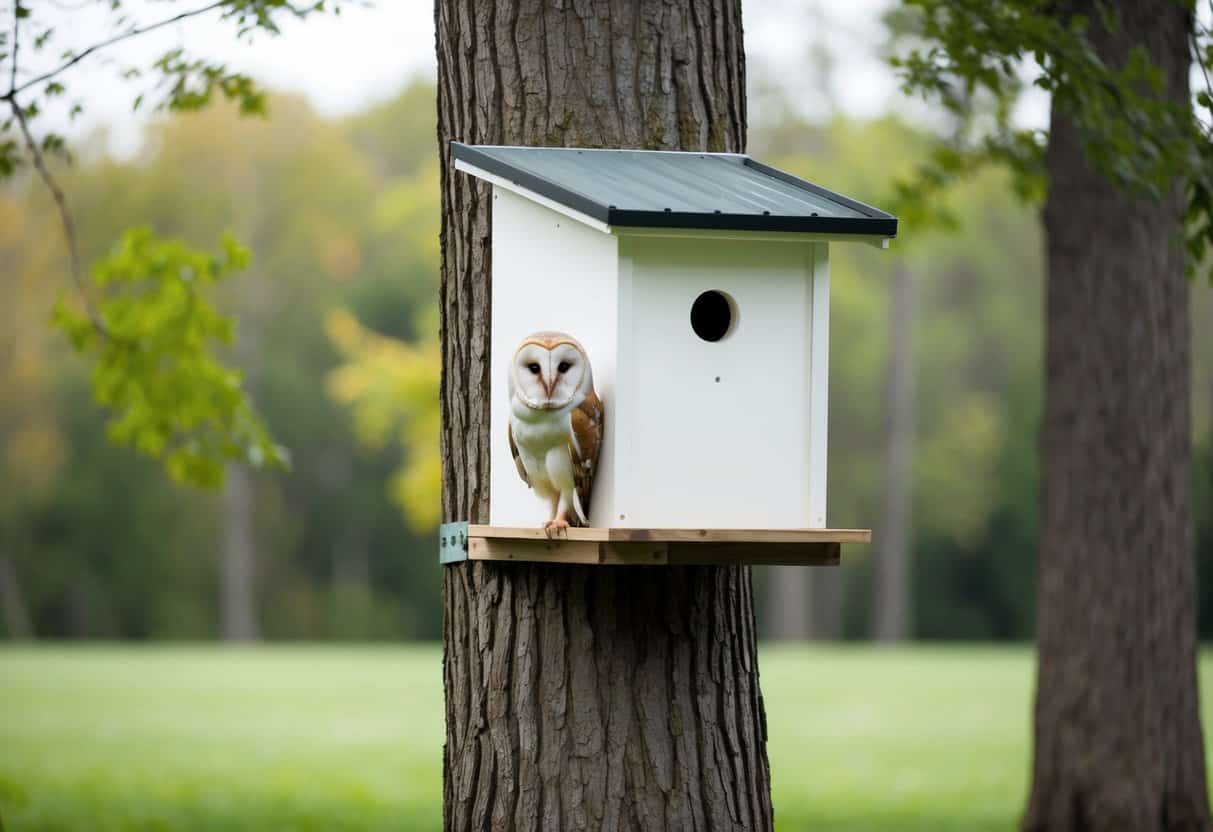
Regular maintenance of barn owl boxes ensures that these wonderful birds have a safe and clean environment. Proper care includes cleaning out debris and monitoring the box for any issues.
Cleaning and Repairs
Cleaning your barn owl box is crucial, especially after the breeding season. Wait until the young owls have fledged before you start. Remove feathers, droppings, and leftover food like remains of mice or rats to keep the area sanitary. Be sure to check for and remove any debris like branches or twigs that might have accumulated.
Repairs are just as important. Inspect the box for damage, such as holes or cracks. Fix these issues promptly to prevent predators from invading or to avoid losing an owl’s shelter. You can use non-toxic materials to ensure no harm comes to the visiting owls.
Monitoring and Observation
Monitor your barn owl box for signs of occupancy. Look for feathers around the entrance or droppings below, which are signs that owls have made the box their home.
Observing during the breeding season is key. A typical clutch size is about 3-7 eggs, and the incubation period lasts around 30-34 days.
You can also use a camera to capture footage of owls entering and leaving the box. This will help you understand their habits.
Share your observations with local wildlife organizations to contribute to barn owl conservation efforts. By caring for and monitoring your barn owl box, you support a vital species facing habitat loss.


