
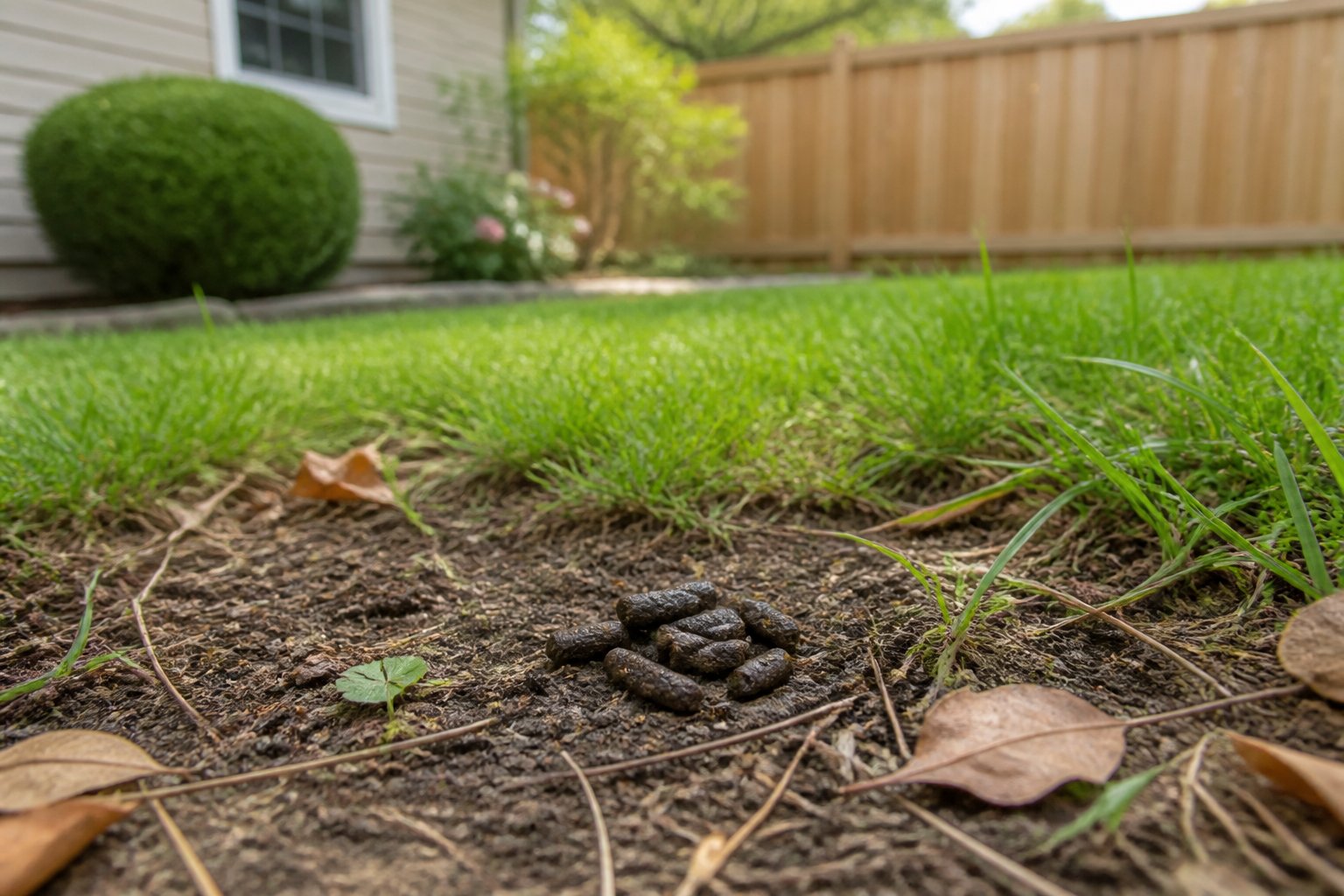
Chipmunk poop looks small, dark, and pellet-shaped. It often resembles mouse droppings at first glance.
To figure out how chipmunk poop looks, check the size, tapered ends, and where you find it. These clues help you tell it apart from other animal droppings.
Chipmunks leave droppings in hidden spots near burrows instead of out in the open. In the U.S., you might notice chipmunk poop near garden edges, sheds, crawl spaces, or around entry points where chipmunks travel.
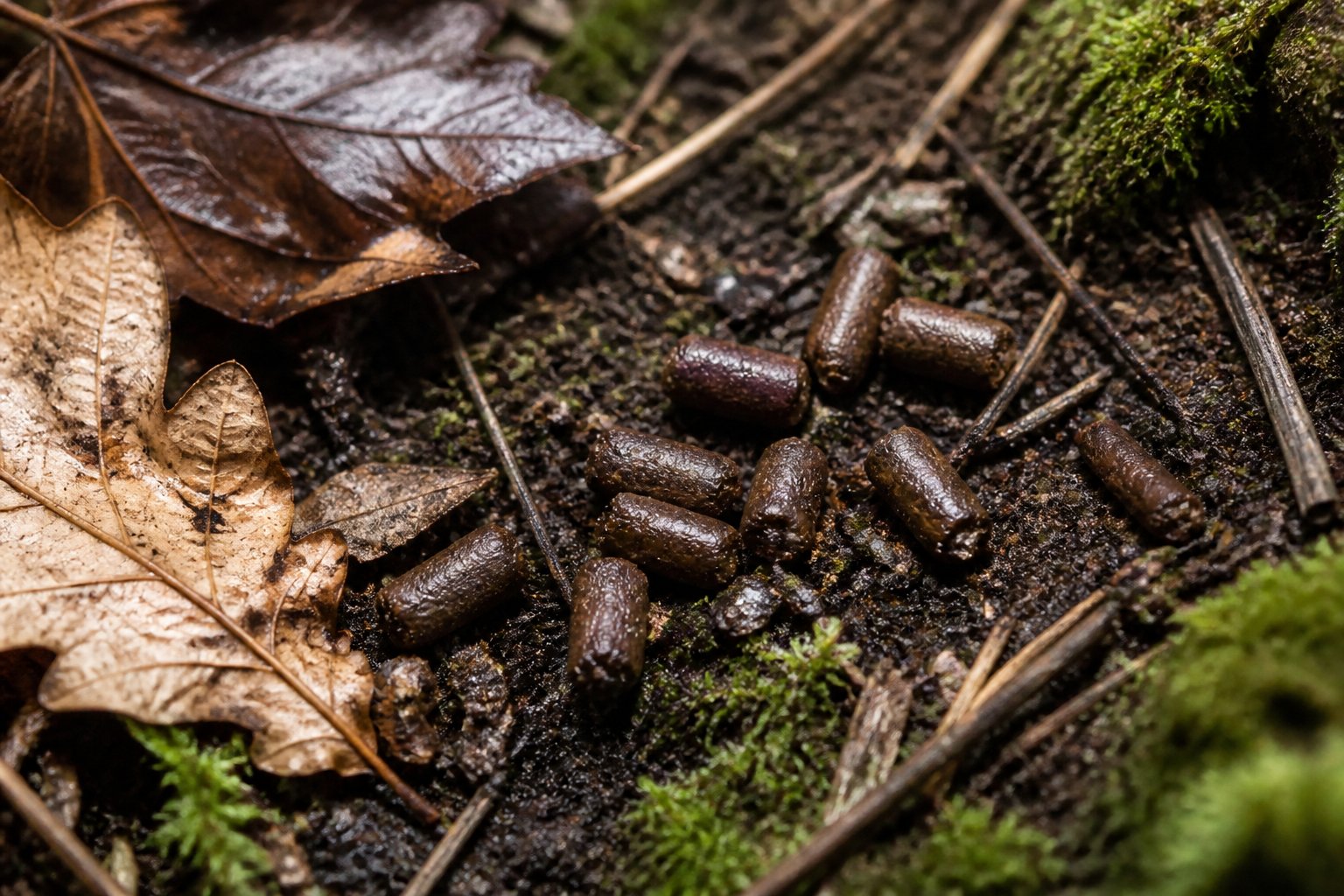
How To Recognize The Droppings
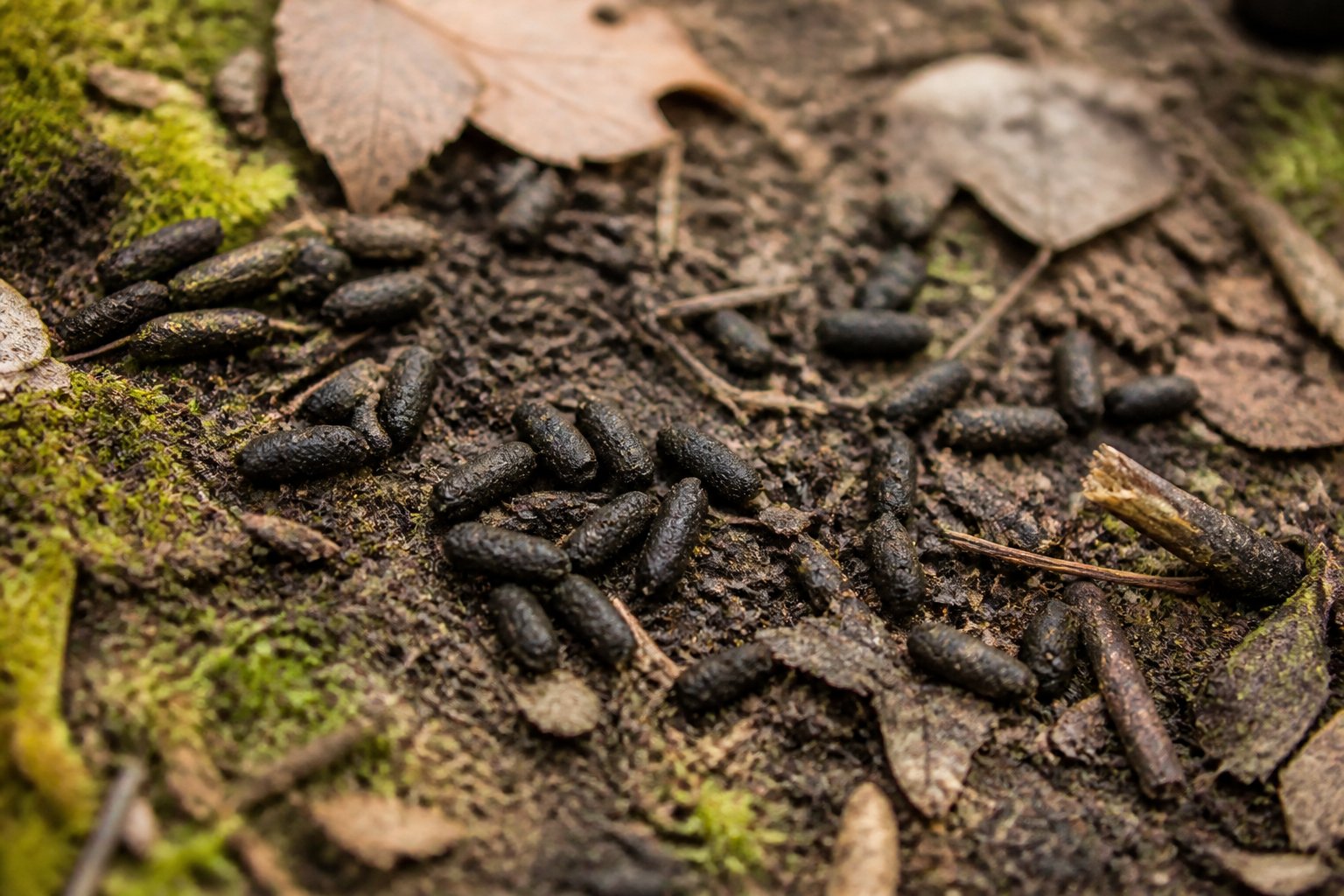
Chipmunk scat is small enough to mistake for other rodent waste. Size and shape are the most important features.
A clear chipmunk poop picture can help, but you should also match droppings to nearby signs like feeding areas and chipmunk burrows.
Size, Shape, And Tapered Ends
Chipmunk droppings measure about 1/4 to 3/8 inch long, roughly the size of a grain of rice. They are cylindrical or oval and often have slightly tapered ends, which helps you identify them instead of rounder droppings from other animals.
Color, Texture, And Fresh Vs Old Droppings
Fresh chipmunk feces appear dark brown to black, with a moist but firm texture and a slight shine. Older droppings dry out, harden, and may look duller.
Where They Are Usually Found
You are more likely to find chipmunk poop near burrow entrances, under decks, beside foundation edges, or in tucked-away garden spots. Chipmunks avoid leaving waste in the open, so hidden piles near food sources or travel paths are a stronger clue than a single pellet in the yard.
How To Tell Them Apart From Other Rodents
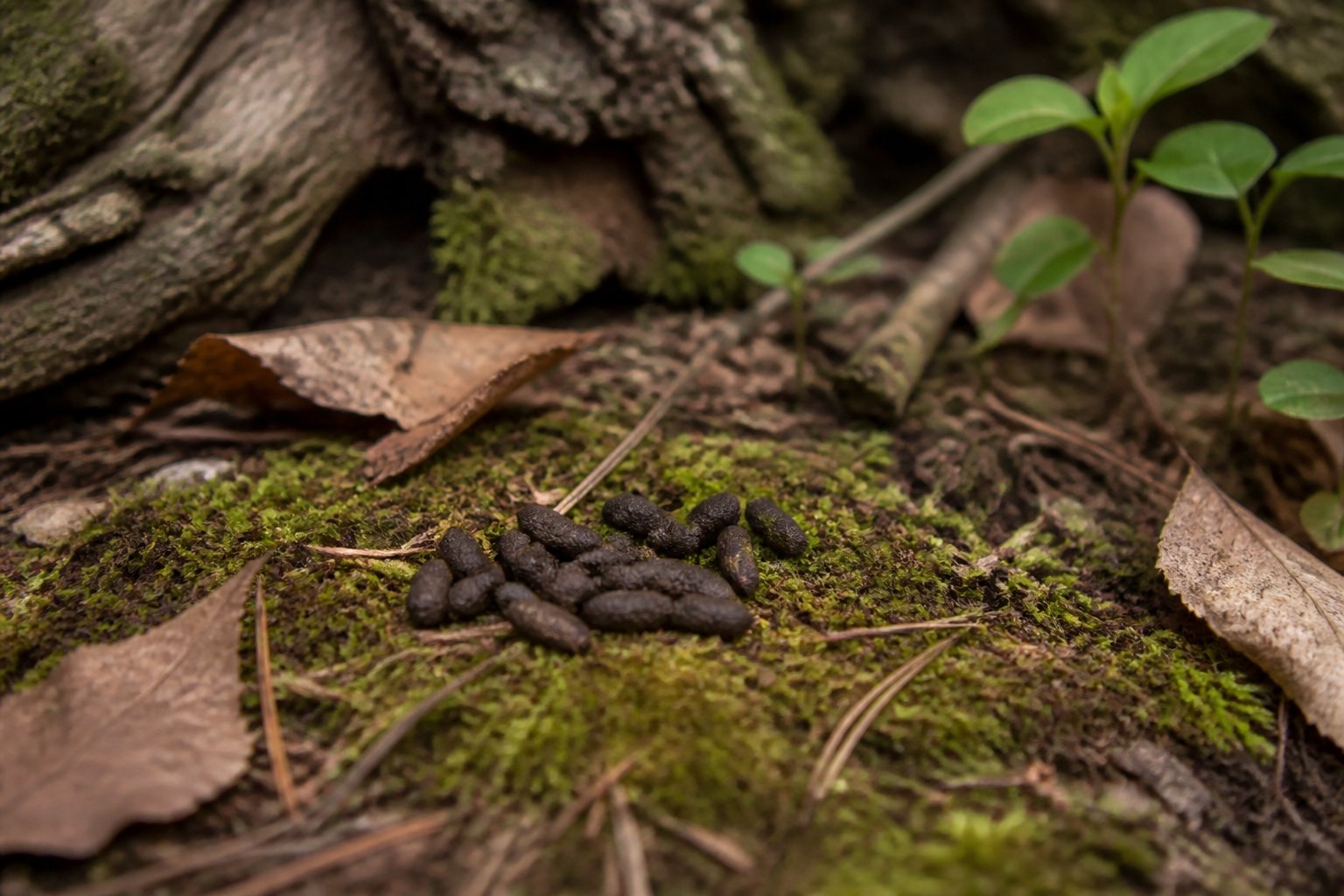
You can compare chipmunk poop to the droppings of mice, rats, and squirrels. Shape, size, and color changes help you tell them apart.
Chipmunk Vs Mouse Poop
Mouse droppings look similar, but they are usually smaller, about 1/8 to 1/4 inch long. If the pellets are a little larger and still tapered at both ends, you are more likely looking at chipmunk poop.
Chipmunk Vs Rat Droppings
Rat poop is much larger and often blunter or more sharply tapered depending on the species. If the droppings are only rice-grain sized, they are more likely chipmunk scat than rat droppings.
Chipmunk Vs Squirrel Droppings
Squirrel droppings can look similar, but they are usually a bit larger and tend to turn gray as they age. Chipmunk droppings often keep their original dark color longer, so color stability is a useful clue.
What To Do If You Find Droppings
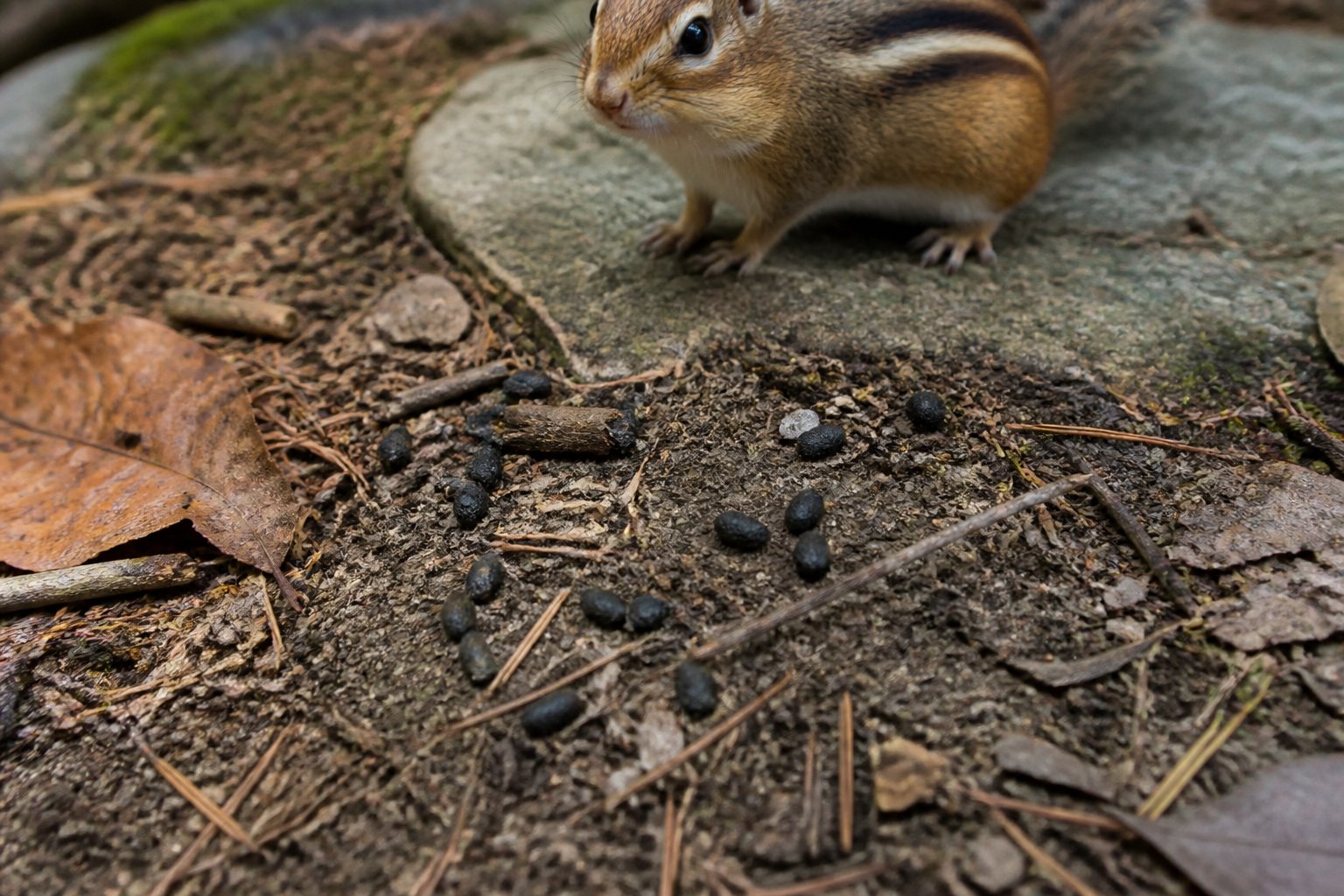
If you find droppings near your home, stay careful before touching anything. You should clean chipmunk poop without stirring up dust or exposing yourself to contaminants.
Health Risks And Safety Precautions
Chipmunk droppings can carry parasites and germs. Clean up with gloves, keep kids and pets away, and avoid sweeping or vacuuming dry droppings without protection.
Clean Chipmunk Poop Safely
To clean chipmunk droppings, wet the area first with a disinfectant so particles do not become airborne. Pick up the waste with paper towels or disposable tools, place it in a sealed bag, and wash your hands well.
Cleaning Up The Area Without Spreading Dust
Keep the area damp while you work, and do not shake rugs, bedding, or loose debris near the droppings. If the waste is in a small enclosed space, ventilate it before cleaning and disinfect nearby surfaces after removal.
Stopping Future Activity Around Your Home
If you keep finding droppings, address the food, shelter, and entry points that attract chipmunks. The best way to get rid of chipmunks is to remove what attracts them and block easy access to hiding spots.
Signs Of Burrowing And Food Sources
Look for burrow holes, disturbed soil, seed caches, and repeated droppings near foundations or garden beds. Fallen bird seed, pet food, and accessible compost can all make your yard more appealing.
Ways To Keep Them Out Of Yards And Gardens
Store food securely, trim dense ground cover, and seal openings around sheds, porches, and crawl spaces. Reduce shelter by clearing brush piles and keep bird feeders from spilling seed onto the ground.
When To Get Professional Help
If burrows keep expanding or droppings keep appearing indoors, you may need professional help. When you cannot safely access the nesting area, contacting a wildlife or pest control expert is the safest option.
A wildlife or pest control expert can remove chipmunks and reduce the chance of them returning.


