
If you’ve found a fox den in your yard, you might be wondering how to encourage these clever animals to relocate. To get a fox to leave its den, use non-invasive methods like noise, repellents, and physical barriers. Foxes are generally shy and will often move on if they feel threatened or disturbed.

Creating a less inviting space can help persuade the fox to find a new home. Making loud noises or playing music near the den can be effective. You can also try using natural repellents such as vinegar or commercial products designed to ward off wildlife. Implementing fencing can prevent future foxes from settling in your garden.
Understanding that foxes usually leave their dens on their own once their young are more independent can also bring peace of mind. With patience and the right techniques, you can encourage these fascinating creatures to roam elsewhere while keeping your yard safe and inviting for your family and pets.
Understanding Fox Behavior

Foxes are fascinating creatures with unique habits that influence how they interact with their environment. Knowing about their behavior can help you in your efforts to encourage them to leave their dens.
The Life of a Red Fox
Red foxes are adaptable animals found in various settings, including urban areas. These clever foxes can thrive in different environments, from forests to city parks.
Typically, a vixen will give birth to kits in a well-hidden den. Kits rely on their mother for food and protection until they are ready to explore. During this time, you may notice the mother fox frequently visiting the den.
Foxes communicate with different sounds, including high-pitched barks and screams. These vocalizations become more common during mating season and can be quite loud at night. Understanding their communication helps you recognize when they are feeling threatened or when predators are near.
Fox Dens and Habitats
Fox dens are usually located in dense vegetation for safety. A typical red fox den can have multiple entrances, allowing easy escape if needed. These dens can range from 3 to 8 feet deep and often have several chambers.
Urban foxes tend to adapt their dens to fit into their surroundings, utilizing spaces like abandoned buildings or backyards. They often seek out places where human activity is less, allowing them to feel secure.
Maintaining a distance from the den and avoiding direct confrontation will encourage the fox to move on. Remember, foxes generally prefer to avoid encounters with humans if they can. By understanding their behavior, you can help create a peaceful coexistence.
Humane Methods to Encourage a Fox to Leave
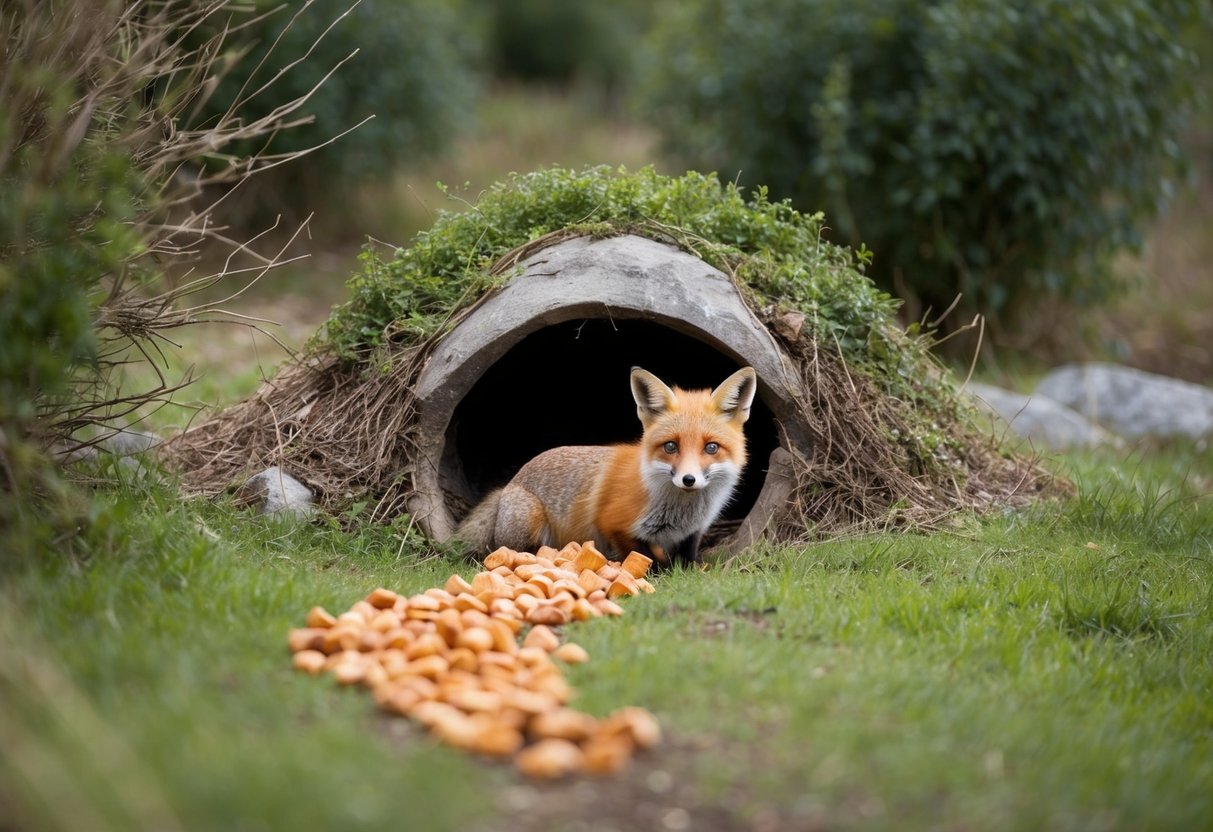
You can gently encourage a fox to leave its den using various humane methods. These techniques help you maintain a peaceful coexistence with wildlife while ensuring your safety and comfort.
Using Fox Repellents
Fox repellents are a practical way to discourage these animals from staying in your yard. You can use natural options like vinegar, which has a strong smell that foxes dislike.
Commercial products like Scoot Fox Repellent are also available. These contain scents that can irritate a fox’s sense of smell, prompting it to find a new place to stay. Always apply these substances around the den area but be sure to follow the product instructions for safe use.
Implementing Environmental Changes
Making simple changes to your environment can also help. Begin by removing any brush piles or clutter where foxes might hide. This will limit their cover and make your yard less inviting.
Sealing off spaces like crawlspaces, sheds, and porches prevents foxes from finding shelter. You can also install fencing along your property line. Ensure the fencing is tall and extends underground for added protection against burrows.
Consider creating a little noise, like using wind chimes or even playing loud music intermittently. Vibrations and sounds can often encourage a fox to move on without harm.
Professional Assistance
If you find that the fox remains despite your efforts, you might need to seek professional help. Contacting a wildlife rehabilitator or local animal control can provide you with guidance.
They have experience in dealing with urban wildlife and can safely encourage the fox to leave. It’s important that the methods used are aligned with animal welfare standards to ensure the fox is treated humanely.
With a bit of effort, you can create a less inviting space for foxes, allowing them to return to the wild while respecting their role in the ecosystem.
Preventing Future Fox Visits
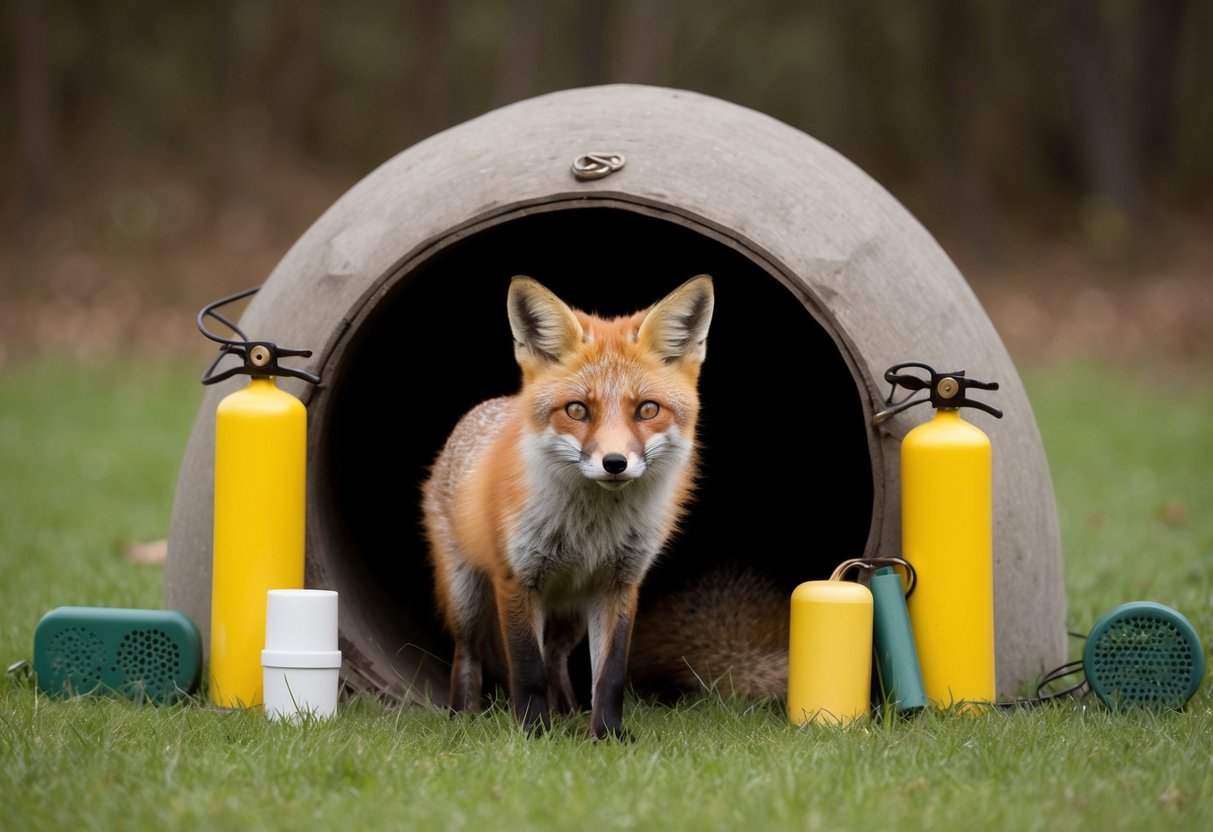
To keep foxes from returning to your property, it’s essential to take proactive steps. Securing food and maintaining your garden can significantly reduce the chances of fox visits. Here’s how you can do that effectively.
Securing Food Sources
Foxes are drawn to easy food sources. To prevent this, secure your trash bins with tight-fitting lids. Avoid leaving pet food outside, as it can attract foxes and other animals.
If you have bird feeders, clean up any spilled seeds and ensure they are not overflowing. This not only discourages foxes but also keeps your yard tidy.
Ensure that any compost piles are also secured. Foxes might see these as a buffet of scraps. By managing food sources, you reduce the chance of inviting foxes into your space.
Garden and Property Maintenance
Maintaining your garden is just as important. Start by removing debris, such as brush piles and tall grass. These areas provide them with cover, making your property more appealing.
Where foxes can hide, close off entrances under fences, garden offices, or porches. Make sure any crawl spaces are sealed. This prevents foxes from finding easy shelter on your property.
If you have pets, keep them inside, especially at dawn and dusk when foxes are most active. You can also use motion-activated lights or noise makers. These can deter wandering foxes, making your garden less attractive for them.


