
You probably haven’t given much thought to how seahorses pee, but honestly, it’s kind of fascinating. Seahorses use their kidneys to filter nitrogen waste, then store urine in a bladder before releasing it through the cloaca. So, just like other fish, they both urinate and defecate.
This little detail actually says a lot about why seahorses eat nonstop, need tanks with good filtration, and have such weird body shapes that suit their slow, upright lives.
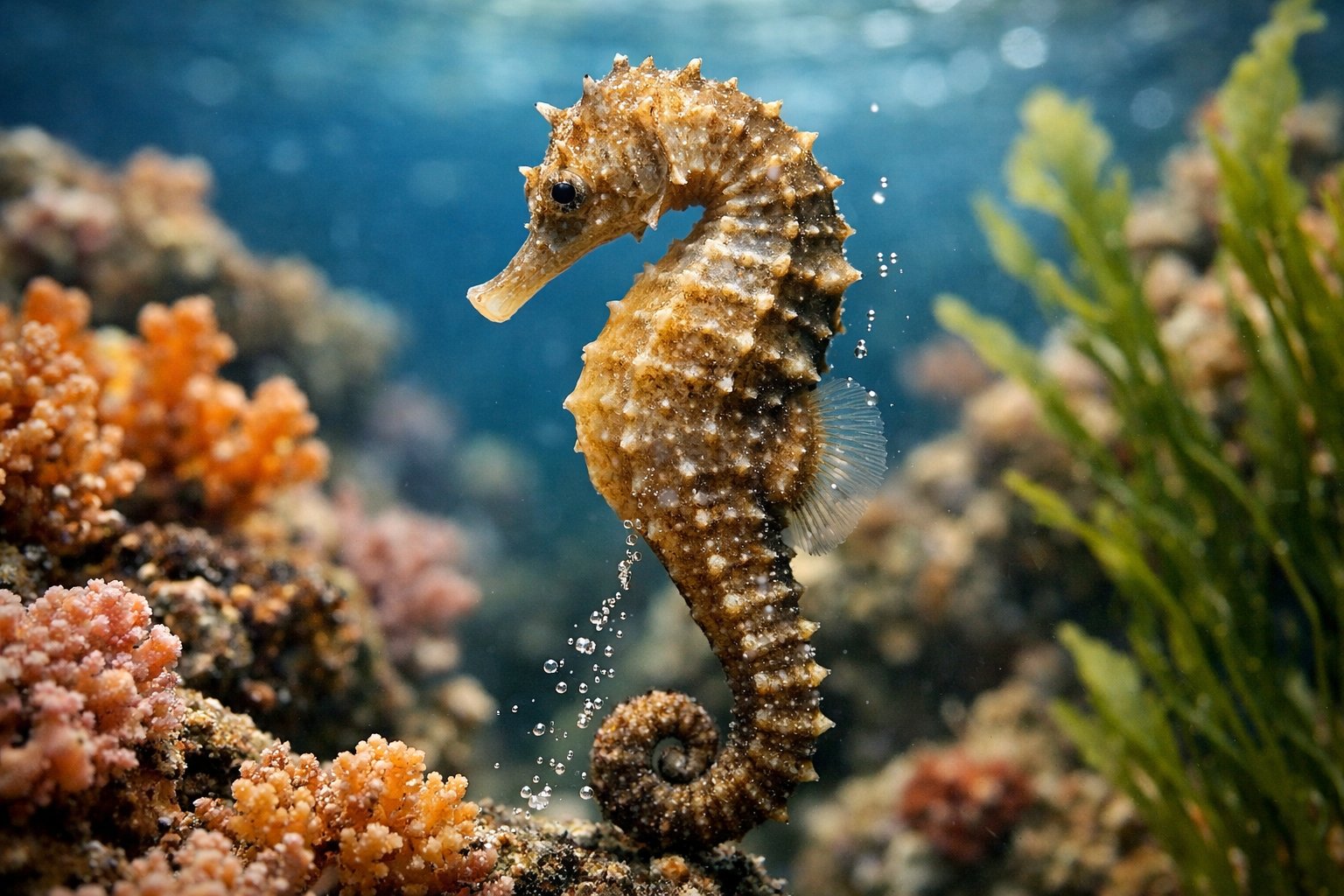
If you stick around, you’ll see how not having a stomach speeds up their digestion, how their kidneys deal with ammonia, and how the cloaca acts as a single exit for both pee and poop. Their odd shapes and tiny mouths play a big role in how they digest and get rid of waste too.
How Seahorses Urinate: Processes and Unique Physiology

Seahorses have a straightforward but effective way to filter their blood, store urine, and get rid of it. Their kidneys concentrate waste, and the cloaca works as the one exit for both urine and feces.
Osmoregulation keeps their fluids balanced in salty water.
Seahorse Excretory System: Kidneys and Bladder
Seahorses rely on paired kidneys to filter blood and remove nitrogenous wastes like ammonia. Their kidneys, which sit along the backbone, pull out soluble wastes and extra ions from the blood.
The kidneys also reabsorb water and useful ions to help them avoid losing too much water in the salty ocean.
Filtered waste gathers in a small urinary bladder. The bladder holds urine until the seahorse needs to get rid of it.
Since seahorses live in the ocean, their kidneys make more concentrated urine than freshwater fish do. That helps them save water and keep their salt levels steady.
The Role of the Cloaca in Urine Release
Urine leaves a seahorse through a single opening called the cloaca. The cloaca sits under the tail and acts as the exit for urine, feces, and, for males, reproductive material that connects with the brood pouch during mating.
Muscles around the bladder squeeze urine into the cloaca. Seahorses time these contractions so urine gets released into the water, not just hanging around their bodies.
This timing helps them avoid reabsorbing their own waste and keeps their surroundings a bit cleaner.
Osmoregulation and Waste Management in Marine Habitats
Understanding osmoregulation is key to knowing why seahorse urine matters. Seahorses live in saltier water than their own body fluids.
Their kidneys, gills, and even their behavior all work together to balance salts and water so their cells don’t dry out. Gills swap ions with seawater while kidneys adjust how concentrated the urine is.
Seahorses reabsorb sodium and chloride when they need to, and get rid of extra ions. Managing ammonia is also important, especially in aquariums—filters have to handle the toxic ammonia from their urine to keep seahorses healthy.
Seahorse Anatomy and Related Adaptations
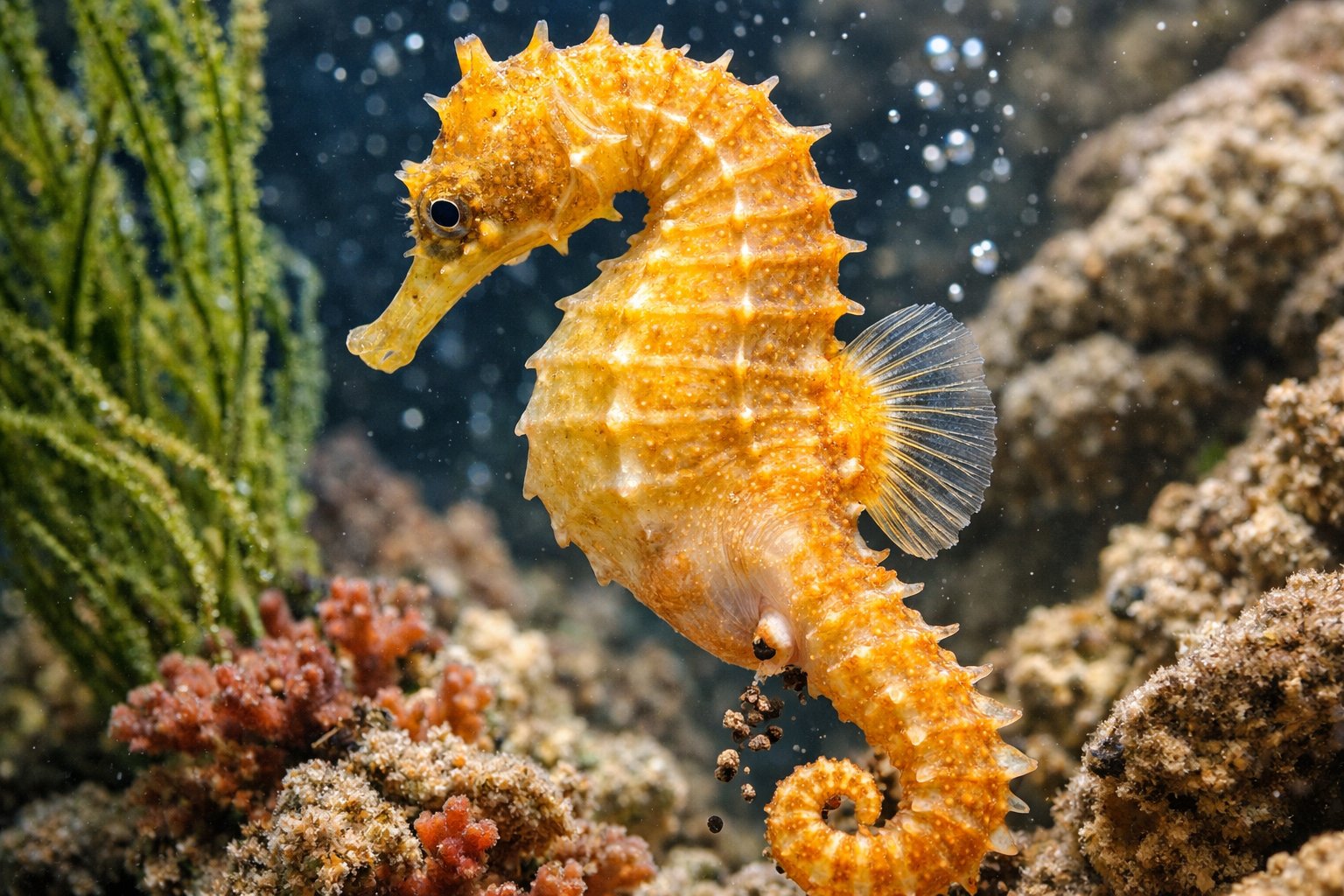
Seahorses have some pretty unique body parts that affect how they eat, move, and get rid of waste. Their bodies are covered in bony rings. They use a tubular snout to suck up prey, and the males carry eggs in a brood pouch.
Digestive System and Intestinal Waste
Seahorses don’t have a real stomach. Food goes straight from their snout into a short gut and then into the intestines.
Without a stomach, digestion happens quickly and constantly. They have to eat a lot of tiny crustaceans every day just to keep up.
Their intestines do both digestion and absorption. Waste from digestion moves into the back part of the intestine and then out through the cloaca.
This setup means they produce frequent, small amounts of feces instead of big, occasional ones.
Some species, like Hippocampus hippocampus and Hippocampus kuda, have different gut lengths and feeding habits. Pygmy seahorses and pipefish, which are related, also need to eat all the time to get enough energy.
Body Features Influencing Excretion
Bony plates under the skin form rigid rings along the body. These plates keep the body from expanding, so seahorses can’t gulp down big meals.
That restriction means they produce small, regular amounts of waste.
Their prehensile tails let them anchor to seagrass while they feed, which saves energy and helps with steady digestion. Pectoral and dorsal fins control their slow movements.
Low activity means their metabolism stays pretty even, so they excrete waste at a steady pace.
Chromatophores in the skin help them blend in, but don’t really affect waste.
Gills near the head handle gas exchange. Kidneys concentrate nitrogenous waste into urine, which then passes to the cloaca.
Even male seahorses with brood pouches use the same route for excretion, though the pouch might change the water chemistry around developing embryos.
Waste Elimination in Different Seahorse Species
Pygmy seahorses, which are on the smaller side, drop tiny, frequent waste pellets. Their feed-and-digest cycle moves pretty fast.
On the other hand, larger species like the spiny seahorse and yellow seahorse have a bit more going on inside—longer intestines and a slower pace. You’ll probably notice their fecal pellets less often, but they’re still small.
Short-snouted seahorses and Hippocampus guttulatus go after different prey sizes. That changes up both the size and look of their waste.
Seadragons and pipefish, which are basically cousins, act similarly. Their tubular snouts and ringed bodies seem to set the rules for how they get rid of waste.
If you’ve ever watched a captive seahorse, you might spot steady, small feces. Sometimes you’ll catch cloudy water from urine or tiny particles.
Honestly, those signs usually just show off their unusual anatomy—think dorsal and pectoral fins, bony plates, and a specialized gut. Most of the time, it’s not a sign of illness.


