
Rats have some surprisingly clever ways to communicate. They rely on sounds, body language, and even smell to get their messages across.
Honestly, the wildest part is that rats “talk” through high-pitched noises we can’t hear, subtle body moves, and scent signals that reveal who’s in charge or how they’re feeling.
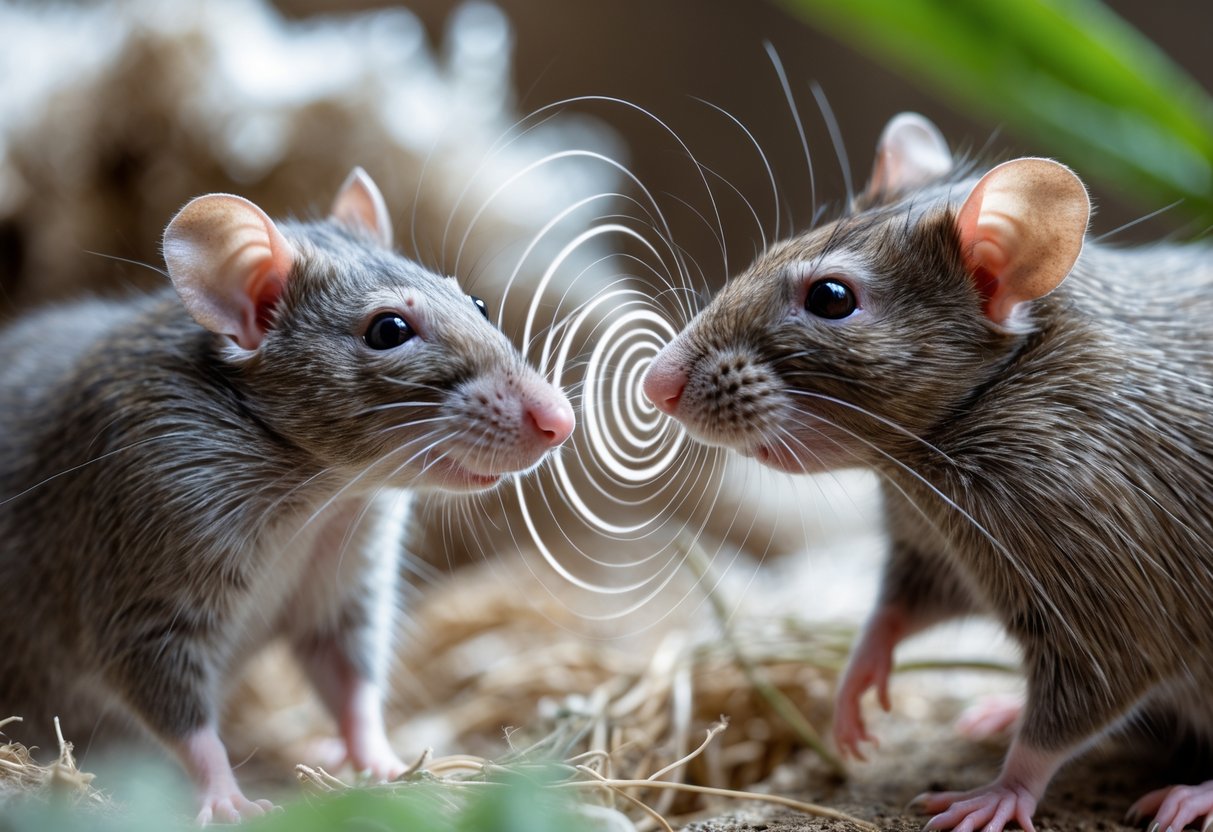
Take a moment to watch your rats. You’ll probably catch them playfighting, grooming, or even wagging their tails.
Each action means something specific. They use these signals to keep the peace or settle arguments without getting too rough.
Sometimes you’ll see them marking each other or the cage with scent. That’s their way of saying who belongs where.
If you figure out how rats communicate, you can connect with them so much better. It’s almost like cracking a code—every sound or gesture tells you a little story about their mood or relationships.
Curious about what your rats are really saying? Let’s dig in.
Fundamental Ways Rats Communicate
Rats have several pretty clear ways to send messages. You’ll see them using body movements, making sounds, and sharing chemical signals that only other rats pick up.
Each method helps them out in different situations—finding friends, sharing warnings, or just showing how they feel.
Body Language and Social Behaviors
You can learn a lot just by watching a rat’s body. They use posture, gestures, and their faces to “talk.”
For example, a rat might raise its ears or shift its whiskers to show curiosity or maybe a little caution.
Rats rely on touch too, especially when they meet face-to-face. Whisker twitches and gentle nudges help them figure each other out and build trust.
If a rat feels stressed or scared, it’ll often shrink down or freeze up. These little signals help other rats know how to respond.
Sometimes, you’ll spot emotions in their faces. Rats might squint or flatten their ears when they’re in pain or under stress.
These small signs matter—they help rats bond and avoid fights.
Vocalizations and Sound Signals
Rats don’t exactly “talk,” but they do make plenty of sounds—just not ones we always hear. They use ultrasonic vocalizations, which are way too high-pitched for us.
These noises let them call to friends, warn each other about danger, or even show happiness.
Young rats chirp softly when they want their mom’s attention. Adults have their own set of calls for playtime or courtship.
These quick vocal signals let rats communicate without touching, which is handy in the dark.
You might catch a rat squeaking or squealing if it’s stressed. Those sounds can warn others or just say, “Hey, I’m not happy!”
Tuning into these noises gives you a better sense of what’s really going on between your rats.
Communication Through Pheromones
Rats use chemicals called pheromones to send some of their most important messages. They release these through urine, skin, and special glands.
These scents share info about who they are, if they’re ready to mate, or where they stand in the group.
Rats have a special vomeronasal organ that picks up on all these scents. It helps them read chemical messages even if nobody’s making a sound or moving.
One sniff, and a rat can figure out if another rat is a friend or a threat—just from the smell of its urine.
Pheromones also help them mark territory and attract mates. The scent changes with mood or health, so other rats get a sense of how someone’s doing.
Using pheromones lets rats have a private, silent conversation. When you mix this with body language and sound, rat communication gets pretty complex.
If you want to know more, check out this article on how rats communicate.
Understanding Pheromones and Chemical Communication
Rats use chemical signals to shape how they interact with each other. These signals help them find mates, mark territory, warn others, and sort out social ranks.
If you’re trying to manage rat behavior or deal with infestations, understanding these details comes in handy.
Types of Pheromones in Rats
Rats release different pheromones for different reasons. Sex pheromones attract mates and show if they’re ready to breed.
Territorial pheromones let other rats know to keep out. Alarm pheromones warn the group about danger and trigger quick reactions.
You’ll usually find these pheromones in urine, feces, or special glands. They can also reveal who’s in charge, which changes how rats act around each other.
If you know about these types, you can better understand why rats do what they do—and maybe even keep them away if you need to.
Role of the Vomeronasal Organ
The vomeronasal organ (VNO) plays a huge role in how rats pick up on chemical messages. It’s separate from their regular nose and is tuned in to pheromones, especially in things like urine.
When pheromones reach the VNO, signals shoot straight to brain areas that control hormones and instincts. Rats react fast to these messages—no thinking required.
For example, a mother rat smells special pheromones from her pups through the VNO, and that helps her care for them just right.
Chemical Communication in Rodent Social Structure
Chemical communication really shapes how rats organize themselves. Pheromones play a big role in setting up dominance and cutting down on fights with obvious scent markings.
Rats mark territory and signal their rank by using urine and gland secretions. When two unfamiliar rats cross paths, these chemical cues can spark aggression or, sometimes, submission.
If you mess with these signals, you can actually change how rat communities work. That’s why people sometimes use this trick for rat removal or control.
Keeping things clean—but not totally scent-free—matters. Rats lean heavily on chemical communication to feel secure in their group, so scrubbing away every trace can actually make them more aggressive.


