
You might assume seahorses always mate for life, but honestly, it’s a bit more complicated. Some species form strong pair bonds and stick with the same partner for several breeding seasons.
Others? They’ll switch things up, sometimes pairing just for a single season. Many seahorse species do show seasonal or long-term monogamy, but the idea that all seahorses mate for life just isn’t accurate.
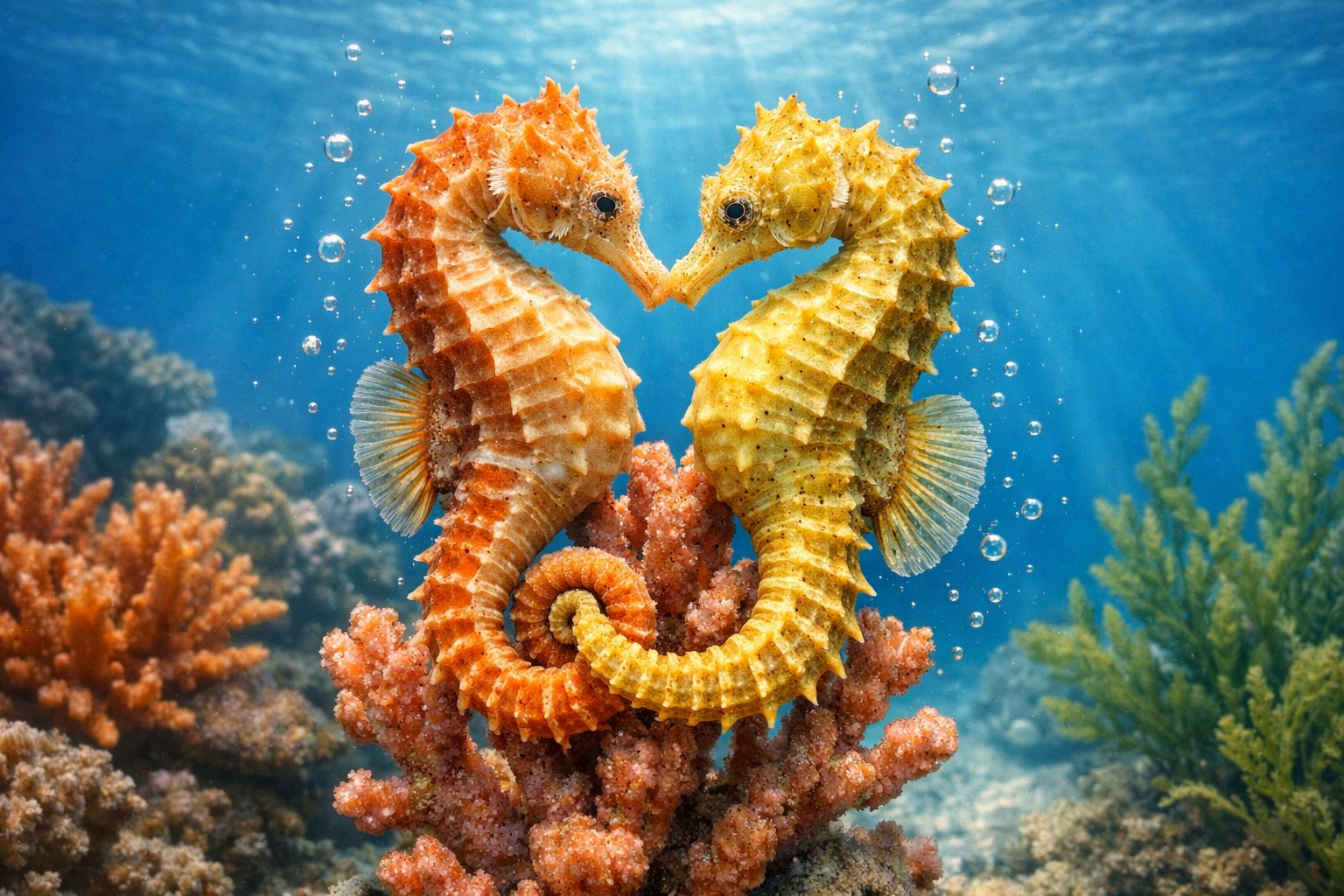
Why do some pairs stay loyal while others don’t? It often comes down to daily greeting dances, the species, and even the environment.
There’s more to their romance than meets the eye, and honestly, it’s pretty fascinating.
If you’re curious, stick around. We’ll look at their courtship, the whole male pregnancy thing, and how changing habitats affect whether seahorses stay together or move on.
Seahorse Partnerships and Mating for Life

Seahorse pair bonds depend a lot on the species and what they need to reproduce. Some partners meet up daily for courtship.
Other pairs split when conditions shift. Males actually carry the eggs until the babies are born.
What Science Says About Seahorse Monogamy
Researchers have found that many seahorse species form repeat pair bonds, especially during breeding. For example, lined seahorses might pair up for days or even months, performing those quirky courtship dances every morning.
Genetic studies suggest true lifelong, exclusive mating is actually pretty rare in the Hippocampus genus. Fieldwork sometimes misses quick partner switches because seahorses hide and don’t live close together.
Lab and tagging studies make things clearer: some species do show high partner loyalty when mates are available and the habitat feels stable. So, sweeping claims like “all seahorses mate for life” don’t really line up with what scientists see.
Factors That Influence Pair Bonding
A few key things affect whether seahorse pairs stay together. Species plays a big role—some types are just more likely to stick with the same mate.
If mates are hard to find, you’ll usually see stronger bonds. Habitat matters too; when things get crowded or the environment gets damaged, bonds can break.
Timing is important. Pairs that sync up with daily greetings can mate again faster and raise more young in a season.
Since males carry the eggs, their health and pouch size also shape how often a pair breeds. All these factors mix together, so a safe, stable environment usually means longer partnerships.
Difference Between Social and Genetic Monogamy
Social monogamy means you’ll see the same male and female hanging out and breeding together. Many seahorse populations do this: they court daily, mate together, and show off as a pair.
Genetic monogamy is stricter—it means all the babies come from just that one partner. Genetic tests show this is less common.
Some wild seahorse babies actually have different dads or moms, especially if a partner switch happens or there’s extra mating. Social bonds help seahorses coordinate and breed more efficiently, but true genetic monogamy depends on the species and how stable things are in their environment.
Unique Seahorse Mating Behaviors and Daily Life

Seahorses have some pretty unique ways of finding mates, breeding, and raising young. Let’s get into their dances, the wild male pregnancy, and why pairs sometimes break up.
Courtship Rituals and Daily Greeting Dances
Seahorse courtship almost looks like a slow, gentle dance. Partners swim side by side, change colors, and even lock tails.
These displays help them figure out if their mate is healthy and ready to breed.
A lot of species do a daily greeting dance before spawning. The ritual might include rising up together, flaring fins, or swimming in sync for a bit.
Researchers watching Hippocampus whitei saw these daily greetings make the bond stronger and help with timing for egg transfer. If you ever keep seahorses, expect these little rituals—they make courtship quicker and easier.
Courtship also has a practical side. The female checks the male’s brood pouch, and the male puffs it up to show he’s in good shape.
Simple, repeatable signals help both partners know when it’s time for eggs to move.
Male Pregnancy and Shared Parenting Roles
Male seahorses actually carry the fertilized eggs in a pouch. During a quick transfer, the female puts the eggs right into the male’s pouch.
Inside, the male provides oxygen and a few nutrients as the embryos grow.
Gestation time depends on the species and water temperature—usually just a few weeks. When the fry are ready, the male contracts and releases fully formed baby seahorses.
Males can mate again pretty quickly after giving birth, which changes how stable a pair stays in one breeding season.
If you’re keeping seahorses, you’ll want to watch water quality and temperature closely. Both partners need good nutrition before mating.
The male’s pouch health and the female’s egg quality really affect how many babies survive.
When Partnerships End: Changing Mates
Pairs might stick together for a season, maybe a few, or sometimes longer. Still, partnerships end for pretty obvious reasons—like if a mate dies, gets sick, or if something changes in their environment.
When one mate disappears, the other usually goes out and looks for someone new. Most seahorses don’t just stay alone.
You’ll notice partner swaps happen more where seahorses live farther apart or when their habitats shrink. In aquariums, crowding or bad living conditions can split them up too.
If you keep seahorses, try matching them by size and health. That really helps avoid fights and keeps pairs from breaking up.
Some species seem loyal, but others? Not so much. It all depends on their nature and what’s happening around them.
Honestly, it’s best to watch their behavior and not just assume they’ll stay together forever.


