
You’ve probably heard that seahorses are lifelong romantics, right? Well, the reality’s a bit messier. Some seahorse species really do form strong pair bonds for a whole breeding season, maybe even longer, but others just don’t stick with one partner if conditions change.
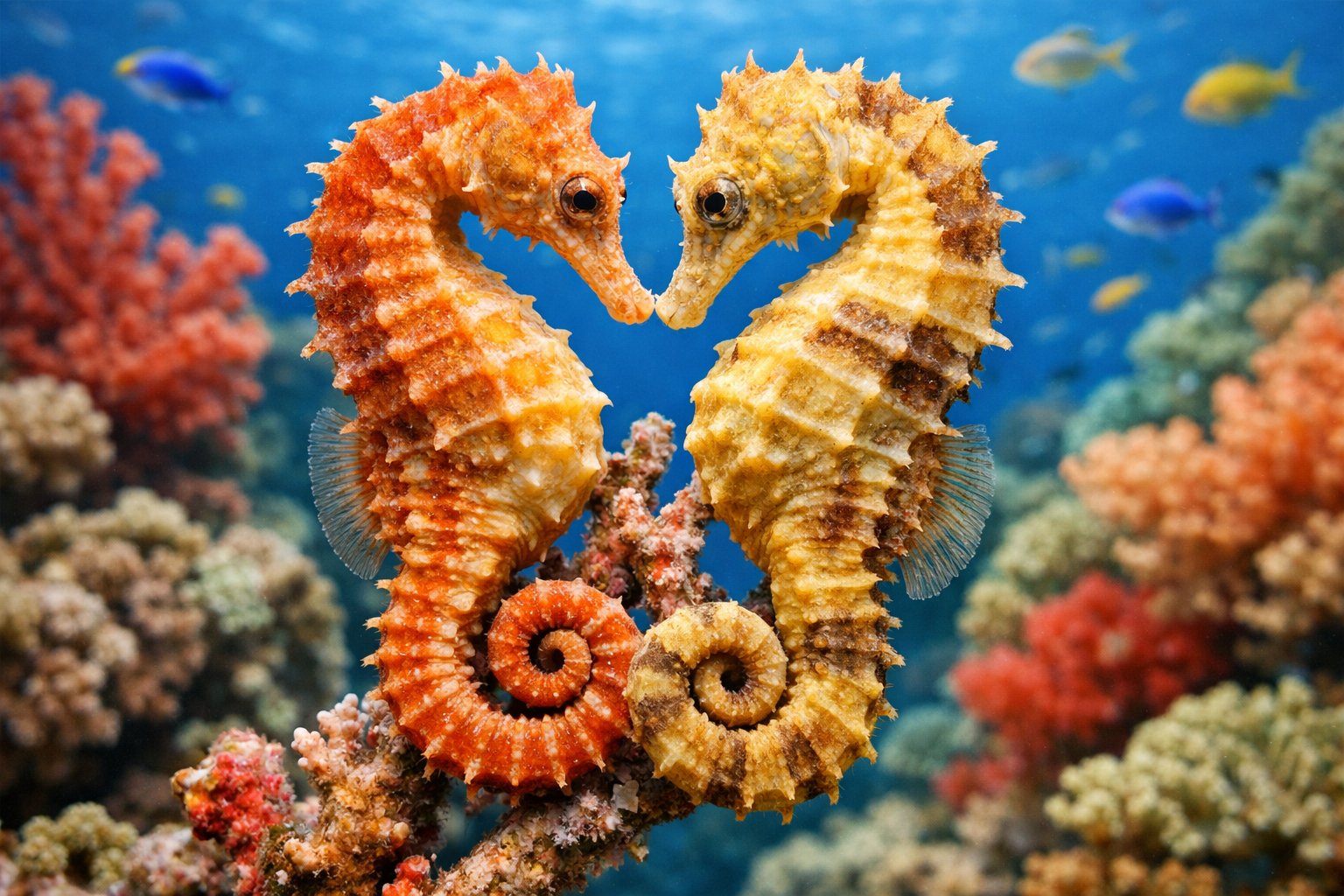
Different seahorse species behave in their own quirky ways. Their mating dances and daily rituals? Those help keep pairs connected, especially when swimming around to find a mate isn’t easy.
Curious about which species stick together, and what their bizarre reproduction looks like? Yeah, the whole “male pregnancy” thing and those daily greeting dances—let’s get into how seahorse romance really plays out underwater.
Seahorse Mating Habits and Pair Bonds

Seahorses often hang out with the same partner again and again. They show off these close, repeated interactions that look a lot like loyalty.
Let’s look at how long these bonds actually last, what can shake things up, and which species usually form lasting pairs.
Do Seahorses Mate for Life or One Season?
A lot of seahorse species pick a favorite partner for the breeding season. Some even stick together for more than one season.
You’ll spot daily greeting dances, color shifts, and tails twisting together. These rituals help partners sync up for egg transfer and timing.
When pairs get this in sync, they boost their chances of successful fertilization and might even spawn a few times in one season.
Field studies say it really depends on the species and where they live. In stable places with little mate turnover, partners might stay together for years.
But in areas with lots of fishing or environmental changes, pairs often break up—sometimes because one partner disappears or has to move. So, “mate for life” fits some species and situations, but it’s not a rule for every seahorse.
Factors Influencing Monogamy in Seahorses
Three main things affect whether seahorses pair up: how stable their habitat is, their life history, and pressure from predators or fishing. In thick seagrass beds, seahorses can find the same partner every day, which helps them mate again and again.
Short lifespans and fast breeding cycles also push pairs to bond quickly and make the most of their time. Male pregnancy adds another twist.
Since the male carries the eggs, partners need to coordinate closely. Daily greetings let them check if their timing still matches.
When humans mess with their habitats—think trawling or losing seagrass—seahorses have a harder time finding or keeping mates. Protecting their homes really does help keep these social routines going.
Species That Commonly Form Lifelong Pairs
You’ll see strong pair bonds more often in species like White’s seahorse (Hippocampus whitei), some lined seahorses, and certain short-snouted populations. Researchers have spotted long-term bonds and daily greetings, especially where populations aren’t disturbed.
Other seahorse species? They’re more relaxed about pairing and might switch mates each season. If you read a field study, check which species and habitat it covers—the details matter for understanding if long-term pairing actually happens.
Unique Reproduction and Daily Rituals

Seahorses form close pairs, do daily greeting dances, and—yep—the male gets pregnant. Let’s look at how they bond, how males carry eggs, where they live, and why threats like overfishing make life tough.
Seahorse Courtship Dances and Bond Reinforcement
Most mornings, pairs go through a short but pretty adorable ritual. They’ll change color, wrap their tails together, and swim upright in a synchronized little dance.
These daily greetings help partners stay on the same schedule for reproduction. The dance cuts down on time spent searching for a mate every season.
For species that stick together, like some thorny and White’s seahorses, these displays keep the relationship strong and lower the risk of missing out on breeding. Project Seahorse has watched these behaviors in the wild and found them crucial for timing.
Male Pregnancy and the Brood Pouch
Here’s the wild part: males, not females, carry the developing babies. The female passes her eggs into his pouch, and he fertilizes and protects them.
Inside the pouch, the male controls oxygen, nutrients, and even salinity for the embryos. Depending on the species and water temperature, gestation lasts about two to six weeks.
When it’s time, the male contracts his pouch and releases a bunch of tiny, fully formed seahorses. This role swap means females can make more eggs while males focus on brooding, boosting reproductive output.
Seahorse Life in Their Natural Habitat
Seahorses live where they can anchor their tails—think seagrass beds, mangroves, and coral reefs in warm or temperate waters. Their prehensile tails help them cling to plants and avoid getting swept away.
They hide more than they swim, thanks to their slow speed and great camouflage. Usually, you’ll find them scattered in low numbers across seagrass or coral patches.
Finding a mate isn’t easy with so few neighbors, which makes pair bonds even more valuable. The quality of their habitat—how thick the seagrass is, how much coral there is, and how clear the water stays—directly shapes their chances to feed, court, and reproduce.
Monogamy, Conservation, and Environmental Threats
Monogamy lets some species breed more efficiently. Still, it brings a vulnerability that’s honestly hard to ignore.
Overfishing chips away at seahorse populations. Bycatch from trawls and habitat loss caused by coastal development break up pairs and scatter them.
People looking for curios or ingredients for traditional medicine put even more pressure on seahorses. The demand just doesn’t seem to let up.
Groups like Project Seahorse step in and push for protection. They focus on fishing restrictions, protecting seagrass beds, and keeping an eye on trade.
If you want to help, try to avoid products that harm seagrass. Supporting policies that limit destructive fishing really does make a difference.


