
Ever find yourself drawn to seahorses? They’ve got this odd charm, don’t they? Maybe you’re wondering if they want attention like a dog or a cat would.
Seahorses aren’t affectionate like mammals, but they do settle into routines and start acting predictably around people. If you get to know them, they’re honestly rewarding to watch—just don’t expect cuddles.
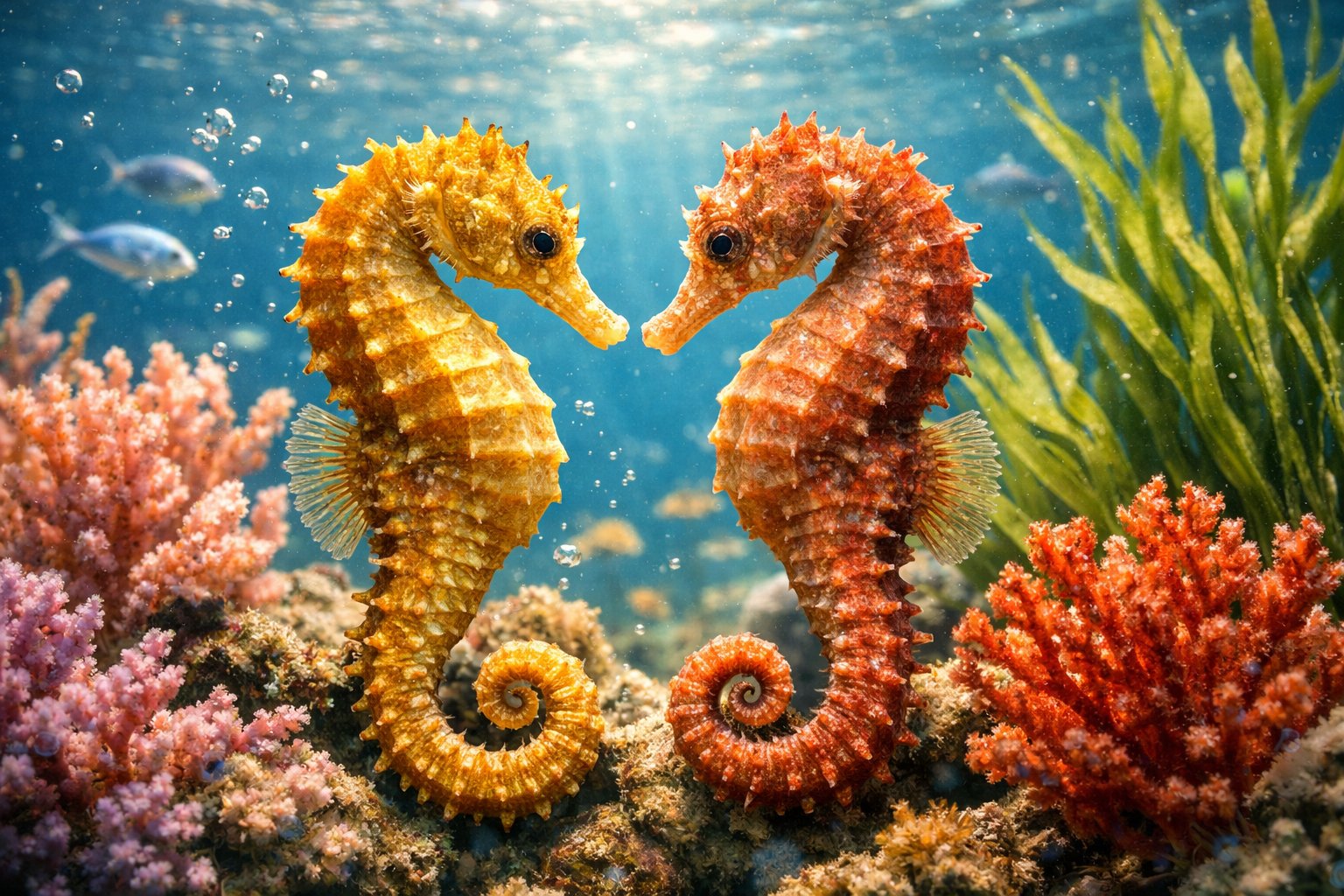
Let’s talk about what seahorse “friendliness” really looks like. You’ll pick up on their body language, feeding quirks, and what they need in a tank. That way, you’ll know when they’re actually doing well.
Are Sea Horses Friendly?

Seahorses can act calm and even a little curious sometimes. How they behave really depends on their species and how they grew up.
Seahorse Behavior and Social Traits
Seahorses swim slowly and kind of deliberately. They’d rather hitch their tails onto something—gorgonians, fake plants, whatever’s handy—than dart around.
You’ll see them gripping tight and gently bobbing while they watch for tiny food drifting by. Most of the time, they hang out alone or in small groups, not big schools.
Like, Hippocampus erectus might pair up or gather loosely during breeding, but dwarf species such as Hippocampus zosterae stick together in eelgrass beds.
They don’t chase or hunt like other fish. Instead, they creep up or wait for live or frozen mysis and copepods.
If you keep seahorses, give them tall tanks and plenty of hitching spots so they can rest and act naturally.
Interaction With Humans
You can train some seahorses—especially captive-bred ones—to eat from tongs or even your hand. They pick up on routines, believe it or not.
They’ll notice when it’s feeding time and sometimes swim right up to greet you.
Try not to handle them unless you have to. Their skin is delicate and those bony plates don’t protect them from rough hands or dirty nets.
Always use soft, wet gloves or a container if you need to move them. Captive-bred Hippocampus erectus usually get used to people more easily than wild-caught seahorses.
Dwarf seahorses like H. zosterae get stressed out by too much handling or busy tanks.
Bonding and Recognition
You won’t get the same bond you’d have with a dog, but seahorses do start to recognize routines and the people who feed them. Over time, they might swim over or focus on your feeding tools.
Male seahorses carrying young in their brood pouch—pretty common for H. erectus—sometimes do these little greeting dances with a tank mate or get more active at feeding time.
Bonding really comes down to consistency. Feed your captive-bred seahorses at the same time with the same food, and keep the water steady—they’ll get more confident.
Wild-caught seahorses tend to stay wary. Shipping and disease stress them out, so they’re less likely to recognize you or take frozen food.
Species Differences in Temperament
Different seahorse species act pretty differently. Hippocampus erectus (the lined seahorse) handles aquarium life well and seems hardier.
You can keep them in pairs or small groups and expect them to eat reliably if you care for them right.
Dwarf species like Hippocampus zosterae are tiny and fragile. They need thickly planted tanks and very small live foods.
They can get nervous if tankmates move too quickly.
Tropical species such as H. reidi want slightly warmer water and react more to water quality changes. Always go for captive-bred seahorses if you can.
Match the tank size to the species: H. erectus likes 30–50+ gallon tanks for pairs, while dwarfs need smaller, lushly planted setups with gentle flow.
If you want more details, check out a solid seahorse care guide like this one: how to care for pet seahorses.
Keeping Seahorses Happy and Healthy

To keep seahorses happy, you need steady water, gentle flow, good food, and safe tankmates. The small daily routines and right equipment really matter.
Choosing Captive-Bred Seahorses
Pick tank-bred seahorses, not wild-caught ones. Captive-bred seahorses get used to aquarium life, eat frozen mysis shrimp, and usually have fewer parasites.
Look for sellers who share breeding info and raise fry—it cuts down on disease and boosts survival.
Ask the breeder about age, size, and species—lined (Hippocampus erectus) and some captive-reared reidi are pretty common.
Request health checks and a short quarantine history. If a seahorse looks skinny, has ragged fins, or acts sluggish, skip it.
Transport them in oxygenated bags and acclimate them slowly to your tank’s water.
Essential Aquarium Setup and Water Quality
Use a tall tank—at least 30 gallons for a pair, but bigger is always better. Set up low to moderate flow with sponge filters or diffused powerheads so your seahorses don’t have to fight strong currents.
A protein skimmer removes dissolved organics, and live rock with macroalgae helps with filtration.
Aim for these water parameters: temperature 72–76°F, salinity 1.020–1.025 specific gravity, pH 8.1–8.4, and zero ammonia/nitrite.
Do 10–20% water changes every week and test your water often.
Add hitching posts—macroalgae, soft corals, PVC coral replicas, or aquarium-safe ropes—so your seahorses can rest and anchor themselves.
Feeding and Nutrition Tips
Feed mostly enriched frozen mysis shrimp two or three times a day. Mysis shrimp should make up most of their diet.
Offer live brine shrimp or copepods as treats or just for fun. Use baby brine shrimp only for very small dwarfs or fry.
Watch each seahorse at feeding time so slower eaters don’t miss out.
Enrich frozen foods with vitamins and thaw them completely before feeding. Scoop out uneaten food quickly to keep the water clean.
For breeding or raising fry, provide tiny live prey like copepods and feed often. Breeders can help with tips on live cultures and dosing.
Preventing Stress and Health Issues
Quarantine any new arrivals in a separate tank for at least two weeks. That way, you can spot parasites, bacterial infections, or fungal problems before they spread.
Keep your water chemistry steady. Rapid changes stress seahorses and can even lead to gas bubble disease (GBD) or other illnesses. Honestly, it’s surprising how quickly things can go wrong if you’re not careful.
Choose tankmates wisely. Aggressive fish that chase or outcompete your seahorses for food will only cause trouble.
Stay alert for signs of disease—like loss of appetite, open sores, cottony growths, or bloating. If you see these, act quickly.
It’s smart to keep a basic first-aid kit on hand: freshwater dip supplies, a few vet-recommended antibiotics, and salt mixes for dips. When you need to treat bacterial infections or parasites, reach out to an experienced seahorse breeder or a marine vet. Their advice can really make a difference and help you avoid mistakes that might harm your tank or your seahorses.


