
You’ve probably heard stories about rats acting surprisingly fierce, but do rats actually eat cats? The short answer: no—rats don’t eat cats.
Rats can get aggressive if they feel cornered or threatened, but they aren’t predators of cats and won’t go after them for food.
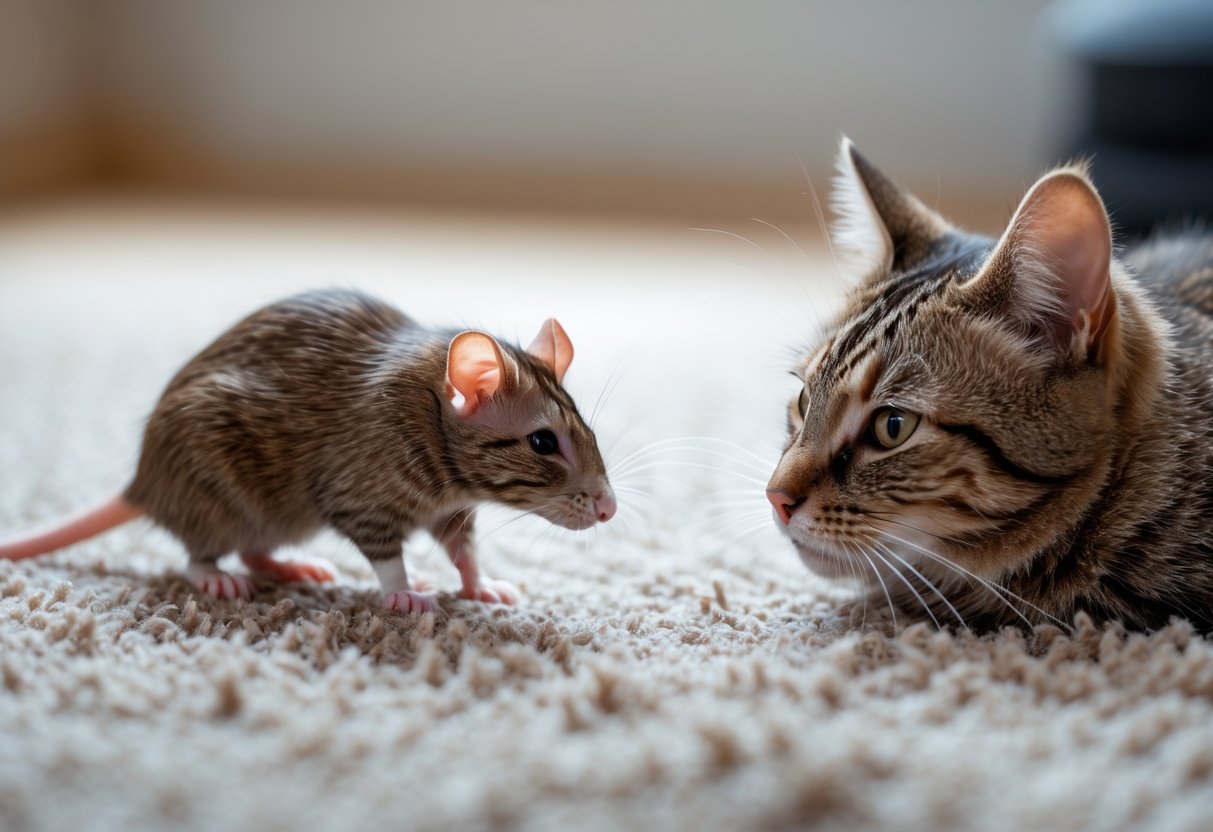
Sometimes, rats might bite or scratch if they’re scared or trapped, which can cause issues for pets. If you understand how rats behave around cats, you’ll have an easier time keeping your furry buddy safe and avoiding surprises.
Let’s dig into this unusual relationship and what you should watch for.
Can Rats Eat Cats?
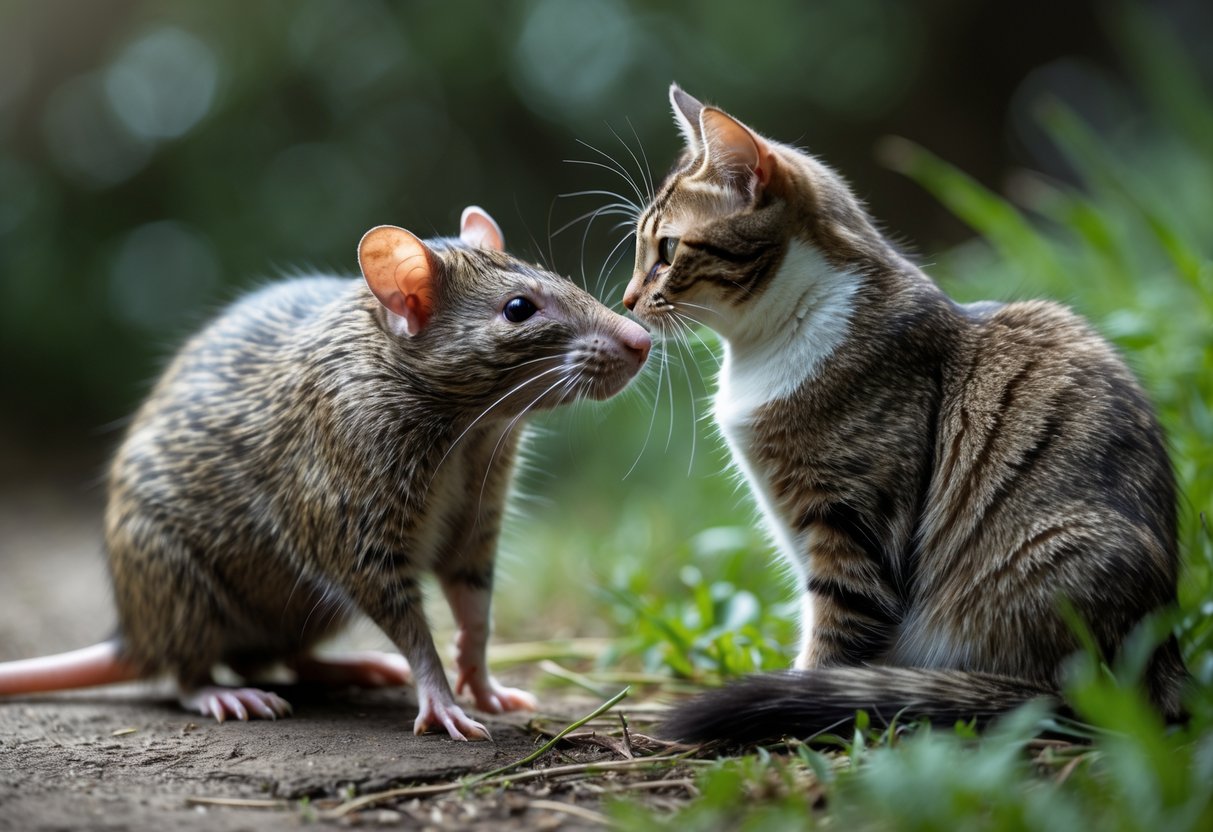
Rats are way smaller than cats, so attacking or eating a cat is pretty much out of the question. Sure, rats might act tough in some situations, but they don’t hunt cats.
Rats usually run away or defend themselves if they feel threatened.
Rat and Cat Size Differences
Cats are just a lot bigger and stronger than rats. Most cats weigh between 8 and 12 pounds, while a rat only weighs a few ounces.
This size gap means rats can’t really overpower a cat. Cats have sharp claws and teeth, which gives them a serious advantage.
Rats would rather avoid a cat than take it on. Size and strength matter a lot here.
Cats are hunters by nature, and rats are usually on the menu, not the other way around.
Rare Instances of Aggression
Rats almost never attack cats. But if a group of rats feels trapped or desperate, they might get aggressive to protect themselves.
In some rare cases, a pack of rats could overwhelm a tiny kitten or a very young cat. That’s not common, though, and usually only happens if the rats are starving or can’t escape.
When rats act aggressive, it’s about defending themselves, not hunting. You really don’t need to worry about rats trying to eat your cat.
Rats as Prey, Not Predators
Cats hunt rats, not the other way around. Rats are prey animals, so predators like cats usually go after them.
If you’re wondering who eats whom, cats are the hunters here and rats are the hunted. Rats will always try to escape, not chase down a cat.
That’s why the idea of rats eating cats just doesn’t add up.
Why Your Cat Is More Likely to Eat Rats
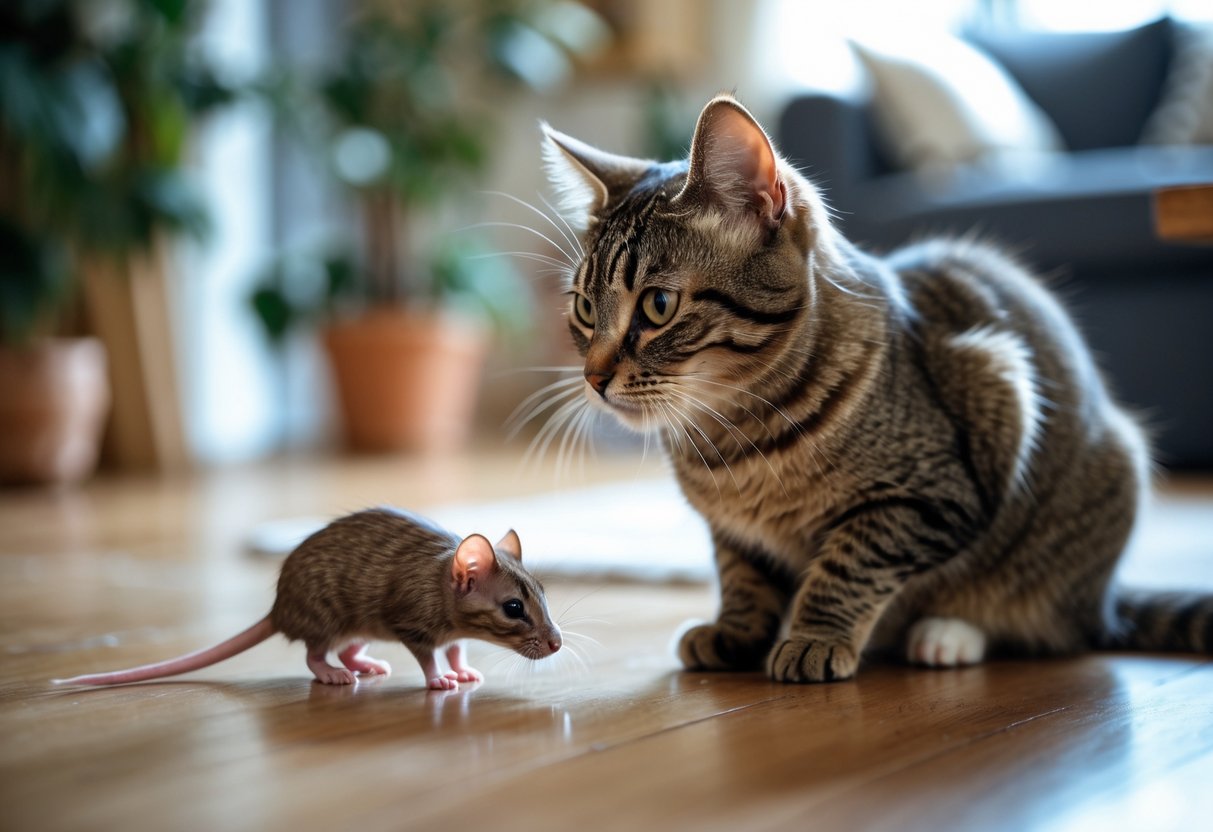
Your cat might hunt rats because those instincts run deep. Even if your cat’s well-fed at home, they might still chase and sometimes eat rats.
Knowing the differences between domestic and feral cats, plus the risks, can help you look after your pet.
Natural Hunting Instincts of Cats
Cats are born hunters, built to find and catch small animals like rats. Their sharp senses—especially sight and hearing—pick up on the quick, noisy movements rats make.
Hunting gives cats stimulation and keeps their skills sharp, even if they don’t always eat what they catch.
Even if your cat has plenty of food, that urge to hunt is still there. Hunting and eating rodents comes from their wild ancestors, and that instinct sticks around.
So it’s not weird if your cat kills or eats a rat they find.
Differences Between Domestic and Feral Cats
Your pet cat usually hunts rats for fun or practice, but most likely won’t eat them since they get regular meals. Feral cats, though, need to hunt rats for food and often eat what they catch to survive.
Feral cats deal with more dangers from rats, like parasites (roundworms, tapeworms) and diseases such as toxoplasmosis. Domestic cats aren’t as likely to have these issues if they don’t eat rats often.
Still, if your cat hunts outdoors, they can pick up these risks.
Risks Cats Face When Eating Rats
Rats can carry parasites like roundworms and tapeworms, which can harm your cat if they eat an infected rat. Rats might also have been exposed to rodenticides (rat poisons).
If your cat eats a poisoned rat, they could get secondary poisoning, which can be very serious.
Cats can get toxoplasmosis from rats, but it usually doesn’t bother them much. It can be dangerous for humans, especially pregnant women, though.
If your cat hunts rats, it’s a good idea to talk to your vet about regular check-ups and worm treatments to keep them healthy.
Effectiveness in Rat Population Control
Cats definitely help control local rat populations, especially when feral cats get hungry and start hunting more aggressively.
Their presence alone can scare rats off, making neighborhoods a little less inviting for rodents.
But let’s be honest, domestic cats aren’t always up for the job—they might catch a rat, sure, but they don’t always kill or eat them.
If you’re thinking about pest control, don’t just count on cats.
When you combine your cat’s natural instincts with other pest control methods, you’ll probably see better results in keeping rats away from your home.


