
Raccoons are known for their adaptability and varied diet. As opportunistic omnivores, they eat a wide range of foods depending on what is available. They generally avoid rotting meat unless they have no other options. This behavior helps them stay healthy and avoid potential sickness.
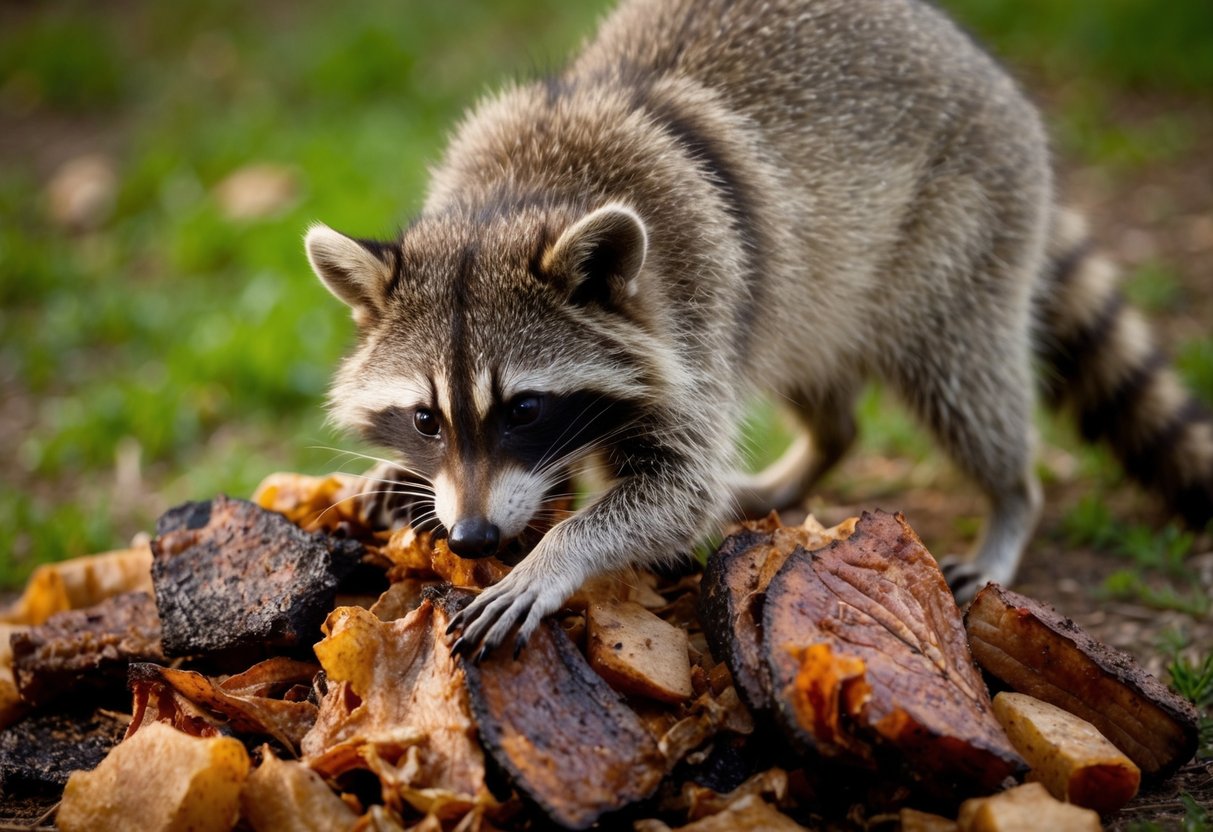
You might find raccoons rummaging through your trash can, but what exactly are they looking for? Understanding their eating habits can shed light on why these clever creatures seem to thrive in urban areas.
In this article, we’ll explore the raccoon diet and answer the burning question: do raccoons eat rotting meat? By the end, you’ll have a clearer picture of what these fascinating animals choose to eat and why their scavenging nature is so important for their survival.
Raccoon Dietary Habits

Raccoons have unique dietary habits that allow them to thrive in various environments. Their roles as omnivores and scavengers help them adapt and find food despite changing conditions.
Omnivorous Nature and Dietary Flexibility
Raccoons are true omnivores, which means they eat both plants and animals. This flexibility in their diet is essential for survival. You’ll find them searching for fruits, vegetables, nuts, and insects in the wild.
Their omnivorous nature allows them to adapt based on the seasons and what food is available. They require a variety of nutrients and protein to stay healthy. This adaptability helps them live in urban settings, where food sources might differ from those in natural habitats.
Common Foods in a Raccoon’s Diet
You might be surprised by the variety of food that raccoons eat. Their diet typically includes:
- Fruits: Apples, berries, and grapes are popular choices.
- Nuts: Acorns and walnuts provide healthy fats.
- Insects: Crickets and beetles are easy to find and tasty.
- Small animals: Frogs, mice, and even eggs are fair game.
- Human food scraps: Raccoons often rummage through trash for leftovers.
This diverse diet helps them get the protein and nutrients needed for their activities. They can find something that satisfies their hunger in nearly any environment.
Scavenging Behavior and Opportunistic Feeding
Raccoons are known as opportunistic feeders. This means they often search for food wherever they can find it, including in parks, backyards, and even dumpsters. Their scavenging behavior is an important part of how they find food.
As scavengers, raccoons look for rotting meat and other decaying items when available. While this behavior might seem unusual, it plays a role in their ability to survive. Eating rotting meat helps raccoons access protein and nutrients that may be scarce otherwise.
This behavior shows just how versatile and adaptable raccoons are in their search for food. They are always ready to make the most of what they find, playing a key part in their ecosystem by helping to dispose of waste.
Specific Foods and Preferences
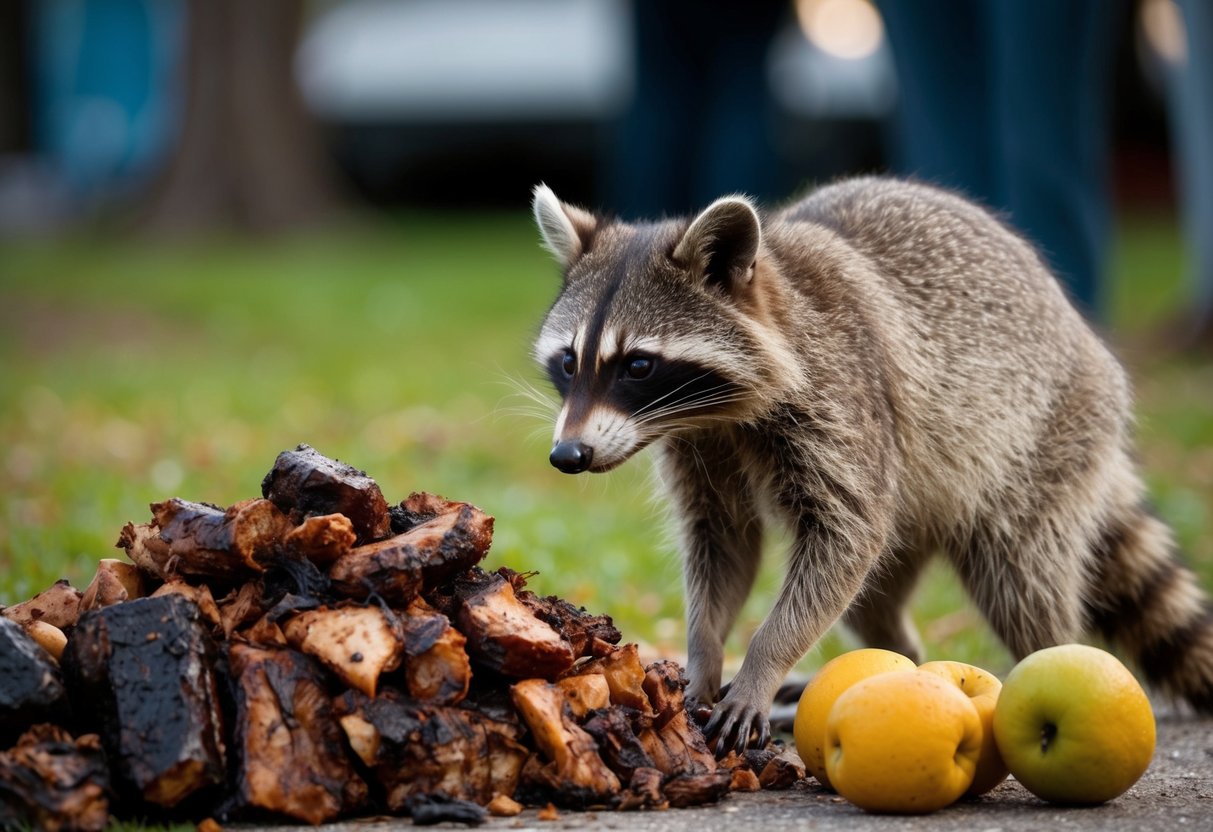
Raccoons are known for their diverse diets and unique food choices. Understanding what they eat can help you appreciate their behavior and avoid attracting them to your property.
Preference for Certain Proteins and Plants
Raccoons thrive on a mix of proteins and plant-based foods. They enjoy eating fish, which provides a good source of protein and healthy fats. Insects and frogs are also favorites, giving them a nutritious snack.
You will find that raccoons love nuts and berries too. They often forage for these food sources in parks or gardens. Raccoons also eat kitchen scraps like vegetables and fruits when they find them in trash cans or gardens. When you think of raccoons, consider their varied diet that includes tasty snacks such as eggs and small mammals like rodents.
The Role of Carrion and Dead Animals in Diet
Raccoons are opportunistic eaters, which means they often consume whatever they can find. They might scavenge for carrion or dead animals if other food is scarce. While they are not particularly fond of rotting meat, they will not hesitate to eat it in emergencies. This ability to adapt helps them survive in different environments.
In urban settings, raccoons can be seen rifling through garbage for meat scraps. They are particularly attracted to junk food and pet food left outside. Raccoons are clever and will take advantage of any easy meal, so understanding this behavior can help you keep them at bay.
Foods to Avoid and Raccoons
While raccoons are not picky eaters, some foods can be harmful to them. Common things like chocolate, onions, and garlic should never be offered. These foods can cause serious health issues for raccoons.
It’s also essential to keep in mind that while they enjoy cocoa, it can be toxic. Even some plant matter can upset their digestive systems. If you have pets, avoid leaving pet food outside since it can attract these curious creatures. Being aware of what raccoons should avoid can help you protect them and your property.
Raccoons in the Wild vs. Urban Environments
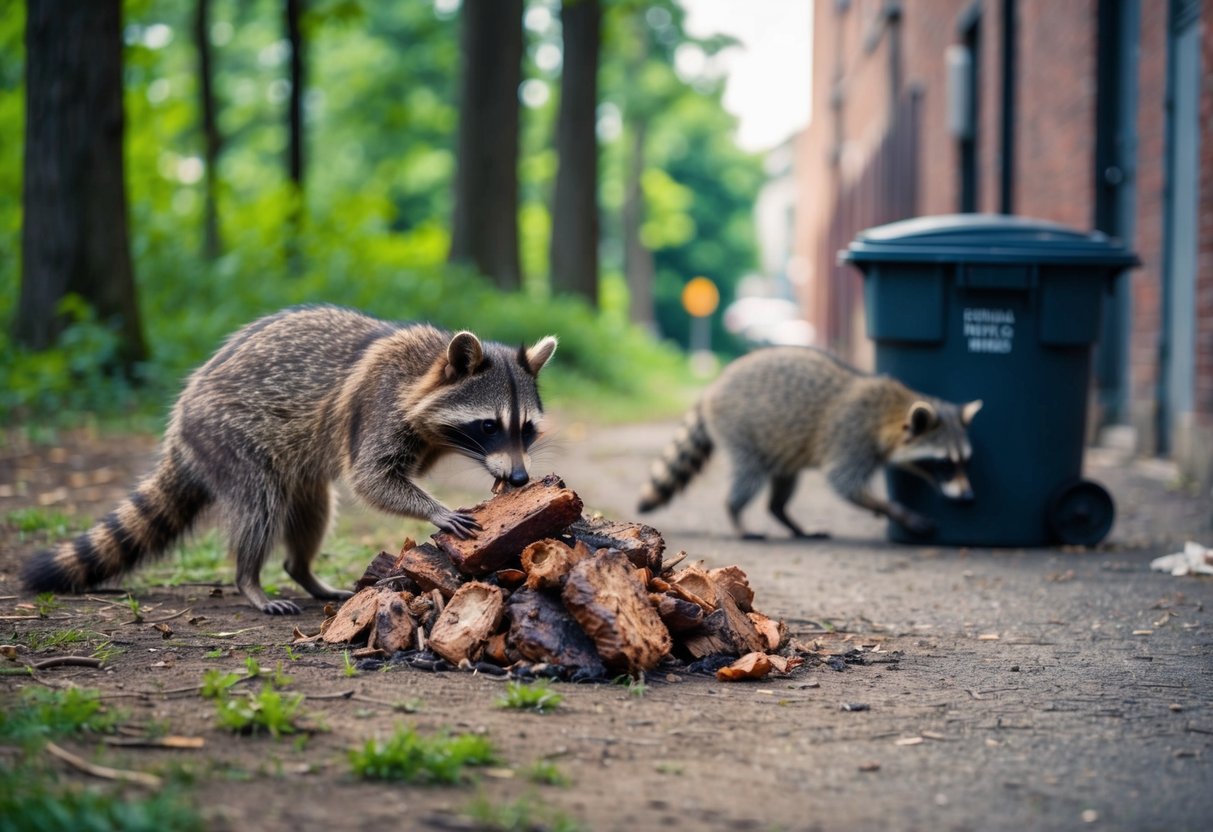
Raccoons are adaptable creatures that thrive in both wild and urban settings. Their ability to change behavior and habitat allows them to find food and shelter, but these environments come with different risks and challenges.
Adaptations to Different Habitats
In the wild, raccoons make dens in hollow trees, thickets, or abandoned burrows. They enjoy habitats near lakes, rivers, and marshes where they can find food. Wild raccoons often hunt for fish, turtles, and clams, using their clever paws to help them dig or grab their meals.
In urban areas, you will find masked bandits taking advantage of human resources. They adapt by scavenging through garbage cans, compost bins, and pet food left outside. Their nocturnal behavior means they’re most active at night, foraging for easily accessible food. This ability to thrive in diverse conditions shows their intelligence and adaptability.
Risks and Challenges in Various Locales
Wild raccoons face threats from predators like coyotes and large birds, such as crows. They also encounter natural challenges, such as finding clean water. Pathogens can be another concern. This is especially true if they eat spoiled meat or contaminated food.
Urban environments pose their own dangers. Car traffic is a significant risk for raccoons darting across streets. They may also be exposed to diseases like distemper or parasites from close contact with other animals. While urban raccoons may enjoy plentiful food, it does come with health risks that can affect their survival.


