
Ever noticed those horn-like bumps on a giraffe’s head? They’re called ossicones. People often wonder if only female giraffes have them, but that’s not quite right. Both male and female giraffes grow ossicones, though males often have thicker, balder bumps from fighting.

If you’re curious about why ossicones look different between the sexes, or how they form, you’re in the right place. There’s more to these bony bumps than meets the eye.
Do Only Female Giraffes Have Horns?
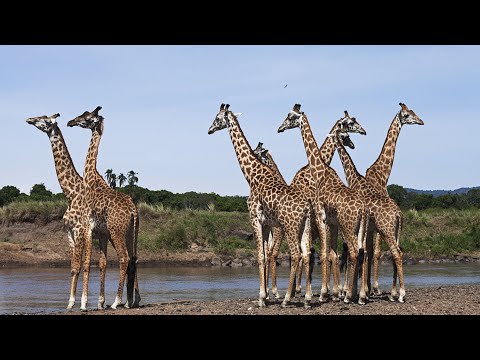
Giraffes don’t actually have true horns. Both males and females carry these bony bumps on their heads.
The shape, size, and hair on those bumps can tell you a lot about a giraffe’s age, sex, and even its behavior.
Ossicones vs. True Horns
Ossicones are those bony projections you see on a giraffe’s head. They start out as cartilage and later turn into bone, staying covered by skin and fur.
True horns, like on cows or antelopes, grow straight from the skull and usually have a hard keratin sheath. Giraffe ossicones begin as soft cartilage at birth and fuse to the skull as the animal gets older.
Both males and females have ossicones. So, asking if only females have horns kind of misses the point—these are ossicones, not true horns.
You’ll notice ossicones are usually rounded and covered in fur. In calves, they’re soft and lie flat at birth so they don’t hurt the mother.
As giraffes grow, the ossicones harden and become fixed bone.
Sexual Dimorphism: Differences Between Males and Females
You can spot some obvious differences between male and female ossicones if you look closely. Males tend to have thicker, more robust ossicones.
They lose the fur on top from all the necking fights—basically, swinging their heads and whacking each other. That leaves the tips bald and kind of scuffed up.
Females usually have thinner ossicones with a little tuft of hair at the top. Sometimes you’ll see extra small bumps behind the main pair, especially in males.
Using these clues, you can often tell a giraffe’s sex just by looking—no need for anything invasive.
Role of Ossicones in Giraffe Behavior
Ossicones add weight to the head and actually change how giraffes use their necks in social situations. Males use them for fighting—a behavior called “necking.”
The extra mass helps deliver harder hits when a male swings at a rival. You’ll often see scars or bald spots on males because of this.
Ossicones also matter for social signals. Their size and condition can hint at age or dominance.
Females mostly use theirs for display or to show what species they are, not for heavy fighting. So, ossicones shape both physical contests and social life among giraffes.
Giraffe Ossicones: Variation and Evolution

Ossicones come in all sorts of shapes and sizes, depending on species, sex, and age. They can change as giraffes grow or after a few fights.
Ossicones in Different Giraffe Species
Different giraffe species have their own ossicone quirks you can spot even from a distance. Northern and reticulated giraffes have paired parietal ossicones in both sexes, but males often add a thicker median bump right on the forehead.
Masai giraffe males usually have really robust, bald-topped ossicones—battle scars from heavy necking. Southern giraffes? Their ossicones tend to be smaller and less obvious in females.
Forest giraffes often have finer, hairier ossicones that keep their fur. Sex plays a role too—males show thicker, more worn tops because they use their ossicones as weapons.
Females keep thinner, hairier ossicones that don’t get worn down as much.
Number and Shape of Ossicones
Counting and checking the shape of ossicones can help you identify a giraffe and even guess its behavior. Most giraffes have one pair of parietal ossicones.
Some males get a central frontal ossicone, so you might spot three bumps in certain northern types. Shapes can go from blunt, rounded knobs (usually in older, battle-worn males) to sharper, tapered spikes.
Okapi males, which are close giraffe relatives, sport smaller, sharper ossicones.
Here’s a quick checklist:
- Pair only: common in most females and some males.
- Pair plus median: often seen in males, especially northern giraffes.
- Shape: blunt (think battle-worn males) vs. tapered (younger or okapi-like).
Ossicones in Extinct Relatives and Other Animals
Fossil giraffids and their relatives show a much wider variety than the species we see today.
Some extinct genera in Giraffidae, and even families like Climacoceratidae, actually had two pairs or even plate-like ossicones.
Sivatherium, which was one of the largest giraffids, sported huge, broad cranial appendages.
These appendages looked nothing like the ossicones we find on modern giraffes.
Other extinct species had rugged or flattened forms, hinting at different uses—maybe for display, fighting, or just recognizing their own kind.
When you compare living giraffes to their fossil relatives, you start to see how evolution played with these headgear designs.
The variety in ossicone number and shape across these animals really shows how they adapted to different habitats, body sizes, and social lives.
If you want to dig deeper into ossicone structure and variation, check out the Wikipedia ossicone page.


