
So, do frogs get attached to humans? Honestly, not really. Frogs don’t form emotional bonds with people like dogs or cats do.
They might notice you because you feed them or pick them up often, but that’s more about routine and survival than any real attachment.
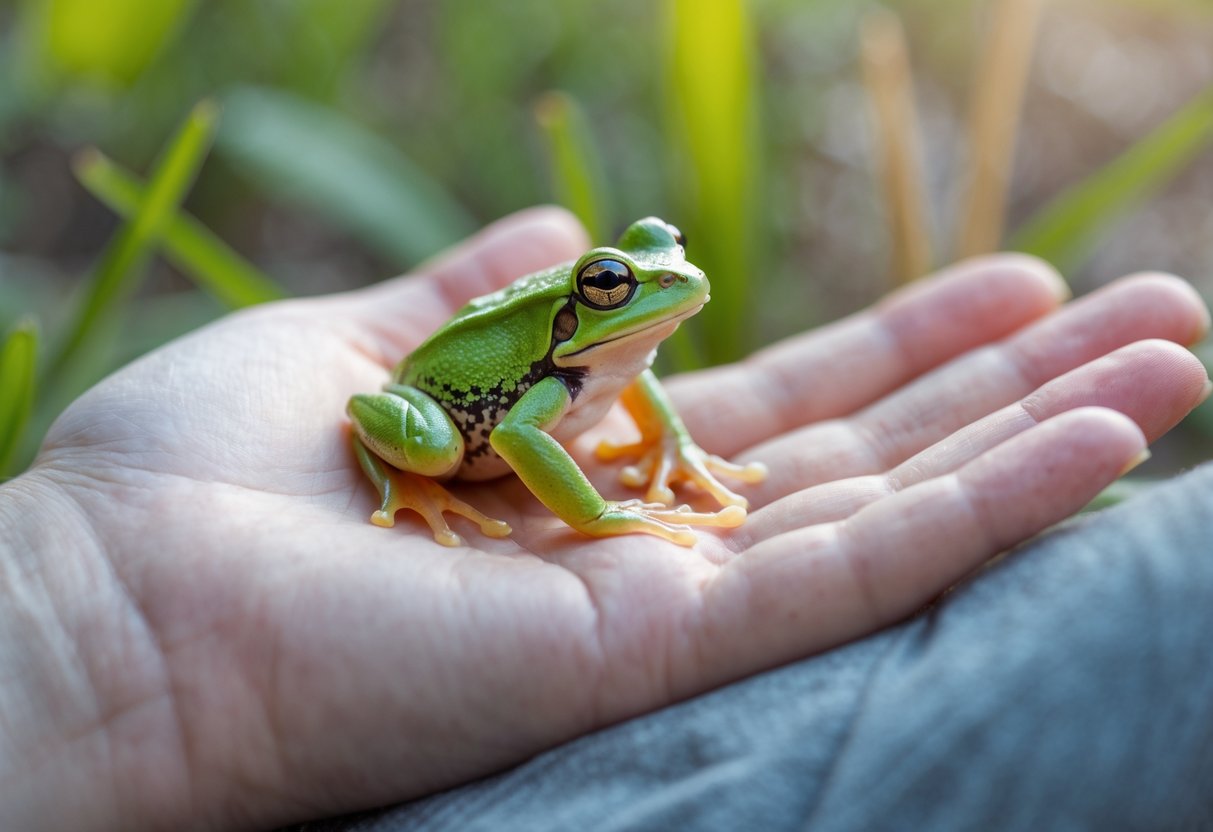
Still, you might spot your frog acting a bit different when you’re around—maybe it seems calmer or a little more curious. Frogs can learn to connect humans with food and safety, so if you’re patient, your frog might even remember you and react when you show up.
Getting how frogs think and act helps you connect better with your little amphibian buddy. Sure, they won’t love you like a dog does, but you can still enjoy their quirks and figure out what makes them comfortable.
If you want to dig deeper into frog behavior, check out this discussion on bullfrog attachment.
Can Frogs Form Attachments to Humans?

Frogs just don’t act like dogs or cats. They won’t form deep emotional bonds, but you might notice some recognition or reaction if you hang out with them regularly.
If you pay attention to how they behave, you’ll see what kind of connection is possible.
Natural Frog Behaviors Around Humans
Frogs naturally stay alert and curious. In places like the US or UK, pet frogs often respond to feeding routines or familiar sounds near their tanks.
They don’t go looking for contact, but you might find them a bit calmer if you handle them gently.
Since their skin is delicate, frogs usually don’t like being held for long. They rely on instincts to explore their world.
When you come close, your frog might watch you or get a bit more active, especially if it thinks you’re bringing food.
You’ll probably notice your frog staying still and watching you, but honestly, that’s more about caution than affection.
Frogs are nocturnal, so they’re up at weird hours, which might mean they don’t always react when you’re around.
Signs of Affection or Recognition in Frogs
Frogs won’t show love like a dog or cat, but they can recognize people they see often—especially if you’re the one feeding them. Sometimes, your frog might blink at you or perk up when you open the cage.
Some folks say their frogs seem “excited” at mealtime, but that’s not really affection. It’s just learned behavior—your frog knows you mean food and safety.
Frogs might show if they’re comfortable or stressed around you. You could see them freeze up or try to get away if they feel threatened.
Sometimes, they’ll give tiny hints—like eye movements or a change in posture—depending on what you’re doing.
If you’re curious about how frogs recognize people and react to humans, check out this detailed guide on frog recognition and behavior.
Understanding Frog Communication and Social Behaviors

Frogs connect with each other in all sorts of ways that help them survive and find mates. They use sounds, movements, and patterns.
But honestly, their relationships with humans just don’t work like pets bonding with people.
How Frogs Communicate With Each Other
Frogs mostly “talk” by croaking. They use different calls to find a mate, warn off rivals, or shout out danger.
Every species has its own style, and the environment shapes how those calls sound. Some frogs even use body movements—like puffing up their throat sacs or waving their legs—to send signals.
You might notice frogs changing their calls if there’s a lot of noise around. That way, they still get heard.
They also pick certain times or spots to call so they don’t mix up their messages with other frogs.
Visual cues matter, too. For example:
- Bright colors warn predators.
- Puffing up can show aggression.
- Certain moves help frogs find a mate.
This mix of sounds and body language lets frogs survive and breed, even in busy, noisy places.
If you want more on frog communication and signals, realitypathing.com has some good info.
Differences Between Frogs and Human-Animal Bonds
Frogs just don’t form emotional attachments to humans the way dogs or cats do. When they interact with people, it’s usually because they recognize someone as a source of food or maybe safety.
Some frogs remember who feeds or shelters them. You might notice your frog approaching you again, but it’s not really affection.
Frogs tend to be social with each other, not with us. If you raise a frog alone, it might sometimes mistake a human for a mate, though honestly, that’s pretty rare and usually happens when the frog hasn’t seen another frog.
If you handle your frog gently and feed it, you can build a bit of trust. Still, don’t expect your frog to show affection like a dog or cat would.
You can read more about these differences at everythingreptilion.com.


