
So, do chipmunks leave droppings? Yep, they do. Chipmunks usually pick one spot for their poop, often tucked away in their burrows or some hidden corner of your yard.
If you know what chipmunk poop looks like, you can figure out if these little guys are hanging around nearby.
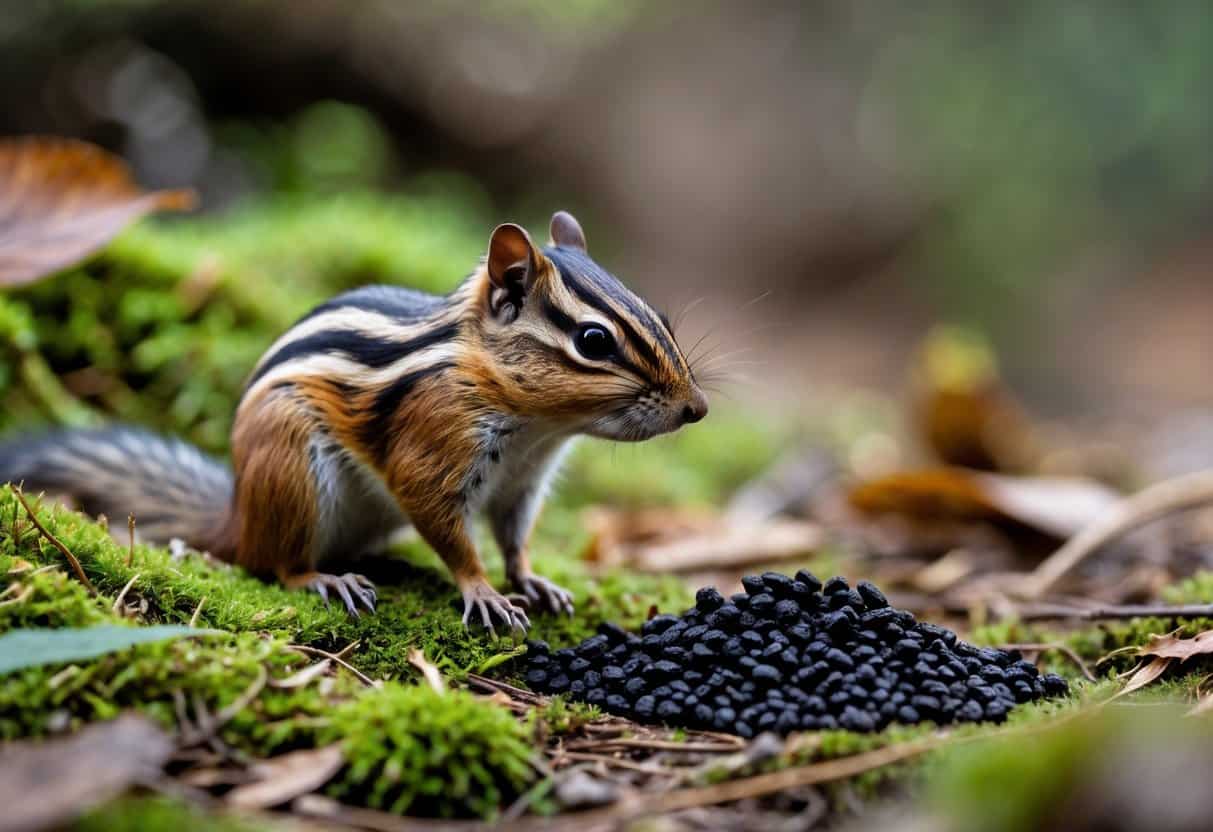
You might spot small, dark pellets with pointy ends, each about a centimeter long. People often mistake these for mouse or rat droppings, but chipmunk poop has its own look.
If you find droppings gathered in one place instead of scattered, chipmunks might be responsible.
Spotting chipmunk droppings tells you a lot about where they’re living. It might even mean they’ve found a way into your home or garden.
Do Chipmunks Leave Droppings and Where to Find Them
Chipmunks absolutely leave droppings, though their poop often looks a lot like what you’d find from other rodents, especially rats. If you know what to look for and where, you’ll have a better shot at spotting signs of chipmunks around your place.
Chipmunk Poop vs Rat Droppings
Chipmunk droppings look like tiny, dark pellets about ¼ to ¾ inch long. They sort of resemble little grains of rice with pointed ends.
Rat droppings, on the other hand, usually show up bigger—often over ½ inch—and sometimes look more curved or blunt.
Both types are dark brown or black, but chipmunk poop is smaller and more uniform. The quickest way to tell is by checking the size and the ends. Chipmunk droppings are more slender and pointed, while rat droppings are thicker and sometimes just look chunkier.
Typical Locations of Chipmunk Droppings
You’ll most often find chipmunk droppings near their burrows. Chipmunks like to hide these burrows under decks, woodpiles, sheds, or tucked away in garden beds.
They tend to leave their droppings in neat little piles or clusters instead of spreading them everywhere.
If you look around bird feeders, gardens, or anywhere with easy food, you might spot droppings nearby. Chipmunks love to stay close to their snacks.
Finding a bunch of droppings in one spot could mean you’ve got a chipmunk infestation.
Check out places where chipmunks rest or run through a lot. That’s usually where you’ll see the most evidence of their activity.
If you want more details, take a look at How to Identify Chipmunk Poop and Chipmunk Droppings: Identification.
Are Chipmunk Droppings Dangerous and How to Clean Them Safely
Chipmunk droppings can actually be risky for your health, so you’ll want to handle them carefully. It’s worth knowing which diseases they can carry and how to clean up safely to keep you and your family out of trouble.
Diseases Associated with Chipmunk Poop
Chipmunk poop can carry germs that cause illnesses like leptospirosis, hantavirus, and salmonellosis.
Leptospirosis is a bacterial infection that can bring on flu-like symptoms and get pretty serious if you don’t treat it. Hantavirus is rare, but it’s no joke—it can affect your lungs. Salmonellosis, on the other hand, is pretty common and usually means stomach problems and fever.
You can get sick if you touch or breathe in dust from dried droppings. Pets might also be at risk if they sniff around contaminated spots.
Because of all this, it’s smart to treat every pile of chipmunk droppings as if it could be dangerous—even if you think the risk is low where you live.
Safe Cleanup Practices for Chipmunk Infestations
Before you start cleaning up chipmunk poop, grab some rubber gloves, a mask, and protective eyewear. You really don’t want to mess with germs or risk breathing anything in.
Don’t sweep or vacuum the droppings while they’re dry. That just stirs up dangerous dust—nobody wants that floating around.
Instead, spray the mess with a disinfectant or a bleach solution. Let it soak for at least five minutes so you know you’re killing off bacteria and viruses.
Once it’s soaked, grab some paper towels and pick up the droppings carefully.
Toss everything into a sealed plastic bag, then take it straight to the outside trash.
Afterward, wash your hands with soap and water—don’t skip this step, even if you wore gloves.
To keep chipmunks from coming back, get rid of food sources and seal up any entry points you can find.
If you still see chipmunks hanging around, maybe it’s time to call a professional for backup.
You can find more tips about cleaning up chipmunk poop at this chipmunk droppings guide.


