
Ever wondered if chimps kiss like we do? Chimps sometimes press their lips together, and yeah, it can look a lot like a kiss. But their version feels a bit different. They mostly kiss during grooming or to bond, not really for romance the way humans usually do.

Chimpanzees and bonobos both share lip-pressing kisses, but for them, it’s about building connections or smoothing over conflicts—not exactly love in the human sense. For instance, you’ll catch chimps “kissing” to show affection, patch things up after a spat, or even when swapping food.
If you’re curious about how this all started or what it means for our own social lives, there’s a lot to dig into. Looking at these differences might just make you appreciate how unique human kissing really is.
Chimpanzee and Human Kissing: How Similar Are They?

Take a moment to watch chimps kiss. You’ll probably spot how their kisses feel different—physically, emotionally, and in how they fit into daily life. These differences help explain why chimp kisses don’t really line up with ours, even if there’s still something touching about them.
Physical Nature of Chimpanzee Kissing
Chimps use their lips for kiss-like touches, but their lips don’t move as much as ours do. You’ll often see them pressing lips to another chimp’s body when they groom or pass food mouth-to-mouth.
This mouth contact is gentle, and it’s not really about the open-mouth, lip-locking thing people do. Chimps usually touch faces, hands, or other spots, but not so much lip-to-lip.
Their kisses look more like soft lip presses mixed with grooming. If you want to know more, there’s plenty of research on how chimps use touch in their social lives.
Emotional Meaning Behind Chimpanzee Kisses
When chimps kiss, they’re usually trying to reassure or comfort each other. You’ll notice this especially when things get tense or if one chimp needs support.
These kisses often happen between close friends or family, and they help everyone calm down instead of showing romance. Chimps seem to say “I’ve got your back,” or “Let’s be friends again,” especially after a disagreement.
Humans use kissing for all sorts of feelings—passion, love, you name it. Chimps mostly use it to keep the peace and strengthen friendships.
Function of Kissing in Chimpanzee Social Behavior
Kissing in chimp groups really helps everyone stay connected and chill. Chimps often kiss after fights to make up, or when they reunite after spending time apart.
In their groups, which split up and come back together a lot, kisses help ease social tension. You’ll also spot kiss-like touches during play, food sharing, or grooming.
Physical closeness matters a ton for them. These small acts keep their group strong and stable.
If you’re curious, reading up on their social touch routines can be pretty eye-opening.
Comparisons With Bonobos and Human Affection
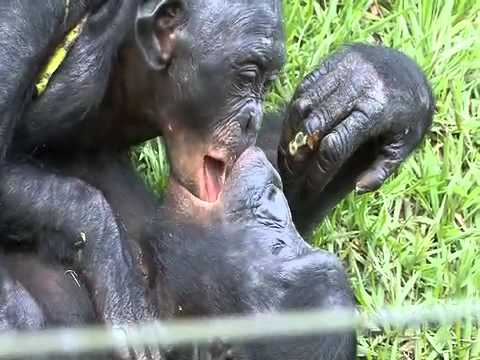
So how do chimps and bonobos stack up against humans when it comes to affection? Both use kissing and lots of close contact, but their styles and reasons aren’t quite the same. It’s actually kind of fascinating to see how emotions and bonding play out in different primates.
Kissing Behavior in Bonobos
Bonobos take kissing to a whole new level. They kiss more often and in more ways than chimps do.
Bonobos use kisses not just for mating but to calm each other and keep the peace in their groups. Sometimes you’ll see bonobos kissing for a few minutes, mixing in a little nibbling.
Their kisses help build strong bonds, especially in their female-led groups. Instead of fighting, bonobos often use sex and kissing to chill things out. Their society feels a lot more peaceful than chimpanzees in some ways.
Differences and Similarities Between Bonobos and Chimps
Chimps do kiss, but their lip contact feels less like what humans do. Their kisses are quick and less about intimacy—more like a greeting or a little comfort.
Bonobo kisses come off as warmer and happen more often. Both species rely on empathy and touch to strengthen relationships, but chimps tend to be a bit more aggressive.
Bonobos usually kiss to soothe, while chimps might pat or embrace instead.
Here’s a quick comparison:
| Behavior | Bonobos | Chimpanzees |
|---|---|---|
| Frequency of kissing | High | Lower |
| Purpose | Bonding, conflict resolution | Comfort and greeting |
| Social style | Female-led, peaceful | Male-dominated, aggressive |
Evolutionary Roots of Kissing in Primates
Kissing probably started out as a form of grooming among early primates. They used it to build trust and stick together. Honestly, you and the great apes share this old habit—touch and closeness still mean a lot.
Chimpanzees and bonobos show empathy, leaning on physical closeness to help their groups. Maybe human kissing grew out of these old gestures, but now it’s tied up with romance and attraction.
How you kiss might even reveal things about health or compatibility, thanks to the chemical signals in saliva. That could be why kissing sticks around in so many cultures, even though it’s not something everyone does.
If you’re curious about empathy in bonobos and chimps, check out the story of human and primate empathy.


