
Ever wondered if chimpanzees really get what hugs mean? Turns out, chimps absolutely understand hugs and use them to show care, comfort, and build trust in their groups. Their hugs aren’t just random gestures—they actually help calm each other, reconnect after arguments, and keep the peace.
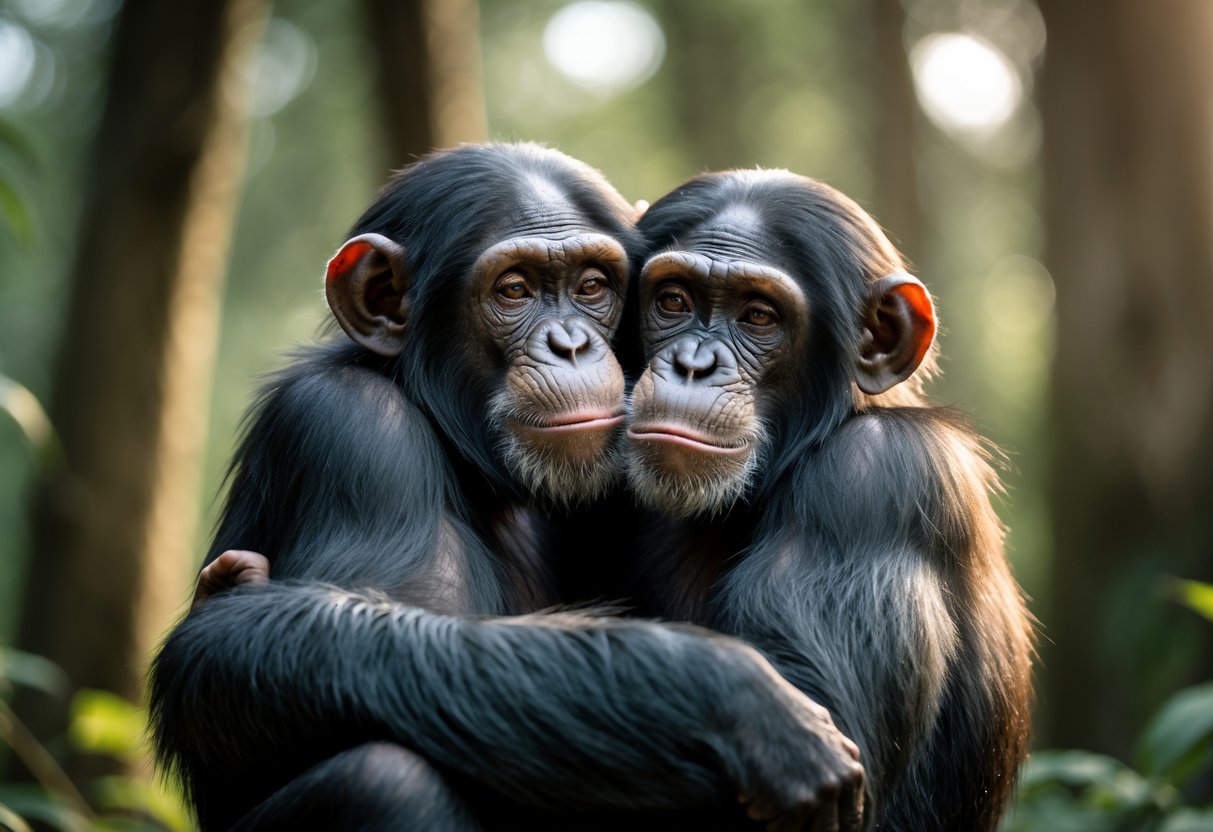
When you watch chimps hug, you’ll notice they often relax or hug back. They seem to understand what the gesture is all about.
These moments of touch matter to their social lives, kind of like hugs do for us. It’s hard not to see chimps as animals with real feelings and close friendships, not just wild creatures.
How Chimpanzees Use Hugs for Communication

Chimpanzees hug in all sorts of situations to express feelings and keep their social groups strong. Their hugs show care, trust, and comfort.
You can see that each hug means something—maybe it’s about calming down, making peace, or just connecting.
Hugging as a Form of Social Bonding
When chimps hug, they build and keep trust with each other. Hugs happen between friends, family, or after being apart.
Hugging is one way chimps say, “You matter to me.” It can lower stress and help individuals feel safe.
After fights or tense moments, a hug acts like a reset button that brings the group back together. That’s pretty powerful.
People sometimes call hugging a social glue. It pulls relationships closer and keeps the group peaceful and supportive.
This is especially important for chimps living in big, complicated groups.
Expressions of Sympathetic Concern and Empathy
Chimpanzees show sympathy with hugs when someone’s upset, hurt, or anxious. If a chimp loses a fight or gets bullied, another might hug them to say, “I’m here for you.”
These hugs aren’t just about touch—they carry emotion. They calm the stressed chimp and help lower anxiety.
You might notice how gentle and caring their hugs look. That’s empathy right there, just like when you hug a friend who’s having a rough day.
The hug sends a message without words, showing kindness and support.
Comparison With Other Great Apes
Hugging isn’t just for chimpanzees, but chimps use it in their own way. Other great apes, like gorillas and bonobos, hug too, but chimps seem to lean on hugs to keep their social lives balanced.
Bonobos sometimes hug to play or share joy, while chimps focus more on calming emotions and fixing conflicts.
It’s interesting to see how each species has their own style for staying close and managing feelings. Touch really matters for great apes, and for chimps, hugs are a big deal for trust and peace.
If you want to dive deeper into chimpanzee hugs, check out Do Chimps Like Being Hugged?
Impact of Hugs on Chimpanzee Wellbeing

Chimpanzees use hugs to help each other feel better, especially after tough moments. These physical signs of care lower stress and build stronger bonds.
You’ll see hugs happen most when chimps want to show support or keep the peace in their groups.
Stress Reduction Through Consolation
When a chimpanzee feels stressed after a fight or bullying, another chimp can hug them and help them calm down. This kind of consolation lowers stress.
You might see the hugged chimp relax, close their eyes, or hug back. Hugs work like a natural stress-reliever for chimps.
They send a message that everything’s okay and that the group still cares. This support helps chimps feel safer and more connected.
It’s one way they manage social tension in their communities.
Frequency and Contexts of Chimpanzee Hugs
Chimpanzees don’t hug just for fun or greetings. They save hugs for moments that really matter in their social lives.
You’ll see hugs after conflicts, during reunions, or when a chimp feels upset or scared. Mothers hug their young to comfort and protect them.
Sometimes, adult chimps hug babies to show friendliness. Hugs often come right after grooming sessions, which helps build trust and closeness between them.
All this careful hugging says a lot about how much touch means in their social world. If you’re curious about how chimps comfort each other with hugs, check out their hugging behavior and stress relief on KnowAnimals.


