
Ever wondered if bees can actually recognize you when you get close to their hive? Bees don’t recognize people in the same way we do, but they can pick up on familiar faces or patterns and remember them. They use both sight and scent to tell humans apart, especially the ones who regularly care for them, like beekeepers.
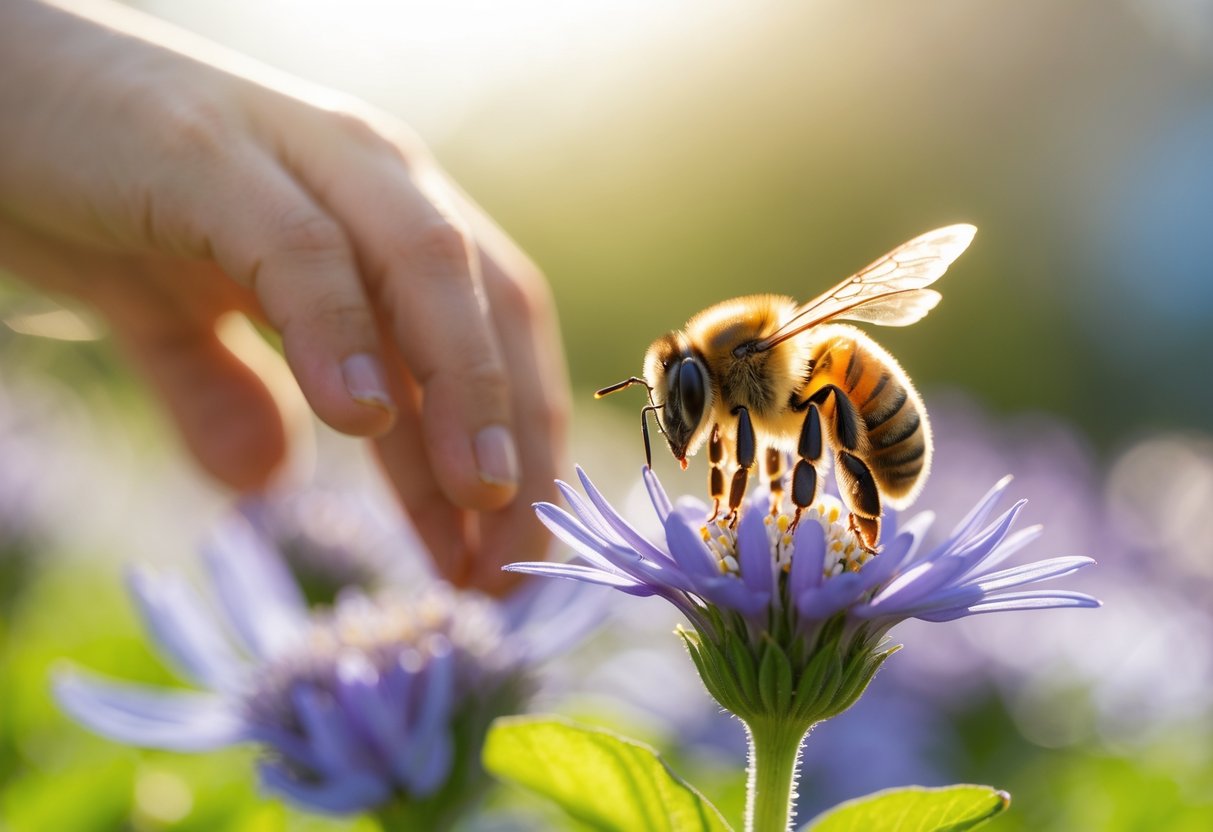
Bees have tiny brains, yet they’re surprisingly good at holding on to visual details. Studies have shown they can spot faces by focusing on patterns and shapes. It’s not exactly how we see each other, but it’s enough for them to figure out who’s a friend and who isn’t.
This might explain why bees sometimes act differently around certain people. They aren’t just running on instinct—they’ve got a knack for recognizing individuals, which makes their world a bit more interesting than you might think.
Can Bees Recognize People?

Bees have shown some pretty surprising skills when it comes to recognizing faces. You might assume their tiny brains wouldn’t allow for this, but research says otherwise.
Some bees can actually learn to tell human faces apart and remember them later. There are limits to how well they do it, though, and not all bees are equally skilled.
Scientific Evidence for Bee Recognition of Human Faces
Researchers have confirmed that honeybees, in particular, can learn to recognize human faces by picking up on patterns. They don’t see faces like we do, but they process facial features as complex images.
This ability comes from their knack for spotting and remembering visual patterns. In a well-known 2004 study, scientists trained honeybees to pick out different human faces. The bees learned to link certain features with rewards like food.
After a bit of training, the bees could tell one face from another—even when the faces showed up at new angles. That’s pretty wild, right?
Bees use pattern recognition rather than detailed facial analysis. Honeybees can tell people apart well enough to remember their beekeepers or friendly humans. If you want to dig deeper, the Journal of Experimental Biology covers this.
Differences Between Honeybees and Bumblebees in Face Recognition
Not every bee is equally talented at recognizing faces. Honeybees tend to do better at identifying and remembering human faces than bumblebees.
Honeybees live in big colonies, so it makes sense they’d get good at recognizing others—it helps them survive and keep things running smoothly. Bumblebees, on the other hand, have smaller colonies and different roles.
Their brains aren’t as specialized for complex visual stuff like facial recognition. While bumblebees can spot flowers and patterns, their ability to learn human faces hasn’t been studied much and is probably weaker.
So, if you’re spending time around bees, honeybees are the ones most likely to notice and remember you. This difference really shows how a bee’s social life shapes its brain and learning skills.
Notable Experiments and Researchers
Adrian Dyer stands out in bee facial recognition research. He led studies that showed honeybees can learn and remember human faces using visual pattern tests.
Dyer’s work revealed bees could recognize faces using just a tiny fraction of the neurons humans need for the same job. Bees use clever shortcuts for face recognition that suit their needs perfectly.
Other researchers have backed up these findings with similar studies around the world. They trained bees to choose or avoid face images tied to rewards. These experiments changed what we thought we knew about bees and their ability to recognize humans.
You can find more details in this article from College of Agriculture and Life Sciences.
Limits of Bee Recognition Abilities
Bees can recognize faces, but not in the same way humans do. They rely on simple pattern learning—not emotional memory or anything personal.
Bees won’t recognize you by name or form friendships, but they can spot familiar faces if they connect them to food or safety. Their memory isn’t perfect, either.
If bees don’t get regular reminders, they’ll forget faces. Recognition works best in controlled settings, like labs. Out in the wild, things like lighting, distance, and movement make it harder for bees to pick out faces.
They don’t pick up on emotions or age, either. For bees, recognition is purely visual and practical, mostly helping them interact with people who visit their hive often. There’s more on these limits in this bee facial recognition article.
How Do Bees Recognize Faces?

Bees use sharp vision and learning to recognize faces. Their small brains pick out patterns and remember details.
This skill helps them spot different people, especially around their hive. It’s kind of impressive for such tiny creatures.
Visual Processing and the Role of the Compound Eye
Bees have compound eyes, made up of thousands of tiny lenses. These let them see patterns, not clear images like we do.
Instead of remembering exact faces, bees focus on patterns—shapes, contrasts, and the arrangement of features. They use something called configural processing.
This means they recognize the layout of face parts as a whole, not just individual features. The compound eye makes it possible for bees to quickly pick out important details, even with a brain the size of a poppy seed.
That’s why bees can tell you apart from someone else, especially if you hang around their hive a lot.
Associative Learning and Conditioning
Bees remember faces by associating them with experiences. When you visit a hive, bees link your face with good things like food or safety.
Think of it like a simple training session. Bees get used to your patterns by connecting them to rewards.
Over time, this helps them remember specific faces better. Bees don’t need huge brains for this—they just need to focus and learn quickly.
Their strong attention to repeated patterns lets them tell you apart from strangers. It’s a handy skill, especially for such small creatures.
Implications for Beekeeping and Pollinators
It’s wild to think that bees actually recognize faces, right? If you keep bees, they might start to pick up on who you are. That could make them a bit less defensive when you show up.
For pollinators in general, this knack for recognizing humans could help them find their way around crowded places. Maybe they’ll learn to steer clear of danger, or even remember where to find food near people they trust.
When you understand how bees see and remember you, you can try to approach hives with a little more calm. It’s better for you, and honestly, it’s probably better for the bees too.
Curious about this? You can check out more on how honeybees can recognize human faces.


