
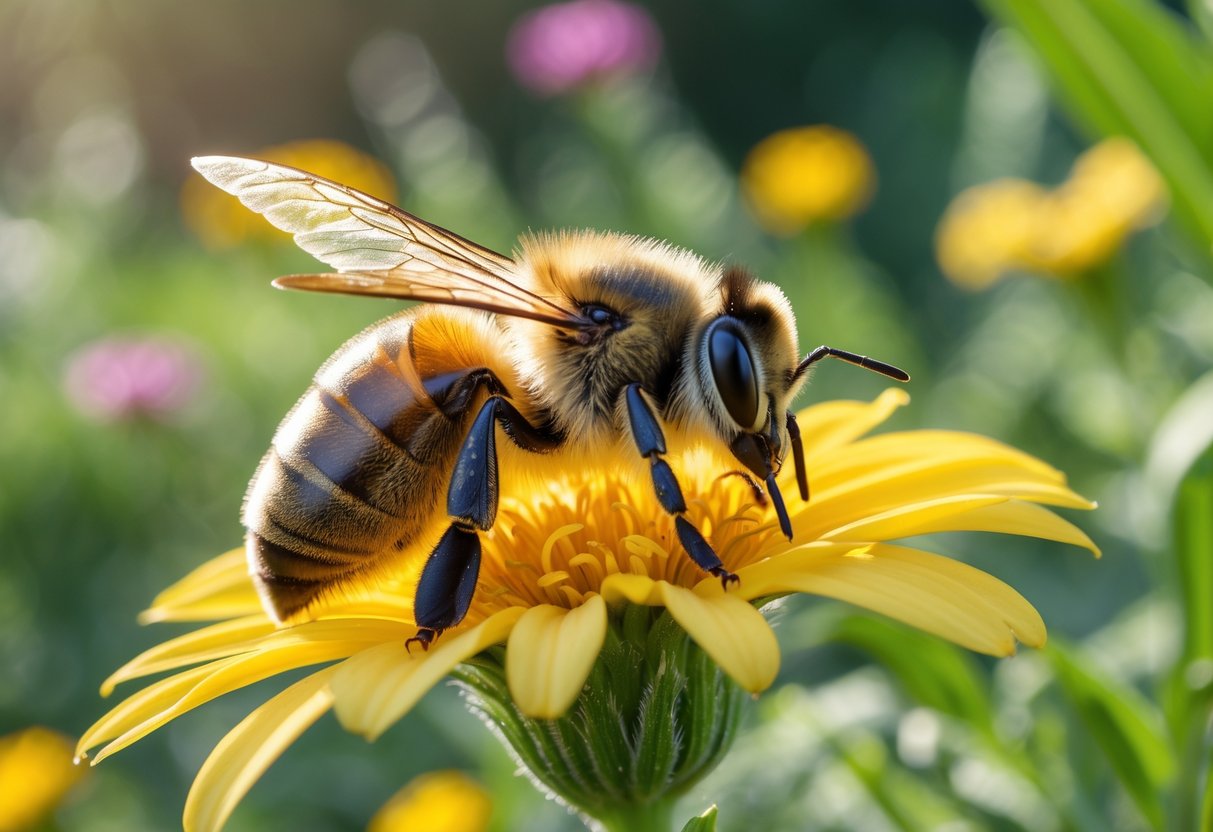
Ever sat in your garden and noticed a bee making that familiar buzzing noise, even when it’s not flying? It’s not just your imagination. Bees buzz even when they’re not in flight because they vibrate their wing muscles without actually moving their wings. This quirky habit helps them with all sorts of things—shaking pollen from flowers or even getting a message across to other bees.
Once you realize bees buzz for reasons beyond just flying, you might start to see these tiny creatures differently. Their buzzing plays a bigger part in their everyday lives than most folks realize.
Do Bees Buzz When Not Flying? Exploring The Science
Bees don’t save all their buzzing for flight. They make those sounds by vibrating their wing muscles, even with their wings tucked away. This buzzing shakes pollen loose and lets them “talk” to other bees in the hive.
How Bees Produce Non-Flight Buzzing
When bees buzz without flying, they put their wing muscles to work but keep the wings folded. The muscles vibrate super quickly, and that’s what you’re hearing.
Bumblebees and some solitary bees use this trick for buzz-pollination. They hang onto a flower and shake it until pollen drops onto their bodies.
The vibration speed can hit up to 230 times a second. That rapid motion helps pollen stick to the bee, making it easier to carry to the next flower. Even when they’re not moving, bees use buzzing to gather food.
Thermoregulation And Shivering Thermogenesis
Sometimes, you’ll spot bees buzzing inside the hive, especially when it gets chilly. They vibrate their wing muscles to warm up, a process called shivering thermogenesis.
By buzzing like this, bees generate heat. This keeps the hive cozy and the bees alert, which really matters during cold nights or winter months. It’s a softer buzz than the one you hear when they’re flying.
Acoustic Communication Within The Hive
Bees don’t just use buzzing for pollen or warmth—they use it to communicate. Inside the hive, different buzzing sounds can mean different things.
When a bee does the waggle dance, it buzzes to tell others about where to find flowers. Sometimes, a bee buzzes with its wings folded to warn the group or signal excitement.
This non-flight buzzing is a big part of how bees “talk.” If you want to dig deeper, check out why bees buzz when not flying.
Specialized Buzzing Behaviors And Pollination Roles

Bees have all sorts of buzzing tricks up their sleeves. Some buzz just to get food, while others—like bumblebees—have special methods for shaking pollen loose from flowers.
These buzzing habits really matter for pollinating flowers and for crops like tomatoes.
Buzz Pollination (Sonication) In Bumblebees And Other Species
Buzz pollination, or sonication, is a neat trick mostly seen in bumblebees. You might notice them grabbing onto a flower’s anthers and vibrating their flight muscles without flying. That shakes pollen right out of the flower.
This works best on flowers that hold their pollen tight. Tomatoes, potatoes, and blueberries count on buzz pollination to reproduce. Since honeybees can’t do this, bumblebees and a few solitary bees step up as the main pollinators for these plants.
Bee Species Differences In Buzzing
Not every bee buzzes the same way or for the same reasons. Bumblebees really shine at buzz pollination because they control the strength and speed of their vibrations.
Some bees buzz for defense or while resting, but honeybees mainly buzz to communicate or warn others. They can’t pull off buzz pollination.
So, you’ll see more flower-shaking from bumblebees and certain solitary bees that specialize in this. All these buzzing styles help different bees survive and find pollen in their own unique ways.
Bees As Essential Pollinators
You count on bees to pollinate loads of the plants that end up feeding you. They visit flowers, buzzing around and grabbing pollen, feeding themselves while helping plants grow fruits and seeds.
Honestly, without their buzzing tricks like sonication, some plants just can’t release pollen the right way. Bees that buzz end up being crucial for crops like kiwis, cranberries, and eggplants.
Next time you spot bees buzzing on flowers, remember—they’re not just making noise. They’re playing a big part in keeping nature and agriculture going.
If you want to dig deeper into how buzzing helps bees with flowers, check out Why Bees Buzz When Not Flying.


