
Most people picture seahorses as gentle and harmless little creatures. But honestly, seahorses can get territorial or competitive, even if they rarely attack or injure other animals like classic predators do.
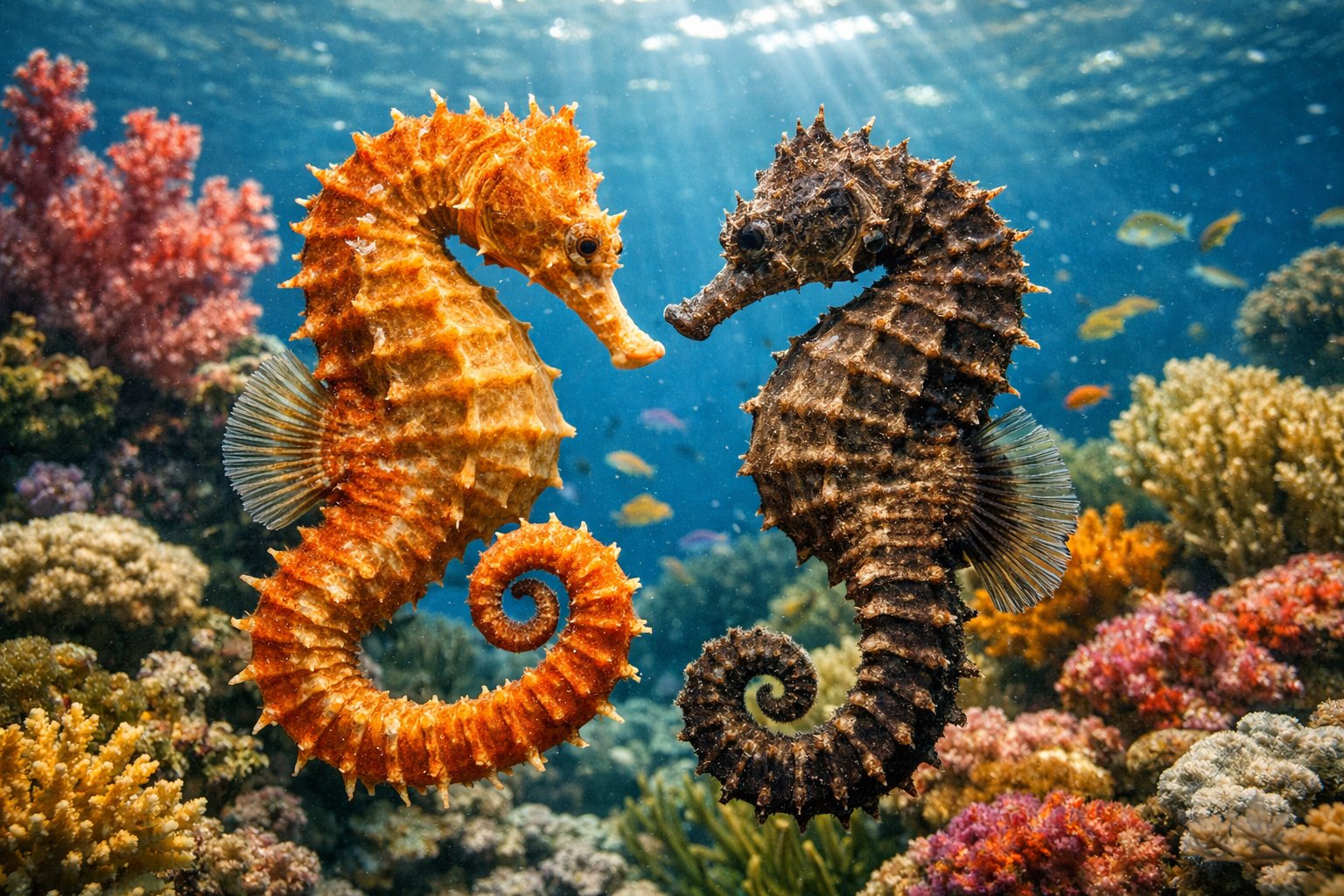
Let’s dig into why seahorse “aggression” doesn’t really look like the usual animal fighting. There are times when their behavior can become a problem, especially in tanks.
I’ll share some real examples from the wild and aquariums. If you’re keeping seahorses, you’ll want to spot stress or conflict before it gets out of hand.
Understanding Seahorse Aggression and Behavior

Seahorses defend their space, compete for food, and show off with quick moves during mating.
You’ll see how they guard territory, chase after prey, and use some pretty interesting rituals when it’s time to court a mate.
Territorial Behavior in Seahorses
You’ll often spot seahorses clinging to a patch of reef or a seagrass stem with their tails. They like to anchor themselves to one spot and just hang out there for days or even weeks.
That helps them wait for drifting plankton and copepods, which are their main snacks.
When they act territorial, they might chase away others of the same sex or do a little head-snapping and tail-wrestling up close. Males, especially those carrying eggs, defend their space more fiercely since they want peace for their brood pouch.
Younger or smaller seahorses seem to tolerate neighbors more than the big, solitary types.
Look for raised dorsal spines, fast turns, and sudden lunges—classic signs they’re defending their turf. These moves almost never cause real injury; they just want to push rivals away and keep their access to food and shelter.
Competition During Feeding
Seahorses hunt tiny prey like copepods and mysids with lightning-fast strikes. They’re sit-and-wait hunters, picking a good spot where the current brings food to them, then snapping it up with a quick slurp of their snout.
When food runs low, seahorses nearby might jostle or bump each other to get the best feeding spots.
Competition gets more intense in crowded seagrass beds or reef patches where plankton gathers. If you keep a lot of seahorses together, expect more confrontations.
You’ll notice more chases and head snaps as each one tries to hold onto the best perch. The bigger guys usually win those little battles.
In captivity, you can cut down on conflict by spreading out hitching spots and making sure there’s enough food for everyone.
Aggression and Courtship Rituals
Courtship in seahorses honestly looks a bit aggressive, but it’s more about bonding than harm. They’ll do mirrored dances, change colors, and grab each other’s tails—sometimes it almost looks like they’re fighting.
Males and females circle, bob, and lock tails during a ritual that ends when the female passes eggs into the male’s pouch.
You’ll also see some head snaps, tail strikes, and short chases between rivals and during courtship. Males tend to get a little more aggressive when they’re showing off or guarding eggs.
These displays follow a pattern and don’t turn into random attacks.
If you want to dive deeper, check out research on seahorse social and competitive behavior. There’s a good study on dwarf seahorse stocking and mating and another on agonistic behavior in long‑snout seahorses.
Seahorse Interactions with Other Species and in Captivity

Seahorses usually avoid direct fights, but they can get defensive around food, mates, or in cramped spaces.
In tanks or packed seagrass beds, you might notice them acting stressed, eating less, or competing with tankmates for food.
Do Seahorses Bite?
Seahorses don’t have real teeth, so they can’t bite like most fish. Their long snout works like a little vacuum—they suck up tiny crustaceans like copepods and amphipods.
You might catch a quick snap at food, but that’s just how they eat, not aggression.
If you handle a seahorse, you won’t get bitten. Still, sudden moves or trying to grab them can stress them out.
Stress can mess with their feeding and make them sick, so it’s best to avoid touching them and just let them eat live or frozen food that fits their size.
Aggressive Displays in Aquariums
In aquariums, aggression tends to be pretty subtle. Males defend their little territories, maybe doing head bobs, flicking their fins, or grabbing with their tails if another seahorse gets too close.
These little displays help you catch conflicts before anyone gets hurt.
Set up tanks with lots of hitching posts, gentle water flow, and plenty of live or cultured prey to keep competition low.
Don’t add fast or aggressive tankmates that might steal food. If you keep seeing chases or notice damaged fins, try separating the troublemakers or adding more hiding spots.
The Impact of Environment on Seahorse Behavior
The environment really shapes how seahorses behave. In healthy seagrass beds, they get enough space and food, so you’ll see them doing their usual courtship dances and hunting.
But if their habitat shrinks or prey becomes scarce, they start competing more. You’ll notice stress behaviors popping up a lot in those cases.
Captivity brings its own problems. Unstable water, bad diets, or too many tankmates can stress them out fast.
You can help by keeping the water’s salinity and temperature steady. Give them places to grab onto, and feed them several small meals with live or enriched frozen foods.
With the right care, you’ll see less competition, and their pair bonds and feeding habits stay pretty steady.
Curious about seahorse interactions or want to improve your tank? You might want to check out more info on how seahorses get along with other marine life (link) or tips for keeping them healthy in captivity (link).


