
Ever had a rough day and noticed your bird acting a bit off? Maybe it stares at you more, or just sits quietly nearby. Birds actually pay close attention to us, probably more than we give them credit for.
They pick up on your tone, your posture, and even your general vibe. It’s kind of amazing—sometimes they seem to know you’re upset before you say a word.
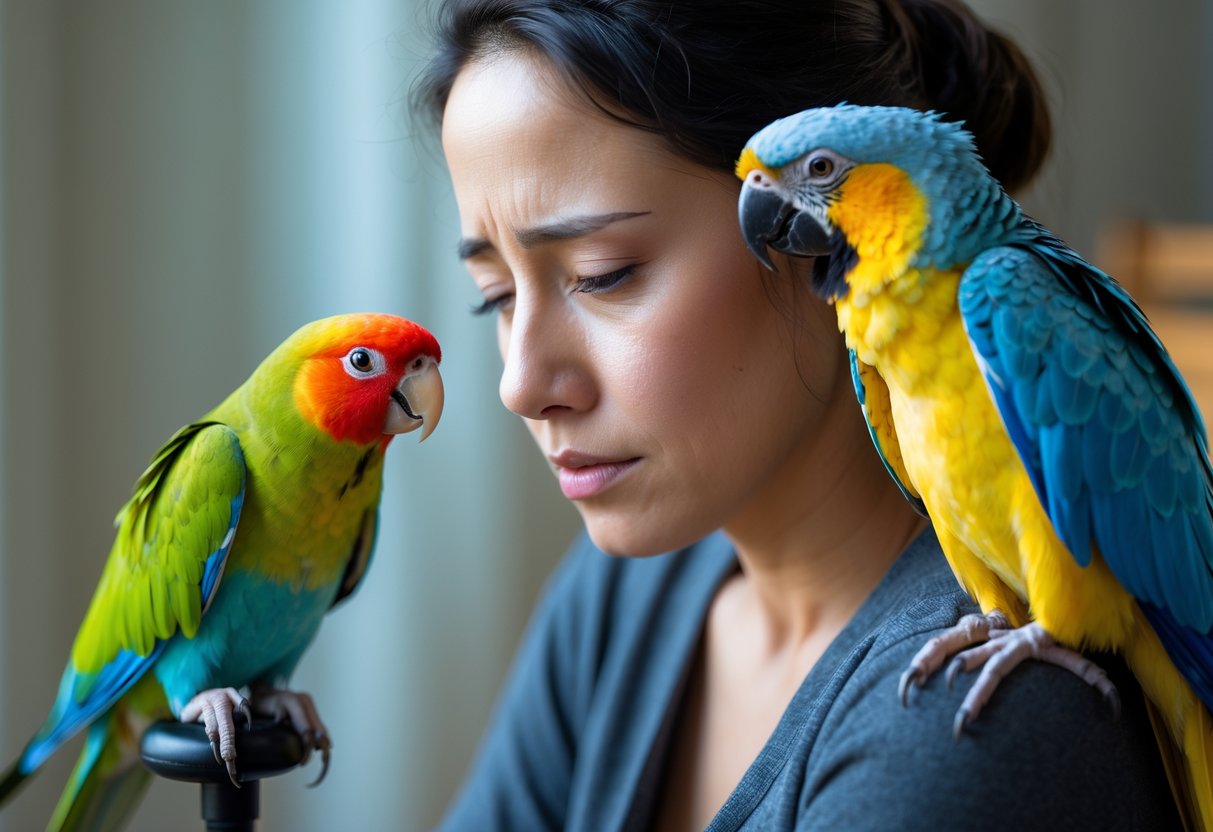
Your bird can sense when you’re sad and might try to comfort you or react to your mood. Some birds go quiet and stick close, while others get extra busy just to get your attention.
When you start noticing these little things, it really makes your bond feel special. And if you’re curious about how birds notice emotions or what their quirky behaviors mean, well, let’s dig in.
How Birds Perceive Human Emotions
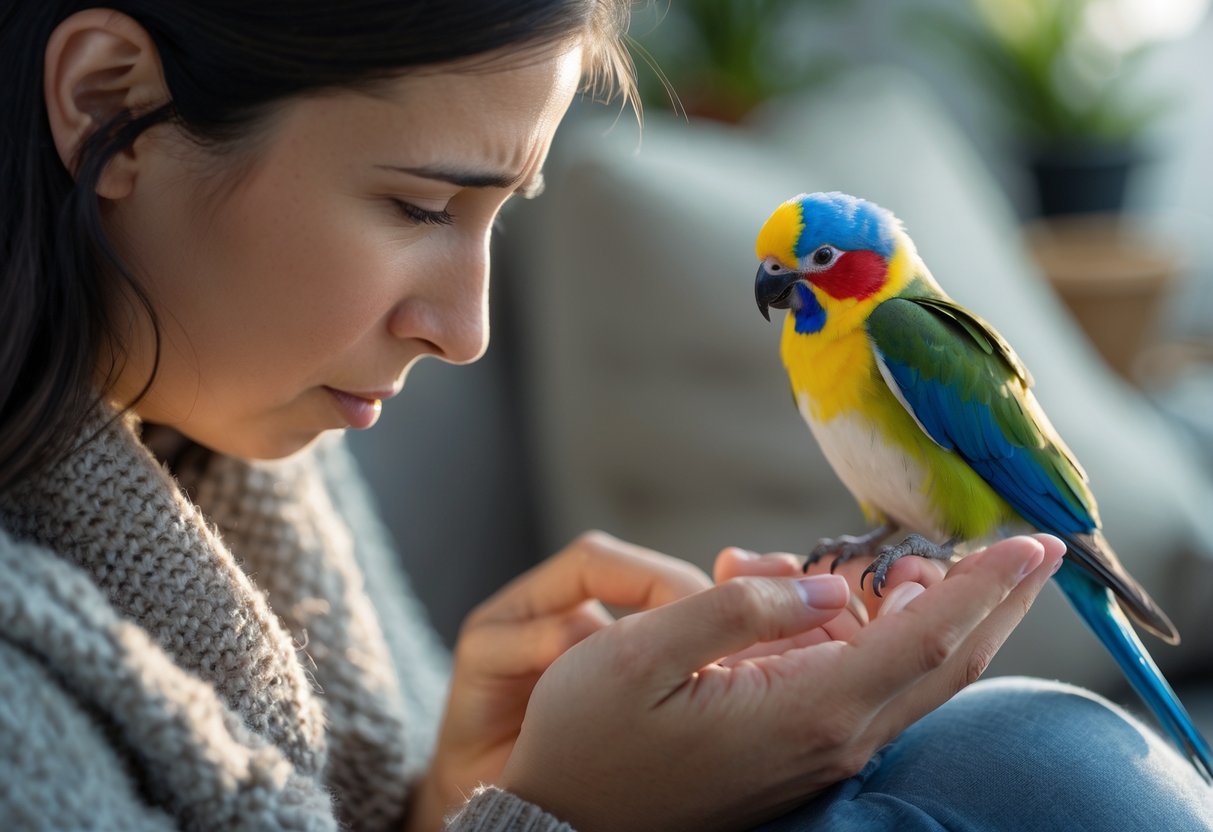
Birds notice all kinds of cues from you—your voice, your body language, even how you move around. They react to these changes, and their responses often match your mood.
Some birds are just more tuned in than others. The closer you are with your bird, the more it picks up on your emotions.
Observational Skills and Sensitivity
Birds watch you all the time. They see when your voice gets softer or when you slow down. If you’re tense or loud, they notice that too.
When you feel sad or upset, your body releases chemicals. Birds can actually sense these changes and react by getting quieter or keeping their distance.
Some birds seem almost hyper-aware. If you act consistently around your bird, it learns your patterns and understands your moods even better.
Emotional Bonding and Attachment
If you’ve built a close relationship with your bird, it’s way more likely to sense how you feel. Parrots and budgies, for example, form deep bonds with people.
You might notice your bird preening or chirping softly when you’re calm. But if you’re upset, it might stick close or act uneasy. These are signs your bird is tuned in and wants to be part of your emotional world.
Spending gentle, quiet time together builds trust. That trust helps your bird read your emotions and respond in ways that feel comforting.
Species Differences: Parrots, Budgerigars, and Others
Different birds have different ways of picking up on emotions. Parrots are super smart and emotionally aware. They might cuddle up or mimic your tone when you’re feeling down.
Budgies, though tiny, are also really perceptive. Some studies even show they stare longer at sad faces and react to your voice when you’re upset. They often get quieter or more attentive if you seem sad.
Birds like pigeons or chickens can sense basic emotions, but they don’t always bond as closely with humans. Knowing your bird’s species helps you figure out how it might respond to your feelings.
If you want your bird to connect with your emotions, pay attention to its natural behaviors. Spend time together and let that bond grow.
You can read more about budgerigars and sadness or parrots understanding emotions if you’re interested.
Behavioral Signs Your Bird Notices Your Sadness

Birds can be surprisingly sensitive to changes in your mood. When you’re feeling down, your actions and voice change, and your bird picks up on that.
Changes in Your Bird’s Activity and Vocalizations
Your bird might get quieter or less playful when you’re sad. You could notice fewer chirps or less hopping around.
Sometimes, if you speak softly or move slowly, your bird mirrors that mood. It might hush or slow down, almost like it’s trying to match you.
Look for things like:
- Less singing or talking
- Not playing with toys as much
- Sitting still for longer
These are signs your bird is reacting to your mood.
Increased Cuddling or Withdrawal
Some birds want to be closer when you’re sad. They might snuggle up or perch on your shoulder, almost like they’re trying to comfort you.
Other birds might pull away and hide in a corner, needing space to cope with the emotional shift.
Watch how your bird acts. If it’s extra clingy or suddenly distant, it probably senses something’s up.
Feather Plucking and Self-Soothing Behaviors
If your sadness stresses your bird, you might notice it plucking its feathers. This can mean your bird feels anxious or bored.
Other signs include:
- Repetitive pacing or biting the cage bars
- Too much grooming or fluffing up
These behaviors suggest your bird feels uneasy. Spotting them early can help you support your feathered friend.
When to Consult an Avian Vet
If you spot serious behavior changes—like feather plucking or your bird withdrawing for more than a few days—it’s probably time to reach out to an avian vet.
These signs might show your bird’s under a lot of emotional stress, or maybe there’s an underlying health issue going on.
An avian vet can:
- Check for physical health problems
- Recommend changes to your bird’s environment or routine
- Suggest therapies that might help lower stress
Getting expert advice gives your bird the best shot at staying healthy and emotionally balanced.


