
Seahorses can share a tank with other animals, but you’ve got to pick their roommates wisely. Stick with peaceful, slow-moving fish and invertebrates that won’t snatch food or nip at those delicate tails.
Try to match their water needs and personalities, or you’ll just end up with stressed, hungry seahorses.
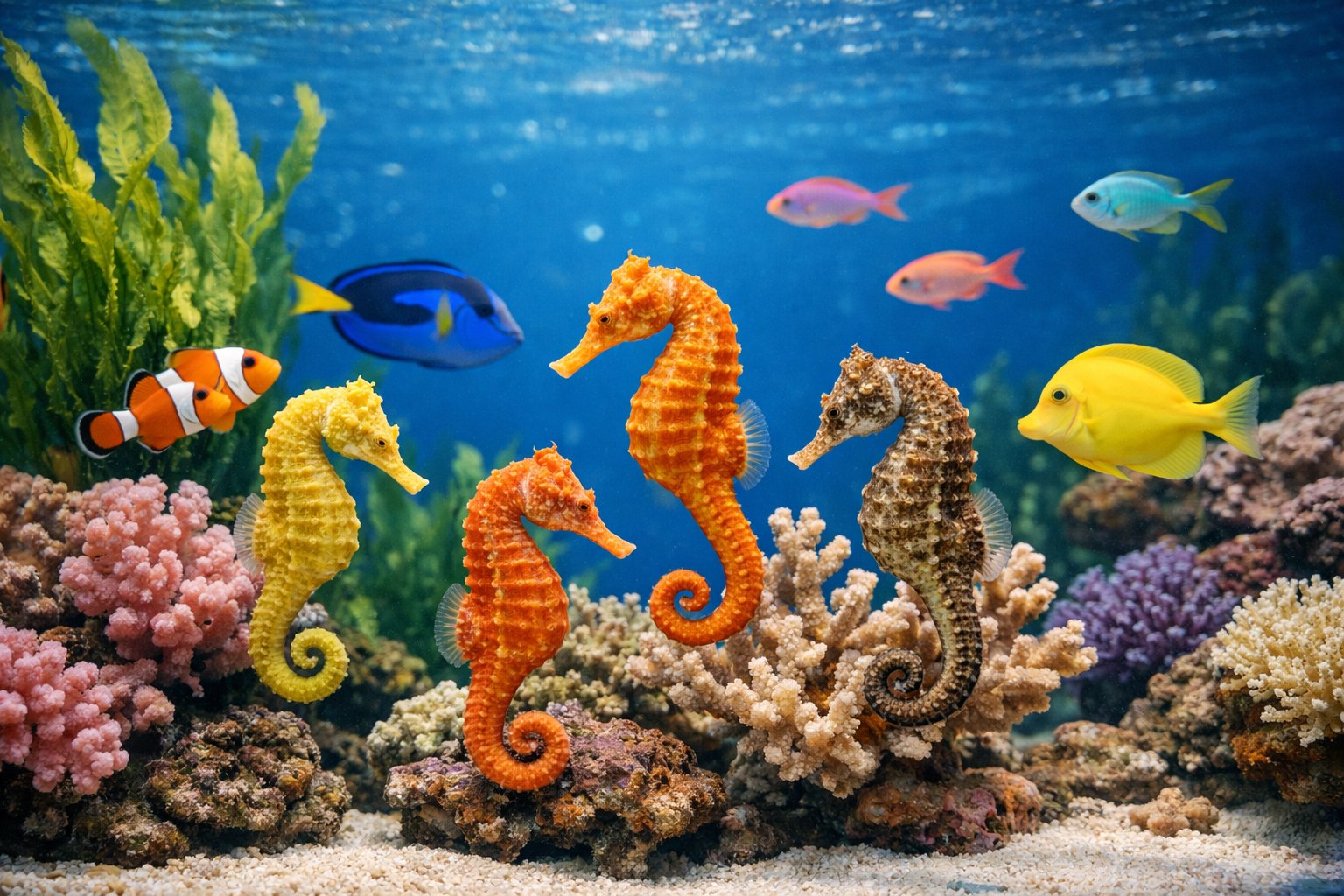
Honestly, life’s a lot easier if you mostly dedicate the tank to seahorses. But if you want some variety, choose calm species that hang out at different tank levels and eat different foods.
Let’s look at how you can weigh the risks, spot safe options, and set up a tank where your seahorses can actually thrive.
Can I Keep Seahorses With Other Fish?

You’ll need peaceful, slow-moving tank mates that won’t steal food or bother your seahorses. Plan for about 30 gallons per seahorse, keep the water stable, add plenty of hitching posts, and stick to a solid feeding routine.
Key Factors for Choosing Compatible Tank Mates
Pick tank mates that are calm, eat slowly, and stay small enough so they don’t outcompete your seahorses for mysis. Small gobies, firefish, pajama cardinals, royal grammas, and some dwarf filefish usually work well.
Avoid fast or nippy fish like wrasses, big tangs, or most angelfish. Go for captive-bred fish when you can—they’re less likely to bring in diseases or cause feeding headaches.
Add new fish one at a time and quarantine them first. Watch how they act for a few weeks; if anyone starts chasing or nipping, pull them out.
Keep your seahorse numbers low. Pairs or small groups do best.
Risks and Challenges of Mixing Seahorses and Fish
Seahorses move slowly and depend on target feeding. If you mix them with fast eaters, the seahorses might not get enough food.
Some tank mates get territorial as they grow up—even the peaceful ones can surprise you. Disease is another big worry.
Always quarantine new arrivals and avoid wild-caught fish unless you’ve quarantined them really well. Chasing and bullying can stress seahorses, making them sick.
If you notice seahorses hiding all the time or refusing food, something’s off. Separate the problem fish right away.
Essential Water and Habitat Requirements
Keep the temperature in the lower tropical range, usually 68–76°F, and maintain stable salinity and pH. Seahorses like gentle water flow, so use soft circulation and avoid strong powerheads near their hitching spots.
A sponge filter gives you gentle filtration and good bio-filtration without sucking up your seahorses. Add plenty of hitching posts—macroalgae, gorgonians, or upright decorations work great.
Live rock adds microfauna and helps the tank’s health. A sand bed is good for gobies and burrowers.
Train your seahorses to eat at a feeding station so they don’t have to compete with faster fish.
Best Seahorse Tank Mates and Safe Choices

Look for slow, non-aggressive animals that won’t outcompete your seahorses for food or nip at their fins. When you add anyone new, match the temperature (72–76°F), salinity (1.020–1.025), and pH (about 8.1–8.4).
Peaceful Fish Species for Seahorse Tanks
Choose small, peaceful fish that eat similar meaty foods and swim slowly. Gobies like the Court Jester Goby and Yellow Clown Goby are tiny, timid, and happy to eat mysis or brine shrimp without bothering seahorses.
Firefish (Nemateleotris magnifica) and other dartfish can work, especially if you give them hiding places and keep water flow gentle. Royal Gramma (Gramma loreto) and calm cardinalfish such as Banggai Cardinalfish (Pterapogon kauderni) or Pajama/Cardinal types are good options since they eat small crustaceans and usually leave slow feeders alone.
Skip fast, aggressive chasers like damsels and dottybacks. Avoid midwater schooling fish that will scarf down all the food before seahorses get a chance.
Target-feed the shy fish or set up more than one feeding station so your seahorses get enough to eat.
Invertebrates That Can Cohabit With Seahorses
Pick inverts that won’t nip, sting, or compete for the same prey. Nerite snails and turbo snails help with algae and won’t bug the seahorses.
Blue leg hermit crabs and small hermits clean up leftovers, but keep an eye out for any without shells—they can stress your seahorses. Stay away from big or predatory crabs and most shrimp, since some might eat or harass young seahorses.
Corals and macroalgae like Caulerpa make nice hitching spots and help keep the water stable. Live rock with feather dusters and other calm, non-aggressive inverts usually works fine.
Keep water quality high—seahorses and most inverts really don’t handle ammonia or nitrates well.
Species to Avoid and Cautionary Notes
Don’t keep aggressive, fin-nipping, or fast-feeding species with seahorses. Fish like damsels, dottybacks, certain wrasses, and many big blennies tend to bully or steal food.
Skip mandarin gobies (Synchiropus splendidus) unless you’re ready to provide a constant supply of live copepods. They’re picky eaters and usually don’t do well in mixed tanks.
Pipefish sometimes carry diseases that can harm seahorses. Quarantine them first, just to be safe.
Keep an eye out during feeding time for any competition. Watch for tank mates that might nip at seahorse skin.
Quarantine every new addition for at least 2–4 weeks. Add new tank mates slowly.
Set up separate feeding stations and keep the water flow gentle. Seahorses need to eat without getting shoved aside.
Here’s a helpful read if you’re curious about compatible species: 10 Seahorse Tank Mates – List of Compatible Species.


