
When you think of seahorses, maybe you imagine them as loyal partners, always sticking together. The reality? It’s a bit messier. Some species do form long-term bonds, but plenty just hang out for a breeding season or until something changes. A few seahorses (genus Hippocampus) mate for life, but many switch partners based on what’s happening around them or what helps them survive.
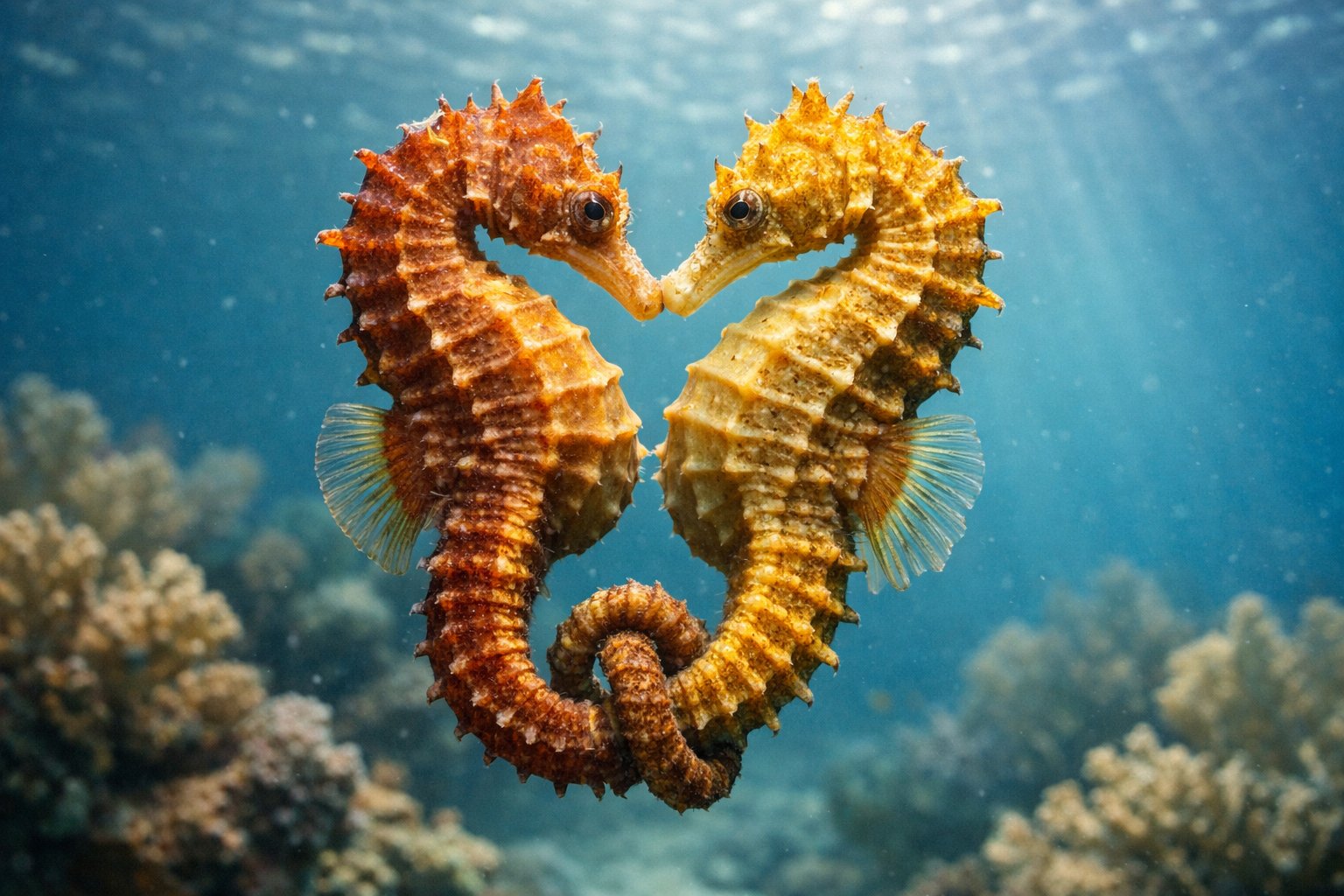
Let’s get into what seahorse romance actually looks like. You’ll see how their courtship plays out, why those daily greetings matter, and how their weird twist on reproduction—yep, the males carry the eggs—shapes their partnerships and conservation issues.
Seahorse Mating Behavior and Pair Bonds

Let’s talk about how seahorses pair up, what their daily courtship looks like, and what keeps those bonds tight—or causes them to fall apart. There are some specifics about different species, male pregnancy, and how the environment stirs up seahorse loyalty.
Monogamy Versus Mating for Life
A lot of seahorse species stick with one partner during breeding season, but that’s not always lifelong monogamy. For example, the lined seahorse (Hippocampus erectus) and a few others usually stay with one mate while they’re spawning. Researchers at Project Seahorse, including Amanda Vincent, have watched these pairs greet each other daily and mate repeatedly, which seems to boost their reproductive success.
Some, like White’s seahorse (Hippocampus whitei), keep up their bond over several broods. Others swap partners between seasons or after something shakes up their habitat. Pygmy seahorses and some pipefish relatives show different patterns since they live in different places and at different densities. If you’re looking for a bottom line, it’s this: most seahorses are monogamous for a season, but true “mate for life” pairs are pretty rare and depend a lot on the species and where they live.
Courtship Dances and Daily Rituals
Seahorses have these quirky courtship dances that help them get in sync before mating. You might spot them changing color, wrapping tails, or doing a morning greeting dance that goes on for minutes. These rituals help the female deliver her eggs into the male’s pouch at just the right time.
Those daily displays matter, since the males carry the babies. In species studied by Project Seahorse, partners practice their moves and get their bodies in sync before each egg transfer. The same pair might repeat this dance every day during the season. That routine helps them avoid mistakes and time the egg transfer and male pregnancy just right.
Factors Affecting Mate Fidelity
Where they live, how many neighbors they have, and what humans are up to can all affect if seahorses stay true to one partner. When seahorses live far apart or in patchy seagrass, it’s tough to find a new mate, so pairs usually stick together. But things like fishing, pollution, or losing habitat can break up pairs by splitting them up or making mates hard to find.
Species differences show up here too. Big-bellied seahorses might act differently than pygmy seahorses because of their size, lifespan, or local pressures. Sometimes, disease or an injury—like a hurt brood pouch—pauses breeding, but doesn’t always end the bond. Observers have even seen pairs reunite after one recovers. If you’re curious about how often this happens, groups like iSeahorse collect field reports that researchers actually use.
Unique Seahorse Reproduction and Conservation Challenges

Seahorses do things differently when it comes to making babies, and they’re also running into a lot of trouble thanks to humans. Here’s how male pregnancy works, what’s threatening their survival, and where you’ll find different species.
Male Pregnancy and the Role of the Brood Pouch
Male seahorses, part of the Syngnathidae family, take eggs from females through an ovipositor. The female puts her eggs right into the male’s brood pouch, which is basically a pocket made from his skin that seals up tight. Inside, the male gives the embryos oxygen, nutrients, and keeps the salt levels just right so they can grow.
Gestation depends on the species and water temperature—sometimes it’s just two weeks, sometimes it’s months. When it’s time, the male squeezes his pouch and gives birth to tiny, fully formed seahorses. Male pregnancy is super rare in the animal kingdom and really flips the script on what we expect from parental care.
The pouch does more than just carry eggs. It keeps the babies safe from predators while the adults blend in. Since seahorses aren’t great swimmers and usually cling to seagrass or coral with their tails, this pouch setup puts a lot of the risk—and the reward—on the dad.
Conservation Threats to Seahorse Survival
Seahorses face some tough threats, and honestly, it’s not looking great for many species. Overfishing for traditional Chinese medicine and the aquarium trade pulls a lot of adults out of the wild. Bycatch from trawls and nets also cuts down their numbers, even when fishers aren’t after seahorses specifically.
Losing habitat is a big problem. Coastal development, pollution, and damage to coral reefs and seagrass beds strip away the places seahorses need to anchor themselves. Environmental problems—like warmer water, acidification, and more sediment—make it harder for them to reproduce and easier for disease to spread.
A lot of species already live at low numbers, so losing even a few can break up pairs and drop local breeding rates. If you want to help, support sustainable fisheries, marine protected areas, and captive-breeding programs that take the pressure off wild populations.
Seahorse Species Diversity and Habitats
Seahorse species hang out in tropical waters and temperate zones. You’ll usually spot them near coral reefs, seagrass meadows, or tucked away in mangroves.
Some types stick to just one bay or a single reef, barely venturing out. Others, though, wander along wide stretches of coastline.
Different species act in their own quirky ways. Some stick with one partner and meet up for daily greetings, while others swap mates more casually.
Their prehensile tails come in handy—they grab onto plants or coral to steady themselves in the current. That’s pretty important, since they’re actually terrible swimmers.
Across the Syngnathidae family, you’ll see all sorts of habitat adaptations. Still, most really rely on healthy reefs and thriving seagrass beds.
If we protect those places, we give seahorse species a fighting chance to bounce back from fishing and environmental threats.


