
If you’ve got a dog door, you might find yourself wondering—can a coyote actually get inside? Honestly, yes, coyotes can squeeze through dog doors if the opening’s big enough. It’s not super common, but it does happen, usually when a coyote’s desperate or smells something tasty inside.
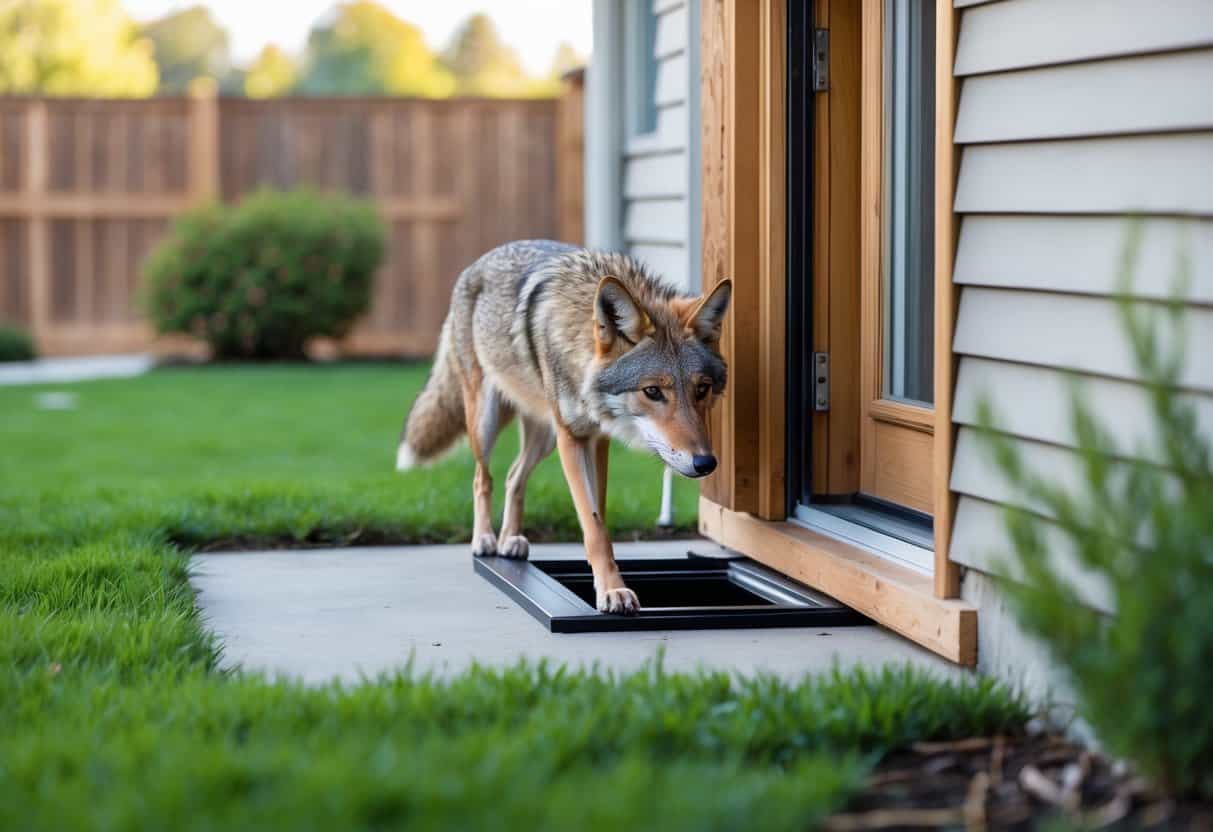
Coyotes are pretty clever and sometimes surprisingly bold, especially in neighborhoods where people and wildlife bump into each other a lot. Most of the time, though, they steer clear of houses—they don’t want to mess with your dog or get stuck inside.
Still, it just makes sense to take some precautions to keep your pets safe and your home locked down.
Can Coyotes Go Through Dog Doors?
Coyotes often look for easy meals, and sometimes that means poking their noses through a doggie door. They’ve figured out how to do it, and there are real stories out there of it happening.
Knowing how coyotes get in, what draws them, and what’s happened to others can help you keep your own pets and home safer.
How Coyotes Access Doggie Doors
Coyotes can twist and squeeze through openings you might think are too small. Most dog doors, honestly, are big enough for them to slip through.
If you leave your dog door unlocked or it doesn’t have an electronic lock, it’s basically open to anything that pushes on it.
Some coyotes learn by watching pets use the door, or just by trying their luck. If the flap’s loose or worn out, it’s even easier for them to sneak in.
You can cut down the risk by switching to electronic dog doors that only open for your pet’s collar or chip. Locking the door at night or when you’re out helps a lot too.
Real Incidents of Coyotes Entering Homes
People have reported coyotes coming inside through dog doors. For example, a family in California found a coyote in their house late at night after their dogs started barking.
The coyote only stayed a few minutes—probably got spooked by the dogs.
There have been other cases where coyotes attacked pets after slipping in through doggie doors. It’s not something that happens every day, but in places with lots of coyotes, it’s a real risk.
Some neighborhoods have seen more than one coyote get inside through unlocked doors.
If you know these things happen, you can keep an eye out and act before a coyote tries to come in. Watch your pets closely when they use the dog door, especially early in the morning or around sunset.
Why Coyotes Are Attracted to Dog Doors
Coyotes follow their noses, plain and simple. If your dog leaves food or treats near the door, that smell can draw them right in.
Pet food or scraps are hard for a hungry coyote to resist.
Sometimes, coyotes just want shelter or a quiet spot to hide. An open dog door looks like an easy invitation to check things out, especially if it seems safe.
If you keep the area around your dog door clean and free of food smells, you’re less likely to attract a coyote. Locking the door when you’re not using it also helps keep wildlife out.
Want more details? Check out PetShun.com’s article on coyotes and dog doors.
How to Prevent Coyotes and Other Wildlife From Using Pet Doors
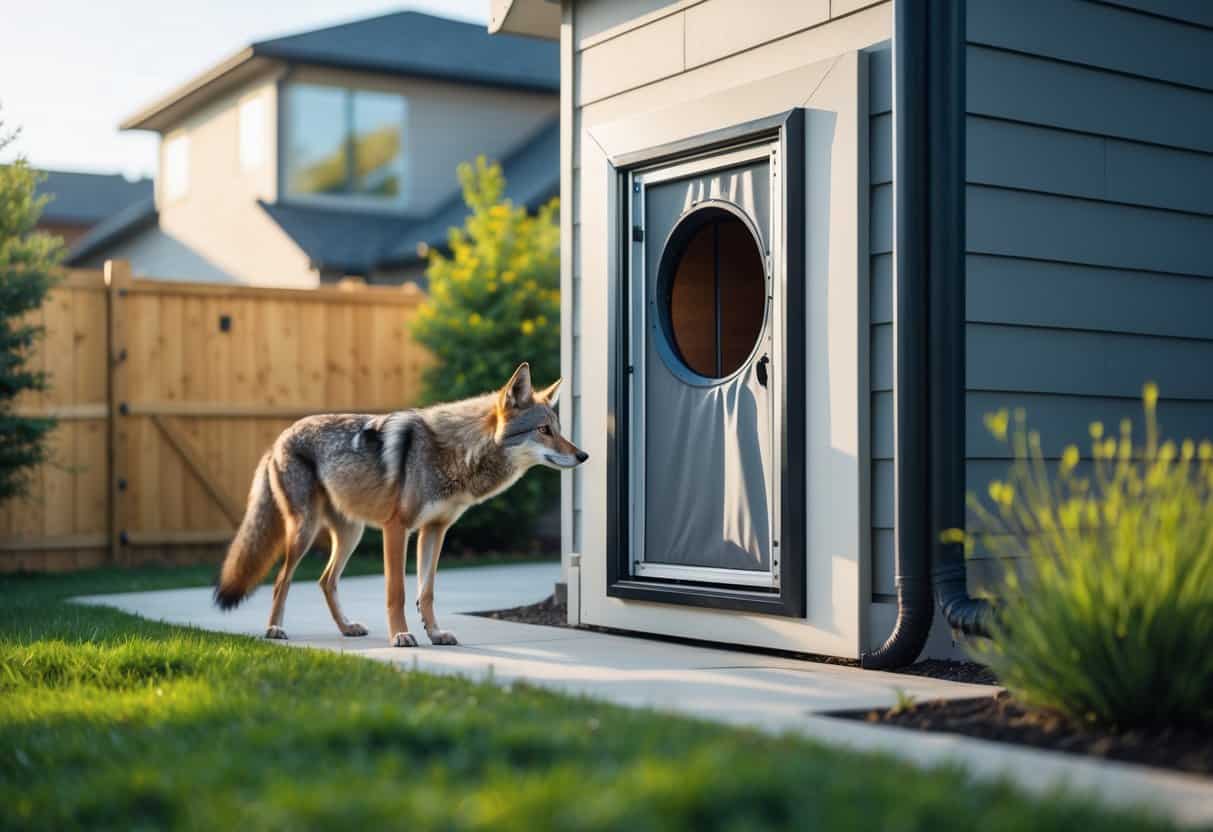
If you want to keep wild animals like coyotes (or even bears, yikes) out of your house, you’ll need a mix of secure pet doors, good yard habits, and a few safety tweaks. Doing all these things together gives your pets the best shot at staying safe.
Choosing Secure Pet Door Designs
Go for a pet door with real security features. Electronic dog doors that only open for your pet’s special collar work really well.
These doors block coyotes, raccoons, and other critters from sneaking in.
Look for doors with locking options so you can shut things tight at night or when you’re away. A heavy-duty flap doesn’t hurt, either.
Some pet doors use sensors that pick up your pet’s microchip or collar. That way, the door stays closed unless your pet’s right there, making it much harder for wildlife to get in.
Safety Measures for Your Home and Yard
A safe home and yard make it tough for wildlife to get close. Use fence posts, sturdy gates, and animal-proof trash cans to block off entry points.
Make sure your fences are tall enough and don’t have gaps.
Try motion-activated sprinklers or lights. These can surprise and scare off coyotes or bears when they wander too close.
Always watch your pet, especially during those early or late hours when coyotes are most active. Keep your dog on a leash if you live where coyotes roam.
Pet Food, Garbage, and Attractant Management
Don’t leave pet food outside. Coyotes and all kinds of wildlife will come looking for it.
Feed your pets indoors whenever you can.
Keep garbage in tightly closed bins, ideally in a locked area or garage. Raccoons, bears, and coyotes love an easy meal.
Pick up fallen fruit or spilled birdseed, too. Less food around means fewer wild visitors poking around your house.
Effective Deterrents and Tools
You’ve got a few options when it comes to protecting your yard. Natural or chemical deterrents can really make a difference.
Try spraying pepper spray or using commercial coyote repellents along the edges of your property. These products usually keep animals from coming too close.
Some folks place wolf or coyote urine near the perimeter. That smell hints to coyotes that predators might be lurking, so they tend to stay away.
You could also set up electronic deterrents, like ultrasonic devices or alarms. They make sounds that bother wildlife, but most pets and people barely notice them.


