
Ever wondered if chimpanzees can swim? The short answer: they usually can’t, at least not naturally.
Unlike humans, chimps just don’t have the same instinct or curiosity about water that pushes us to learn swimming. Most chimps avoid water altogether and, honestly, their bodies aren’t really made for it.

It’s kind of wild, considering how closely related they are to us, but chimps tend to see deep water as dangerous. Their bodies don’t float well, and they lack those automatic swimming skills that some other mammals have.
Every now and then, a few chimps in captivity pick up swimming—usually with a lot of human help. So, yeah, it’s possible, but you won’t find wild chimps doing laps in a lake.
Why don’t chimps swim? The answer lies in how they’re built and how they interact with their world. If you’re curious about the handful of chimps that learned to swim, stick around for some interesting facts. You can also check out this article on chimpanzees’ relationship with water.
Swimming Abilities of Chimpanzees

Chimpanzees run into a bunch of physical challenges when it comes to swimming. A few rare cases show they can learn, but their bodies just make it tough.
If you compare them to other primates, it’s clear why water isn’t their thing.
Physical Challenges in Water
Chimps absolutely own the trees and the ground, but water? Not so much.
Their muscles and body shape just don’t help them move smoothly in water. Male chimps, being heavier, have an even harder time.
Most chimps in the wild barely ever deal with deep water. Without experience, they don’t pick up any swimming skills like animals living near rivers.
Chimps usually steer clear of water because it feels risky. Their fear of drowning keeps them close to dry, safe ground.
Even female chimps, though a bit lighter, face the same swimming struggles.
Buoyancy Issues and Body Composition
Chimps have dense, muscular bodies with very little fat. That makes floating a real challenge.
Their heavy bones and muscle mass just pull them down. Humans, on the other hand, have enough body fat to stay afloat without much effort.
If you watch chimps, you’ll notice they sink easily. Swimming takes way more energy for them than for most other mammals.
Their bodies are perfect for climbing and swinging, but swimming just isn’t in their design.
Notable Cases of Chimpanzees Swimming
Some chimps raised by people have actually learned to swim.
Cooper the chimp, for example, got trained to dive and swim in a pool. He even grabbed stuff off the pool floor, which is pretty impressive.
In zoos, a few chimps have tried swimming, but it’s hit or miss. Usually, this happens because of human training or being in captivity, not because it’s something chimps would do on their own.
These cases show chimps can learn to swim with effort, but without help, most avoid it and risk drowning if they end up in deep water.
Comparisons with Other Primates
When you look at other primates, it gets interesting. Orangutans, like Suryia, can swim pretty far using a sort of breaststroke kick.
Some monkeys just instinctively dog-paddle, but chimps don’t have that reflex. They have to learn, just like we do.
So, yeah, compared to their cousins, chimps are definitely not natural swimmers. Avoiding water is way more common for them than taking a dip.
For more on chimpanzee swimming and diving, you might want to check out these reports about swimming chimpanzees and orangutans.
Chimpanzee Behavior Around Water
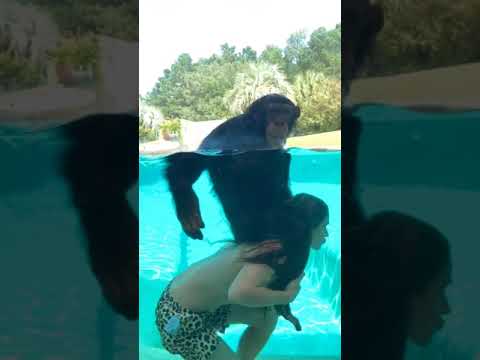
Chimps usually avoid deep water since it feels unsafe to them. They do seem to enjoy splashing around in shallow water, though, where they can stay in control.
How males and females react to water can differ, and water spots often turn into places for social stuff like grooming.
Natural Aversion to Deep Water
You’ll see chimps steering clear of deep water almost every time. Their bodies sink because they have less body fat and a top-heavy build.
Staying afloat is just plain hard for them. Deep water feels risky, so chimps don’t swim or wander into it naturally.
Near deep water, they act pretty cautious. They might poke around at the edge, but they rarely cross unless they really have to.
This cautious behavior keeps them safe from drowning. Instinct just tells them to find shallower, safer spots.
Play and Interaction with Shallow Water
Chimps seem to love shallow water, especially when they can stand and keep their balance.
You’ll catch them splashing, wading through puddles, or playing in small streams. Water play is especially fun and stimulating for young chimps.
On hot days, shallow water helps them cool off. Sometimes they’ll splash themselves or each other just to feel better.
Water might not be for swimming, but it still brings them a little fun.
Differences in Male and Female Responses
Male and female chimps can act differently around water. Males might get a bit more curious or bold at the water’s edge.
Sometimes they test the deeper spots, but not enough to swim seriously.
Females usually stick to the safe, shallow areas, especially if they’ve got babies to look after.
They prefer to rest and groom near water rather than play in it. This careful approach helps keep their little ones safe.
Impact of Social Bonding and Grooming Near Water
Water spots often turn into little hubs for grooming and social bonding. You’ll probably spot chimpanzees hanging out together in shallow streams, picking through each other’s fur and just relaxing.
Grooming by the water really helps them grow closer and chill out. These moments matter a lot for their tight-knit groups.
When chimpanzees gather near water, you can see how they use the space to build trust, even if they’re just playing or resting. Water areas seem to pull them together and keep those connections strong.
For more details on how chimpanzees behave around water, check out Can Chimpanzees Swim? A Fascinating Insight.


