
Can bees really sense illness in humans? Actually, yes—they can.
Bees have an incredible sense of smell that lets them notice changes in the chemicals in your breath or on your skin. They can pick up signs of diseases like cancer, tuberculosis, and diabetes just by sniffing around.
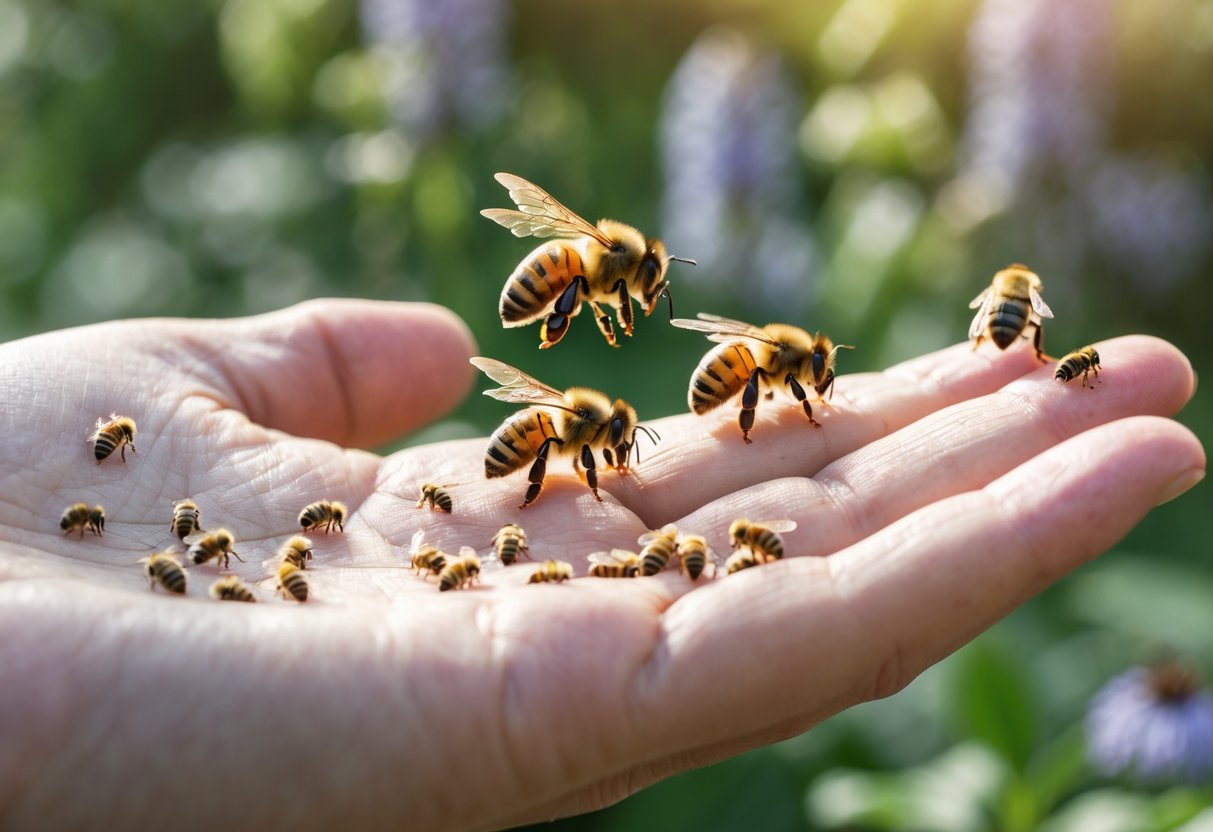
It might sound a bit wild, but scientists have trained bees to spot these illnesses. Their noses sometimes beat traditional medical tests, which honestly is pretty impressive.
Nature’s tiny helpers might end up playing a bigger role in healthcare than we ever expected.
If you’re curious about how bees pull this off and what it could mean for medicine, stick around. There’s a lot to learn about how these small insects could help us catch diseases early. Dive deeper at animalsaroundtheglobe.com.
How Bees Sense Illness in Humans

Bees rely on their powerful sense of smell to notice changes in human health. Their antennae can pick up tiny molecules that we’d never notice.
These molecules, called volatile organic compounds (VOCs), come from your breath or skin when you’re sick. Researchers can train bees to react to these scents in just minutes.
Bee Sense of Smell and Sensitive Antennae
Honeybees owe their strong sense of smell to antennae dotted with tiny sensors. These sensors catch scents at levels as low as parts per trillion.
That’s way beyond what our noses can do. Bees use their antennae to find specific odors linked to sickness.
They’re naturally good at picking out floral scents, but that same talent helps them notice odd smells caused by disease. Their brains process these clues quickly, which could help spot illness early.
Detection of Volatile Organic Compounds in Human Breath
When you’re unwell, your body produces special chemicals—VOCs. These VOCs come out in your breath or through your skin and create unique scents.
Bees can sniff out these molecules because they stand out from everyday body odors. Diseases like lung cancer or diabetes change the VOCs you release.
By noticing these shifts, bees can tell when something’s off. It’s similar to how dogs can sense illness, but bees learn faster and don’t need much space.
Illnesses Bees Can Detect in People
Bees can pick up on several diseases just by smelling your breath or skin. They’ve detected things like lung cancer, tuberculosis, and diabetes.
Researchers train bees by giving them a treat when they find the right scent. It only takes about ten minutes to teach a bee what to look for.
Trained bees react by moving to a certain area when they detect illness. This could help people get diagnosed sooner, especially where medical tools are scarce.
Comparison of Bees With Other Disease-Detecting Animals
Dogs are famous for sniffing out diseases, but bees bring their own set of perks. Bees need less care and don’t take up much space, so labs and clinics can use them more easily.
Their sense of smell rivals that of rats and ants, which can also spot disease. Bees can learn in minutes, while dogs might take weeks or longer.
Dogs can search bigger spaces, and ants can find certain bacteria. Still, bees really stand out for their speed and sensitivity—helping you detect illness quickly.
If you want more details about how bees do this, check out this article on how bees detect illness.
Methods and Innovations in Bee Training for Disease Detection
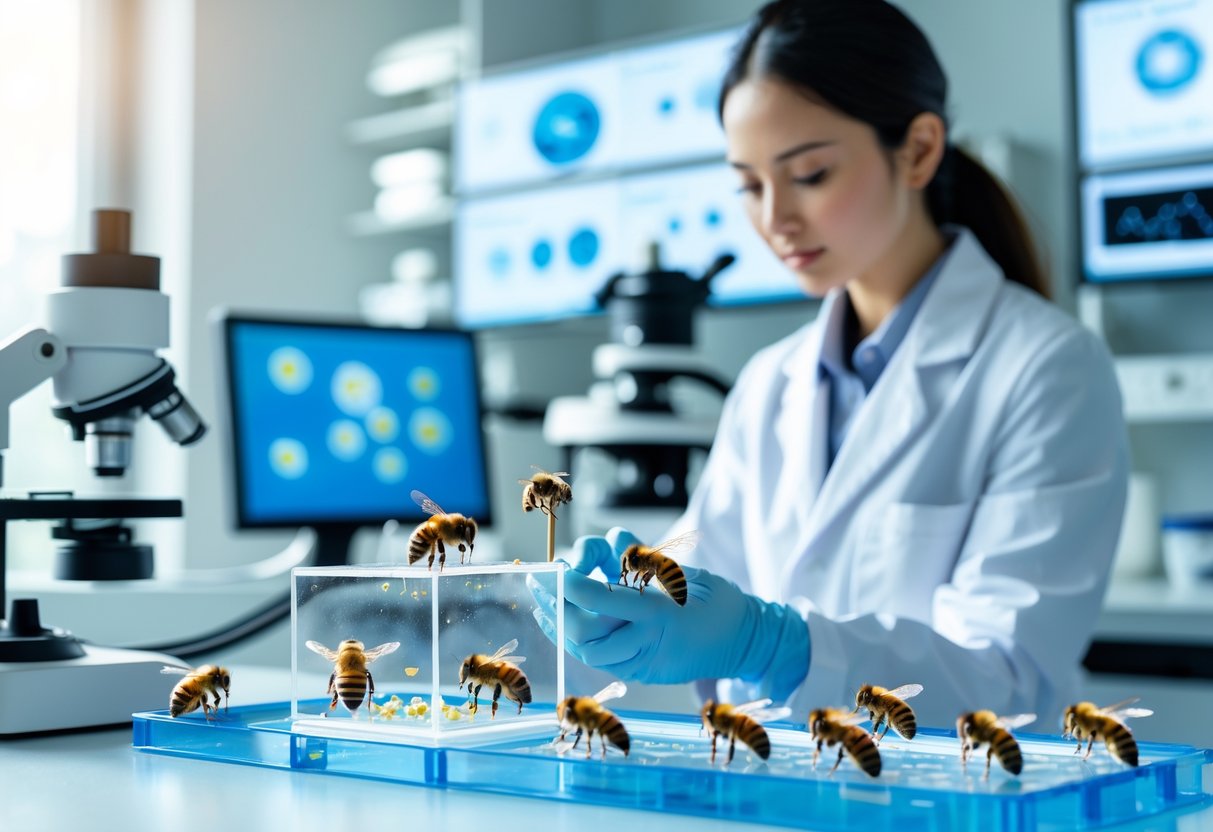
Honeybees use their sharp sense of smell to spot even tiny chemical changes in breath or sweat. Researchers have come up with ways to train bees and use special tools to track their reactions.
This opens up new ways to catch illnesses early by relying on what these little insects can sense.
Training Bees for Medical Purposes
Scientists train honeybees using classical conditioning—kind of like Pavlov’s dogs. When a bee smells a certain illness-related chemical, like VOCs from cancer or COVID-19, it gets a reward of sugar water.
Soon, bees learn to stick out their tongues or change their behavior when they find those scents. Training usually takes less than ten minutes.
You can then use the bees to test samples by exposing them to breath or skin scents. Bees’ quick learning lets them spot diseases like cancer or tuberculosis with pretty surprising accuracy.
Innovative Devices and Tools Using Bees
To handle bees safely, inventors have built special tools that move the insects gently and collect their signals. One clever device uses tiny glass chambers where bees can sniff samples without harm.
A vacuum helps move bees in and out, making the process smooth. These gadgets also record bees’ reactions automatically, so you can read the results fast.
By combining bees’ natural skills with smart design, you get portable tests for use in clinics or even remote places with limited medical gear.
Advantages and Limitations of Using Bees
Honeybees offer some pretty unique benefits for disease detection. They pick up new things quickly and don’t cost much to train. Honestly, bees can sniff out subtle odors that even the best machines might miss.
Compared to animals like dogs, bees are easier to keep and, frankly, it feels more ethical to use them.
But there are some things to watch out for. Environmental stuff—like temperature swings or weird outside smells—can mess with bee tests.
Trained bees usually work well for a bit, but then you’ll probably need to retrain them. Plus, with bee populations dropping lately, it’s tough to see how this method could scale up everywhere.


