
Ever wondered if gorillas and chimpanzees could actually have babies together? I mean, they do look pretty similar, right? Both are great apes, so it’s not a weird question to ask if they could somehow mix and make a brand-new kind of ape.

The simple truth? Gorillas and chimpanzees can’t breed because their DNA and chromosomes just don’t match up enough for offspring. Their bodies and genetics differ too much. Sure, they share a distant ancestor, but they’ve been evolving on separate paths for millions of years.
So, there aren’t any real gorilla-chimpanzee hybrids out there, even though you might hear wild stories or see odd-looking apes that make people wonder. Want to know why? Let’s dig into the science behind this weirdly fascinating topic. If you’re curious for more, check out can a gorilla breed with a chimpanzee.
Can a Gorilla Breed with a Chimpanzee?
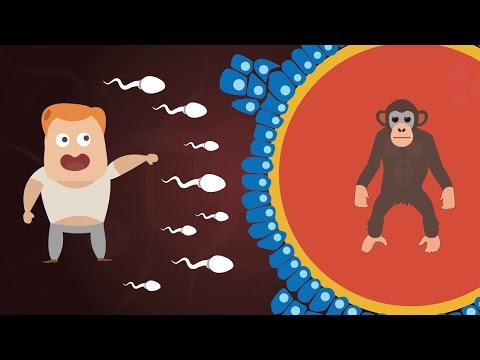
Gorillas and chimpanzees do share some physical traits. Still, their biology and genetics just don’t line up.
These differences stop them from having babies together. People have told stories about ape hybrids, but nobody has offered real proof.
Genetic Differences Between Gorillas and Chimpanzees
Both gorillas and chimps have 24 pairs of chromosomes. But the way those chromosomes are set up is totally different.
When an egg and sperm meet, the chromosomes need to match up perfectly for a baby to develop. In gorillas and chimps, this just doesn’t happen—their DNA is too mismatched.
It’s kind of like trying to jam puzzle pieces from two different sets together. They just won’t fit.
Even though they share a common ancestor, millions of years of separate evolution have made their genes incompatible. So, fertilization doesn’t work, and no baby comes from it.
Why Hybridization Is Not Possible
For two species to make offspring, their reproductive cells have to be compatible. But with gorillas and chimps, the differences in their DNA stop the process before it even starts.
Scientists have actually tried artificial methods like insemination, but nothing ever happened. No hybrids, no surprises.
Physical and behavioral traits drive the point home, too. Gorillas are way bigger and spend most of their time on the ground. Chimps are smaller and swing around in trees.
These differences really show how far apart they are, both biologically and evolution-wise. Hybridization just isn’t going to happen.
Myth of the Koolakamba Hybrid
Maybe you’ve heard of the Koolakamba—supposedly a mix between gorillas and chimpanzees. It’s said to have a chimp’s face and a gorilla’s size.
But there’s no scientific proof for this creature. Most experts agree the Koolakamba is probably just a gorilla or chimpanzee with unusual features.
Apes can look pretty different even within the same species, so it’s easy to get confused. The Koolakamba is more legend than reality.
Curious for more details? Check out Can a Gorilla Breed with a Chimpanzee? Scientific Facts & Myths.
Genetic Studies and Historical Accounts

So, why can’t gorillas and chimps—who look kind of alike—have babies together? Their genetic makeup and what we’ve learned from past attempts make it pretty clear.
Some cases that seemed odd at first? They turned out to be just unusual individuals from one species or the other.
Chromosome Comparison and Compatibility
Both gorillas and chimpanzees have 24 pairs of chromosomes. But even though the number matches, the arrangement is really different.
This difference makes it almost impossible for their sperm and egg to combine and develop into a baby. If the chromosomes don’t line up during reproduction, fertilization just can’t happen.
So, their DNA is too mismatched to make a baby at all.
Here’s the gist:
- Chromosome pairs: Both have 24 pairs
- Arrangement: Different for each species
- Result: No viable fertilization
Because of this, crossbreeding between gorillas and chimpanzees just doesn’t happen—naturally or artificially.
Notable Cases and Misidentified Apes
Sometimes, people tell stories about animals that look like a mix of a gorilla and a chimpanzee. One of the most famous is Oliver, a chimp with a stockier body and a face that looked a bit off.
People thought Oliver might be a hybrid. But after experts took a closer look, they found he was just a unique chimpanzee.
There have been other reports of odd-looking apes, often called Koolakamba, that seem like hybrids. Still, there’s no scientific proof for any of these claims.
Most of the time, these are just animals with rare traits or normal variations within their species.
Early Hybridization Experiments
Back in the day, a few scientists actually tried to mate gorillas with chimpanzees. Some even went as far as using artificial insemination to see if they could create hybrids.
None of these attempts led to pregnancies or offspring. It just didn’t work.
Zoos and researchers have watched these species closely. Still, they’ve never spotted any sign of crossbreeding.
Out in the wild, gorillas and chimpanzees don’t see each other as potential mates. That makes the odds of hybridization basically zero.
These early experiments really drove home the point—gorilla-chimpanzee hybrids just aren’t possible. Genetics had already hinted at this, but the failed attempts made it pretty clear.
If you’re curious and want more details, check out reports on gorilla-chimpanzee breeding impossibility.


