
Ever wondered if a gorilla and a chimpanzee could actually have babies together? They look kind of similar, right? Both are great apes, and it’s easy to see why people get curious about this. But as soon as you dig a little deeper, it gets way more complicated than just appearances.

Here’s the quick answer: gorillas and chimpanzees can’t breed because their DNA and chromosomes just don’t match up. Their bodies and reproductive systems aren’t compatible, and millions of years of separate evolution made sure of that.
Even though they share a distant ancestor, gorillas and chimps have gone down very different evolutionary roads. If you know why they can’t crossbreed, you’ll see just how unique each species is—and maybe you’ll stop believing some of those wild stories. For more details, check out this explanation about gorilla-chimpanzee breeding impossibility.
Can a Gorilla Breed with a Chimpanzee?
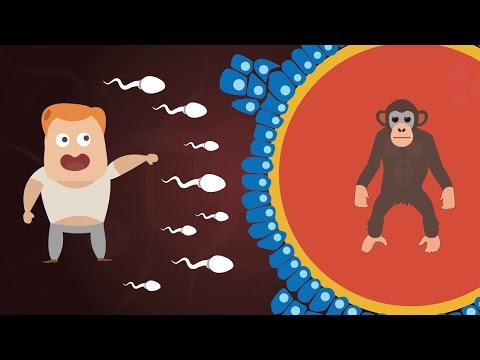
Gorillas and chimpanzees might seem a bit alike, but their biology keeps them from making babies together. Their DNA differences, separate evolutionary journeys, and past attempts at breeding all show why mixing these species just doesn’t work.
Genetic Compatibility and Chromosomes
Gorillas and chimpanzees share some traits, but their genes don’t line up well enough for breeding. Both have 24 pairs of chromosomes, but the way those chromosomes are organized is pretty different.
That’s a big deal because chromosomes carry the genes that decide if offspring can develop at all. If chromosomes don’t match up during reproduction, fertilization simply won’t happen. So, even though the number of chromosomes matches, their genetic differences stop their sperm and eggs from combining.
Key point: Their DNA is just too different for offspring to be possible.
This genetic mismatch makes it impossible for these apes to reproduce together.
Key Evolutionary Differences
Gorillas and chimpanzees split from a common ancestor millions of years ago. Since then, they’ve evolved separately and adapted to really different environments.
They behave, look, and even think in unique ways. Because of this, they don’t see each other as potential mates in the wild.
This long stretch of separate evolution acts like a natural wall between them. It’s kind of like trying to match up two distant relatives who just have nothing in common.
Historical Attempts at Primate Hybridization
People have tried to find or even create hybrids between gorillas and chimpanzees, but nobody’s ever succeeded. Even artificial insemination didn’t work.
Zoos and scientists have kept a close watch, but there’s never been a real gorilla-chimp hybrid. The animals themselves don’t try to mate with other species, either.
Sometimes, a few odd-looking apes sparked rumors, but experts always found they were just unique individuals—not hybrids. So, no confirmed crossbreeding has happened, not in the wild or in captivity.
If you’re curious about their genetic differences, check this detailed explanation on can a gorilla breed with a chimpanzee.
Exploring Related Legends and Scientific Curiosity

Maybe you’ve heard stories about apes that seem like a mix between gorillas and chimpanzees. Some tales and reports have definitely sparked curiosity and scientific interest. These stories include strange apes and old myths that still get people talking.
The Koolakamba Myth
The Koolakamba is usually described as an ape that looks like a mix of gorilla and chimpanzee. People claim it has a chimpanzee-like face and a gorilla’s size.
But scientists haven’t found any solid proof that Koolakamba is a real hybrid. Most experts think it’s just a gorilla or chimpanzee with unusual traits. This myth has stuck around for ages and probably confuses people because Central African apes can look pretty different from each other.
The Koolakamba story shows how myths can grow when apes don’t fit our usual expectations.
Notable Case Studies and Unusual Apes
Take Oliver, for example—a chimpanzee who looked a bit different from the rest. He had a stockier body and a unique face. People wondered if he was a gorilla-chimpanzee mix.
Scientists looked into it and confirmed Oliver was just an unusual chimpanzee, not a hybrid. His case shows how an ape’s appearance alone can lead to all kinds of guesses about crossbreeding.
Unusual apes like Oliver always grab attention because they challenge what we think is “normal” for chimpanzees or gorillas.
Misidentifications and Confusion in Great Ape Classification
For years, explorers and hunters have claimed to see apes that just don’t fit into any familiar category. Their stories often muddle chimpanzees and gorillas together in ways that leave you scratching your head.
People mix them up because both animals look a bit alike and live in similar regions. When someone spots an ape with unusual features, they might assume it’s some kind of hybrid instead of just a quirk of nature.
That kind of confusion keeps the old rumors about gorilla-chimpanzee hybrids going, even though scientists haven’t found any real evidence they can breed. It’s honestly not hard to see how facts and myths get tangled up when folks try to sort out great ape classification.


