
Ever wondered if a coyote can mate with a domestic dog? You’re definitely not the only one. These two animals might look alike and share the same family tree, but their lives couldn’t be more different.
Yes, coyotes and dogs can breed and have offspring—called coydogs or dogotes—but it’s honestly pretty rare and usually only happens in special situations.
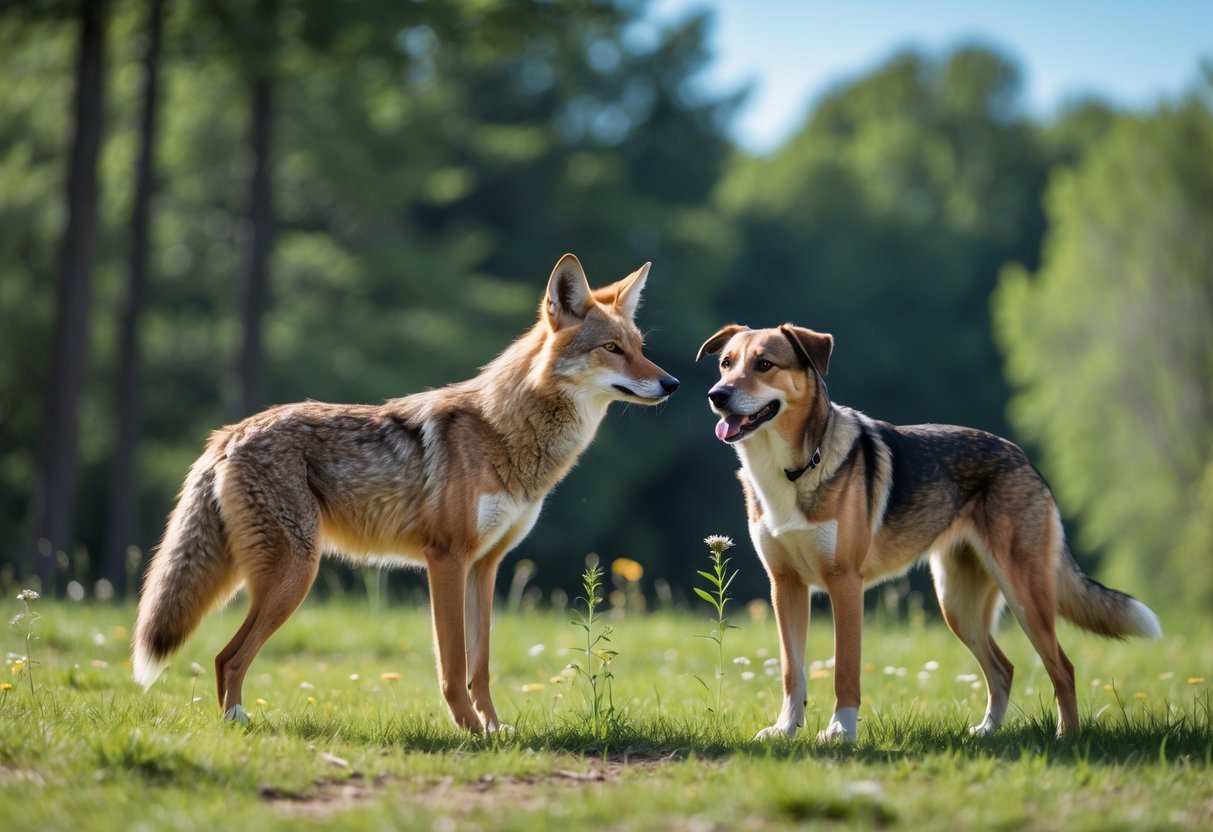
Coyotes and dogs each follow their own breeding habits and behaviors, so they don’t often mix in the wild. When they do, the puppies pick up a weird mix of traits from both parents.
Curious how this happens or what it means for both animals? Let’s dig into some surprising facts about these rare hybrids.
Can Coyotes and Domestic Dogs Mate?

Coyotes and domestic dogs both belong to the Canidae family. That means they share a lot of biological traits.
This connection lets them sometimes breed and make hybrids called coydogs. But how often this actually happens—and whether those hybrids can reproduce—depends on some pretty specific things.
Biological Compatibility and Genetics
Coyotes (Canis latrans) and domestic dogs are close relatives, so their DNA matches up enough for mating to work. Both come from the Canidae family, which lets them have pups together.
People call these hybrids coydogs or coyote-dog mixes. Still, their behaviors and breeding cycles are very different.
Coyotes have a set mating season, while dogs can breed pretty much any time. That difference makes natural mating between them tough.
Coydogs show a mix of traits—sometimes you get a dog’s friendliness mixed with a coyote’s wild side. Since they’re different species, though, not every attempt leads to puppies.
Frequency of Hybridization in Nature
Coydogs are honestly super rare in the wild. Coyotes and dogs do live near each other in some places, especially around woods or suburbs.
Actual mating between them, though? It almost never happens. Coyotes stick to their own breeding season, while dogs don’t.
Plus, male domestic dogs and male coydogs usually can’t father many pups. That keeps hybrid numbers low.
Genetic research shows most wild coyotes don’t have dog genes, even though coyotes and dogs have lived side by side for ages. That tells you coydog births are possible, just not common at all.
Fertility and Reproductive Capabilities
When coydogs exist, their fertility often changes compared to their parents. Female hybrids might have weird breeding cycles that don’t match coyotes or dogs.
That makes pregnancies less likely. Male coydogs and domestic dogs usually show lower fertility than wild male coyotes.
So, fewer hybrid pups are born. These fertility issues keep coydog populations from growing in the wild.
If you worry about your dog’s safety near coyotes, knowing this stuff helps. While hybrids are rare, it’s still smart to be careful where coyotes hang out.
You can read more about this topic in this article on coyotes breeding with dogs.
Key Factors Limiting Coyote-Dog Hybrids
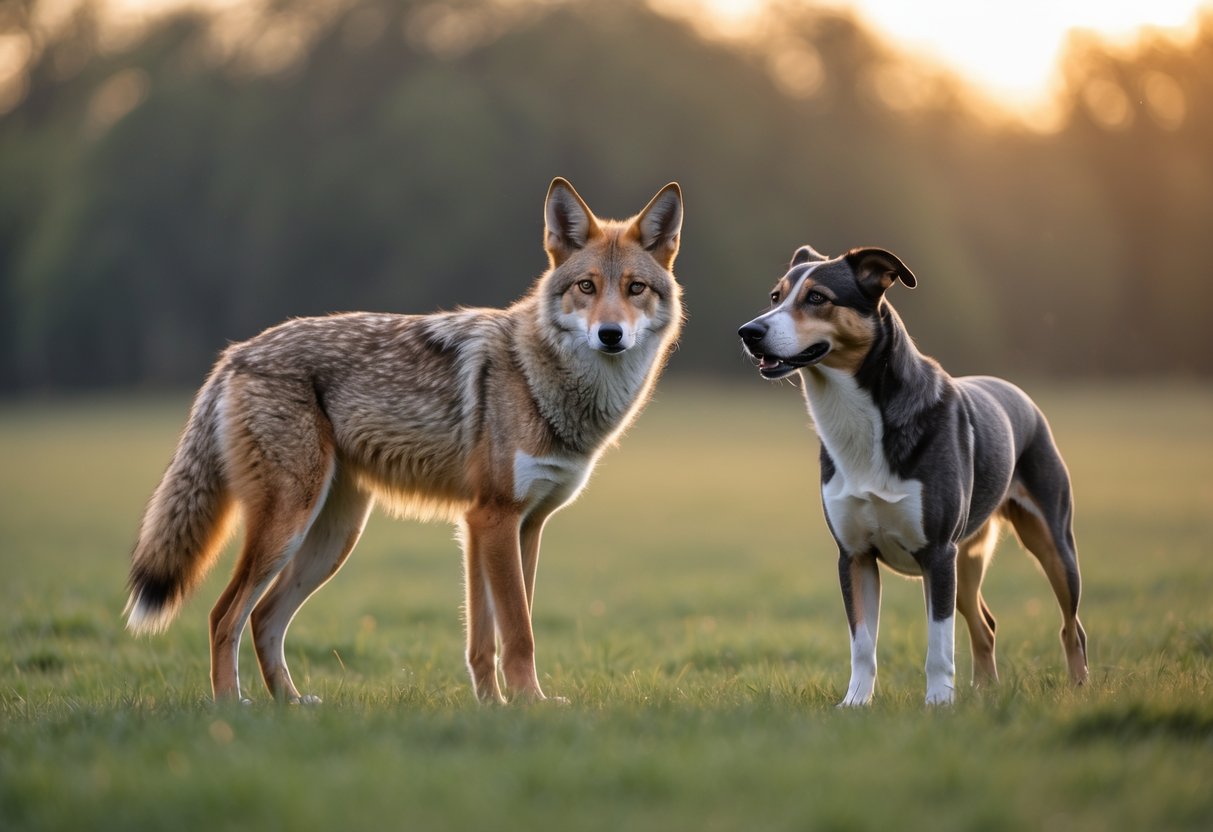
Some key factors make coyote-dog hybrids rare. Timing, behavior, and where they live all matter a lot.
That’s why you almost never see these hybrids in nature.
Mating Seasons and Estrus Cycle
Coyotes mate once a year, usually in late winter or early spring. Their breeding window is short and specific.
Domestic dogs, though, can go into heat several times a year—or all year if they’re unspayed. That means a female dog and a coyote are rarely fertile at the same time.
If your dog is outside during coyote breeding season, the odds of mating go up. Spaying or neutering your dog can stop accidental breeding.
Behavioral and Social Differences
Coyotes follow strict courtship rules. They use howls, scent marking, and chasing, usually with a bonded mate or within their pack.
Domestic dogs show all sorts of mating behaviors, depending on their breed and how people raise them. They’re less picky, to be honest.
Coyotes act territorial. Packs defend their area and usually chase off strange dogs.
This social setup makes it tough for dogs and coyotes to pair up or mate.
Environmental and Habitat Influence
Coyotes usually stick to wild or semi-wild places—think forests, fields, or the edges of suburbs.
Most dogs spend their time in human spaces, like houses and neighborhoods. This keeps them apart and makes it pretty rare for them to cross paths in a way that would lead to mating.
Even when their territories overlap a bit, coyotes tend to steer clear of people and busy spots. So, honestly, you probably won’t see coyotes hanging around close enough to most dogs for natural breeding to happen.


