
Ever wondered if chimpanzees can chow down on the same food you do? Well, the short answer’s yes—at least for some human foods. Chimps can eat fresh fruits and veggies, since those are pretty close to what they’d find in the wild.
But here’s the thing: not all human food is safe for them. Processed snacks or sugary treats? Those can really mess up their health.
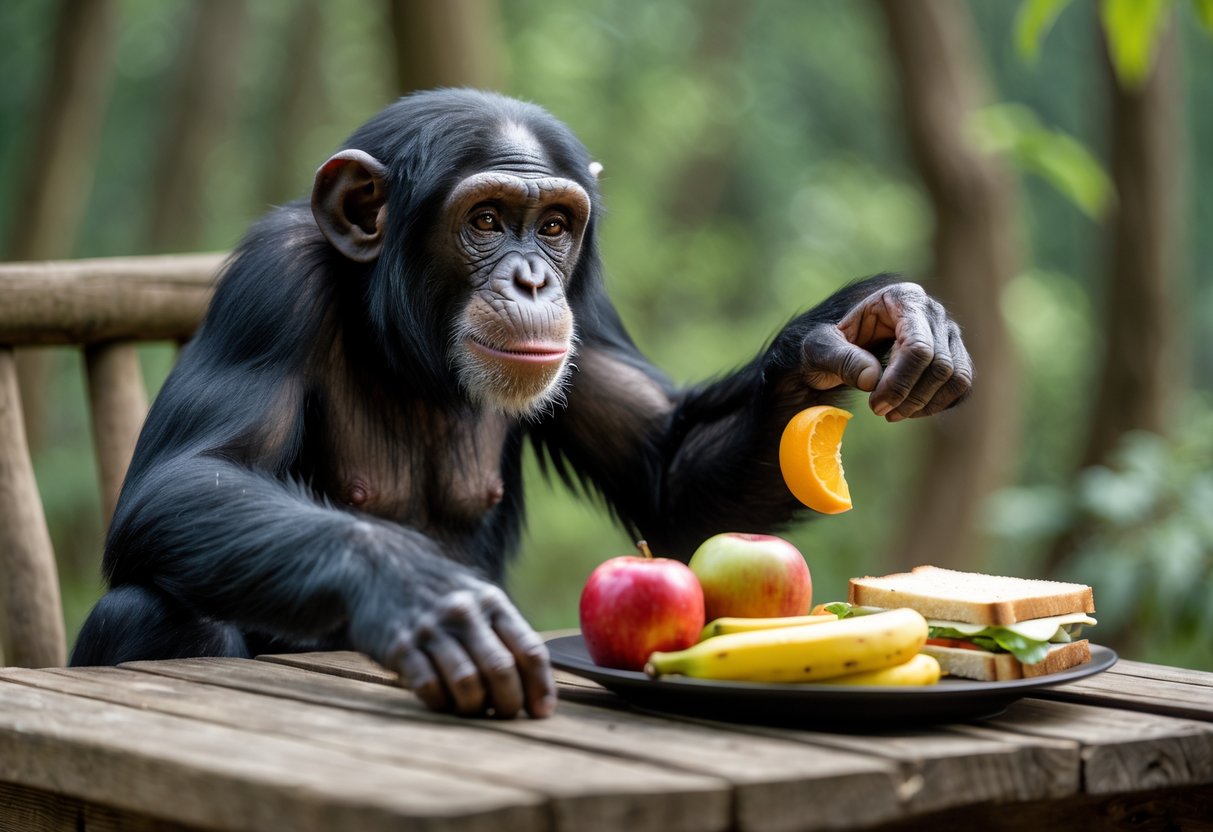
In the wild, chimpanzees mostly munch on fruits, nuts, insects, and sometimes even small animals. When people give them stuff like candy or junk food, it leads to weight gain, stomach issues, and weird changes in behavior.
Knowing what’s safe and what’s risky really matters for keeping chimps healthy and, honestly, just happier.
Curious about which human foods are actually okay for chimps, and why some are a bad idea? Let’s get into the details about their diet and how food choices impact their well-being.
Can a Chimpanzee Eat Human Food?

Chimpanzees can eat some human foods, but you can’t just feed them anything. Their natural diet focuses on fruits, nuts, leaves, insects, and small animals here and there.
Some human foods line up with this, but a lot—especially the processed, sugary ones—can cause real problems for their health.
You have to be thoughtful about what you offer a chimp. Certain foods fit their needs, but others can mess with their health or even change how they eat.
Which Human Foods Can Chimpanzees Eat?
Chimps do fine with fresh fruits and veggies—bananas, sweet potatoes, green beans, leafy greens. These are foods they’d find in the wild, and they give them vitamins and fiber.
Cooked veggies work, too, as long as you don’t drown them in salt, sugar, or oil. Lean meats or eggs are okay in small amounts, since wild chimps sometimes eat small animals for protein.
But processed snacks like candy, chips, or soda? Skip those. Their bodies just aren’t built for that much fat and sugar.
Zoos and sanctuaries usually stick to natural foods for chimps to keep them healthy and closer to what they’d eat in the wild.
Health Risks of Human Food for Chimpanzees
Feeding chimps junk food leads to all sorts of trouble—obesity, diabetes, stomach problems. Their digestive systems can’t handle high sugar or fat.
That kind of diet weakens their immune systems and brings on other health problems.
If chimps get used to easy human food, they might stop foraging naturally. That’s bad news for their survival skills.
They could start approaching people for snacks, which isn’t safe for anyone. Unhealthy food habits can even mess with how chimps act around each other.
It’s just better to stick with natural foods so they stay strong and act like wild chimps should.
Differences Between Human and Chimpanzee Nutrition
Sure, humans and chimps share about 99% of their DNA, but their diets? Totally different.
Humans eat a ton of cooked and processed stuff, but chimps rely on raw fruits, leaves, nuts, and bugs.
Chimps need fiber, carbs, and protein mostly from plants and a bit of meat. Human diets often have way more sugar and fat than chimps can handle.
Chimps’ diets shift with the seasons and where they live—they adapt to what’s around them. But your diet probably includes things like pizza or candy, and those just aren’t good for chimps.
If you want to keep chimps healthy, stick with foods that are close to what they’d eat in nature.
For more on what chimps eat, check out Can Chimpanzees Eat Human Food?.
Natural Diet and Feeding Habits of Chimpanzees
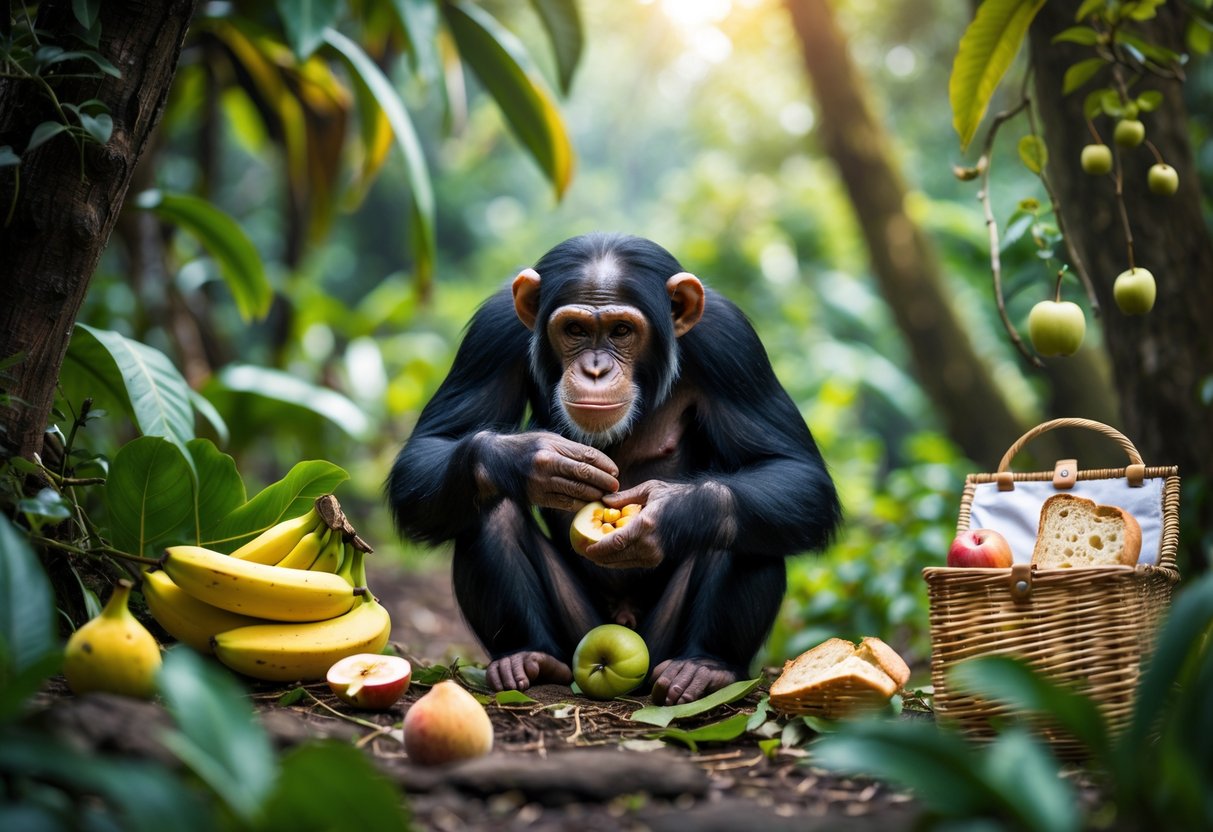
Chimpanzees eat all sorts of things, depending on where they live and the time of year. They use clever tricks to find food and sometimes work together to get what they want.
Their diet is mostly plants, but they’ll go for some animal protein, too.
Wild Chimpanzee Diet Overview
In the wild, chimps mostly eat fruits, leaves, nuts, and insects. Figs and berries are big favorites—they give quick energy.
Leaves and seeds add nutrients, and insects are a handy source of protein. Sometimes, they hunt small animals, but meat is a tiny part of their diet—less than 2%.
If you ever visit Taï National Park in Côte d’Ivoire, you’ll spot chimps eating a mix of fruits and nuts because the forest is so rich. In places like Uganda, when fruit’s scarce, they might eat more insects or leaves.
Tool Use and Foraging Behaviors
Chimps are pretty crafty with tools. They use sticks to fish termites out of mounds or grab leaves to soak up water like sponges.
Researchers at the Max Planck Institute for Evolutionary Anthropology watch them pick out just the right sticks and even shape them before using.
This tool use lets chimps get food they couldn’t otherwise reach. It also proves they’ve got sharp memories and real problem-solving skills when they’re out searching for a meal.
Impact of Human Food on Chimpanzee Populations
Giving chimps human food really messes with their health and the way they act. Stuff like candy, chips, or pizza? Their bodies just aren’t built for all that sugar and fat.
They might gain weight, get sick, or deal with stomach problems. It’s not just about their bodies, either.
Once chimps get used to grabbing easy snacks from people, they stop foraging like they normally would. That’s a problem.
They start coming closer to humans, and honestly, that’s risky for everyone involved. If we want chimps to stay healthy, we should just let them eat what they’d find in the wild.
If you’re curious about why a natural diet matters so much for chimps, check out Can Chimpanzees Eat Human Food? Insights Into Their Diet & Habits.


