
Maybe you’ve seen wild stories or rumors floating around about humans and chimpanzees having babies together. Sounds like something straight out of a sci-fi flick, right? But if you dig into the science, the answer’s honestly pretty obvious. A chimpanzee and a human can’t have a baby together—their genes and biology just don’t mesh.

Sure, humans and chimps share a big chunk of DNA. But big things like chromosome numbers and how their bodies actually work don’t line up at all.
Their sperm and egg cells just can’t combine or develop into an embryo. That’s the end of that story.
If you’re wondering why nature draws such a hard line between us and chimps—or what really happened with those old experiments—let’s get into it. Understanding the facts can clear up a lot of weird myths and show why a human-chimp baby isn’t even remotely possible.
Can a Chimpanzee and a Human Have a Baby Together?
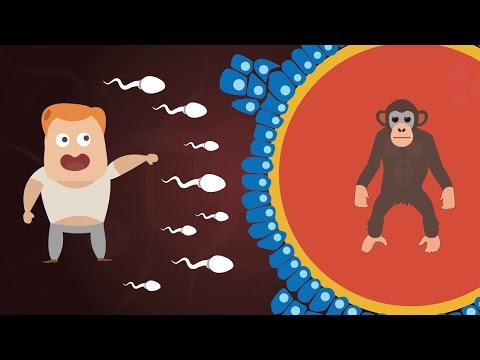
Humans and chimps really do share a lot of DNA. Still, those key biological differences make it flat-out impossible to have a baby together.
These differences show up everywhere—from chromosomes to how embryos develop.
Understanding Genetic Compatibility
Your cells carry chromosomes, which hold all your genetic info. Humans have 46 chromosomes. Chimps have 48.
That difference? It’s a dealbreaker. Their genes can’t line up right during reproduction.
Even though humans and chimps share about 95-99% of their DNA, those extra chromosomes and the way our genes are ordered make it impossible to create a healthy embryo. The chromosomes just don’t match up the way they need to.
Some of our chromosomes are actually fused versions of ape chromosomes. That’s kind of wild, but it also means things don’t fit together. These mismatches keep cells from dividing or developing into a baby.
So, your biology just won’t let a chimpanzee and a human have kids together. That’s how it is.
Why Human-Chimpanzee Hybrids Are Not Possible
Besides chromosomes, our reproductive systems are nothing alike. A chimpanzee’s womb can’t support a human embryo or fetus.
The environment for growth just isn’t there. It’s not just a technical issue—it’s a hard stop.
On top of that, ethical and legal issues prevent scientists from even trying these kinds of experiments today. No credible evidence has ever shown a human-chimp hybrid being born, or even coming close.
And don’t forget the massive differences in gestation, immune systems, and how our cells communicate. All of that adds up to a big no for any hybrid developing in a human or chimpanzee body.
If you want a deeper dive into the biology, check out Can a Chimpanzee Carry a Human Baby? Biological Limits Explained.
Scientific Barriers and Research Attempts

When you look at whether a chimpanzee and a human could have a baby, the biological roadblocks are everywhere. The differences in chromosomes, those old experiments, and the way primate reproduction works all slam the door on this idea.
Genetic Differences Between Humans and Chimpanzees
Humans have 46 chromosomes. Chimps? 48. That mismatch means their DNA can’t line up right for reproduction.
Even though you share about 98-99% of your genes with chimps, that tiny leftover percent packs a punch. It includes genes for brain function and physical traits that just don’t match up.
There’s also the matter of gene order and structure. Human chromosome two actually comes from two fused ape chromosomes. That alone makes things really complicated.
These differences make it impossible to form a viable hybrid embryo. Our genetic material is just too different. If you want to get into the nitty-gritty, you can read more at human and chimpanzee genetics.
Historical Experiments and Ethical Considerations
A few scientists in history tried to see if a human-chimpanzee hybrid could be made. Soviet scientist Ilya Ivanov, for instance, attempted to inseminate female chimps with human sperm.
None of those attempts resulted in a pregnancy. These experiments were pretty controversial, and honestly, there’s no solid proof anything ever came of them.
There’s also the weird case of Oliver, a chimp who looked and acted kind of human. Some people thought he might be a “humanzee,” but genetic tests proved he was just a regular chimp with some quirky traits.
Beyond the science, modern ethics firmly shut down any attempts at human-chimp hybrids. The welfare and moral concerns for both species are just too big to ignore. Bioethics literature on primate research covers these issues in depth.
Reproductive Mechanisms in Primates
You and chimpanzees have different reproductive systems, which actually block hybridization. Humans have a unique menstrual cycle. Chimpanzees, on the other hand, experience more seasonal fertility.
This mismatch means the timing for fertilization rarely lines up. Your mating behaviors and social systems also differ a lot.
Humans usually form monogamous partnerships. Chimps? They tend to have more promiscuous mating habits.
These behavioral differences make the odds of mating even lower. And even if fertilization somehow happened, genetic incompatibility would almost certainly stop embryo development.
Chromosome pairing errors and developmental problems usually prevent a hybrid from surviving. Altogether, these biological and behavioral factors create strong reproductive barriers between you and a chimpanzee.
If you want to dig deeper, check out this explanation of chimpanzee pregnancy and human genetic differences.


