
If you have a female Boxer, you might be curious about when she will go into heat. Knowing this can help you prepare for her needs and ensure her well-being.
Most female Boxers have their first heat cycle between 6 and 12 months of age, but some may start as early as 4 months or as late as 18 months.

Understanding heat cycles is essential for responsible dog ownership. Female Boxers typically experience heat twice a year after their first cycle. This means you’ll need to be aware of the signs that indicate she is in heat, so you can take the right steps to care for her.
As a Boxer owner, being informed can help you manage this natural process with ease. Stay tuned to learn more about the signs of heat, how to care for your dog during this time, and other important facts to keep your Boxer happy and healthy.
Understanding the Heat Cycle in Female Boxers

The heat cycle in female boxers is a natural process that occurs regularly. It’s important to recognize the different stages and signs of heat to ensure proper care for your dog.
Phases of the Boxer Heat Cycle
The heat cycle consists of four main phases: proestrus, estrus, diestrus, and anestrus.
-
Proestrus: This phase lasts about 9 days. You may notice changes in your female boxer’s behavior and body. She will have a swollen vulva and may show vaginal discharge, which can be bloody. Hormonal changes begin during this stage, signaling that heat is approaching.
-
Estrus: Lasting around 5-10 days, this is when your female boxer is fertile. The discharge usually becomes clearer and less bloody. You’ll notice more signs of flagging, which means she may raise her rear when approached. This stage is vital for breeding.
-
Diestrus: This phase follows estrus and can last about 60 days. If your dog is not pregnant, her body will start to return to normal. Any signs of heat will fade, and her vulva will return to its regular size.
-
Anestrus: This is the resting phase that lasts until the next cycle, about 4-6 months. During anestrus, your female boxer will show no signs of heat or hormonal activity.
Recognizing the Signs of Heat
Being aware of the signs of heat can help you care for your female boxer. Common signs include:
- Swollen Vulva: This is often one of the first signs you will notice as she enters proestrus.
- Vaginal Discharge: Look for changes in discharge color and amount.
- Increased Urination: Your female boxer may urinate more often to mark her territory.
- Behavior Changes: She may become more affectionate or restless.
When you notice these signs, it’s wise to monitor her closely. Keeping her away from unneutered males can prevent unwanted pregnancies.
Health Considerations During Heat
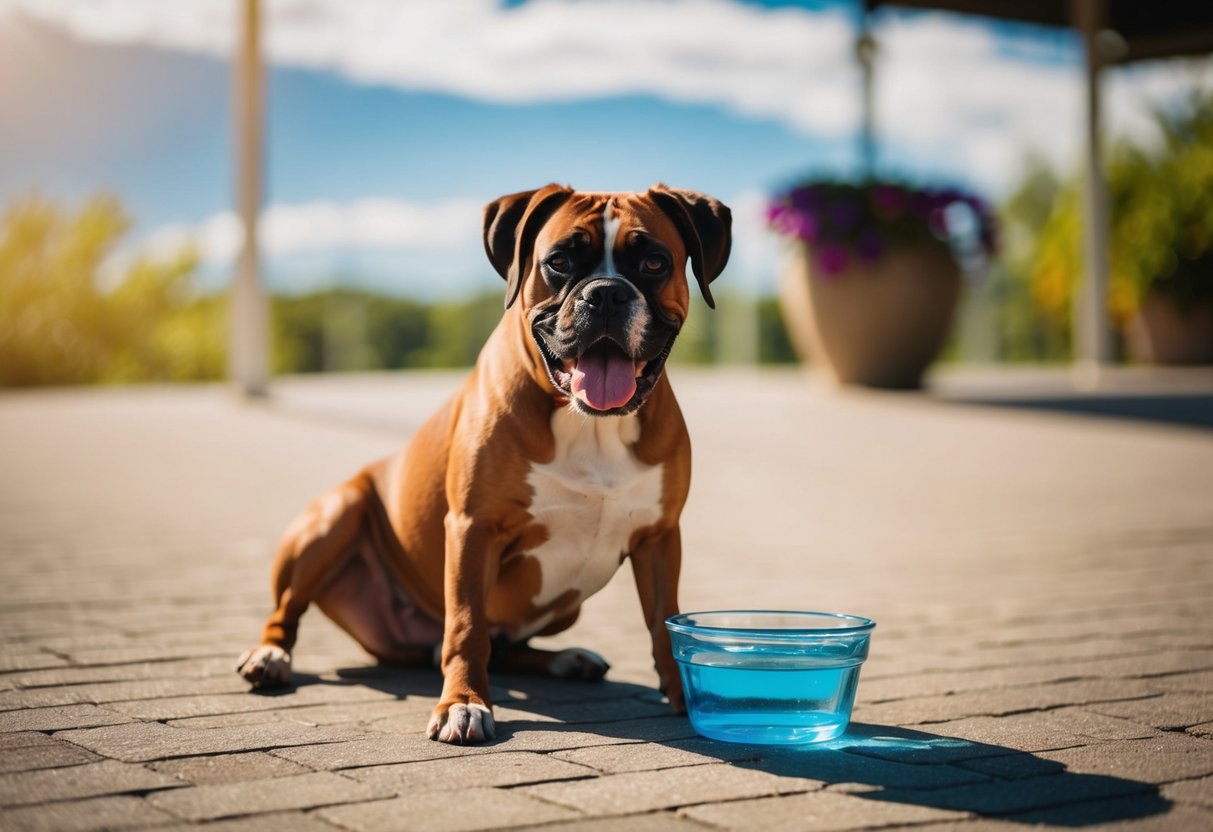
When your female Boxer goes into heat, it’s important to be aware of her health needs. You’ll want to manage her care carefully during this time and understand potential health risks.
Managing a Boxer in Heat
During her heat cycle, your Boxer will need extra attention. Keep her indoors and supervised to prevent unwanted breeding.
Use doggy diapers to manage any discharge. This can help keep your home clean while keeping your pup comfortable.
You should also maintain her regular feeding and exercise routine. However, she might be less active than usual.
Monitor her mood closely, as some dogs may experience changes in behavior. Providing a calm environment can help ease her stress during this hormonal change.
Potential Health Risks
While most female Boxers handle their heat cycle well, there are health risks to watch for. One serious condition is pyometra, an infection of the uterus that can occur after heat cycles.
Symptoms include increased thirst, lethargy, and a foul-smelling discharge.
You should also be cautious about accidental breeding. If you’re considering breeding, it’s best to wait until she has had a few heat cycles to ensure her health.
Spaying your Boxer is another option to avoid the heat cycle entirely and reduce health risks associated with reproductive diseases. Always consult your vet for personalized advice on managing your Boxer’s health during this time.
Responsible Breeding Practices
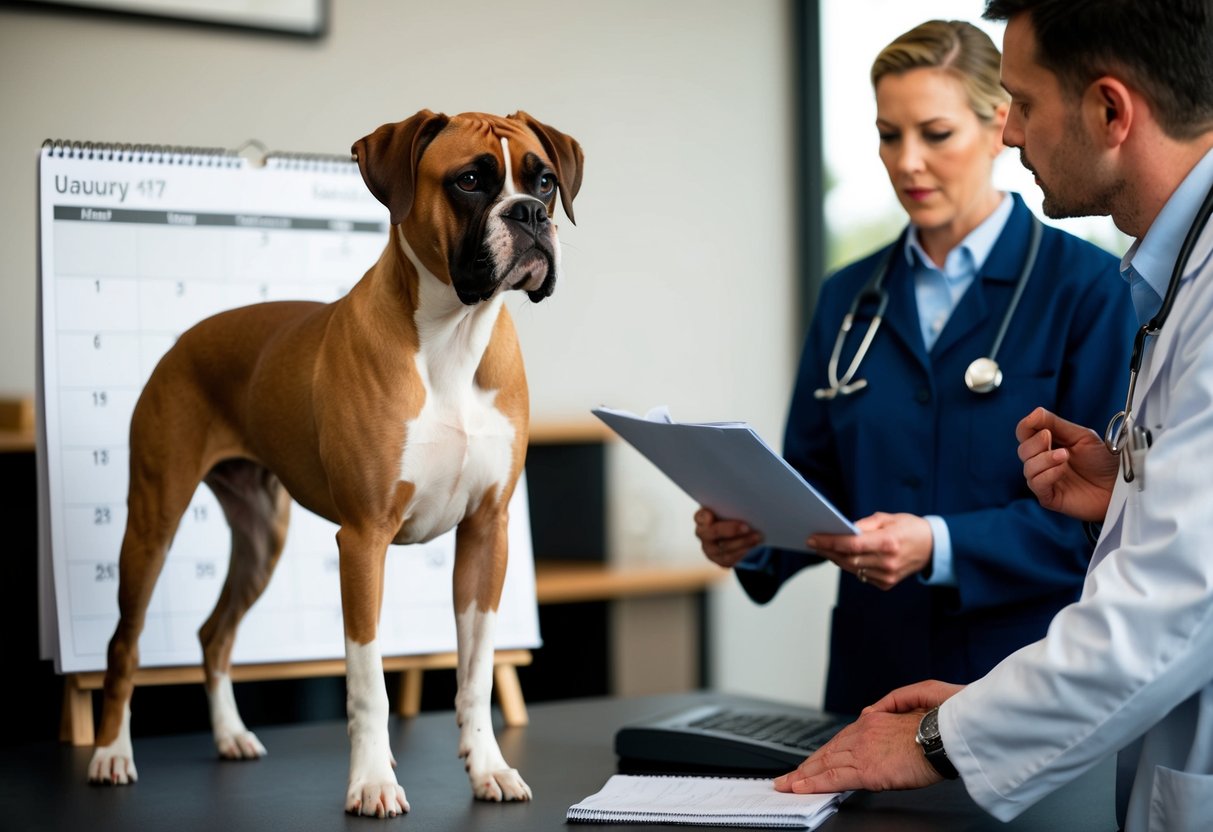
Breeding your female boxer requires careful thought and planning. It is important to understand the best practices to ensure the health and well-being of both the mother and her puppies.
Deciding to Breed
Before breeding, you should consider if your female boxer is ready.
Ideally, she should be at least 2 years old and have gone through 3 or 4 heat cycles. This helps reduce health risks for both the mother and the puppies.
Make sure to evaluate her genetics. Look into her family history for any genetic health issues.
This can help you avoid passing on potential problems to the puppies. Only breed dogs that are healthy and have good temperaments. This will increase the chances of producing happy, healthy boxer puppies.
Healthy Breeding Intervals
When breeding, your female boxer’s health is a top priority. You should space out the pregnancies to prevent any health issues. It’s often recommended to wait about 18 months to 2 years between litters. This allows her body to recover fully.
Pay attention to her health during and after pregnancy. You should also schedule regular vet check-ups. This can help catch any issues early. Good nutrition and proper care during this time will also lead to healthier puppies and a smoother process for your dog. By following these practices, you improve the chances of raising happy, healthy boxer puppies.


