
Squirrels are often seen darting through parks, stealing bites of food, or curiously approaching people. While some squirrels can display friendly behavior toward humans, it’s essential to remember that they are still wild animals. Their interactions may vary based on their environment and experiences with people.
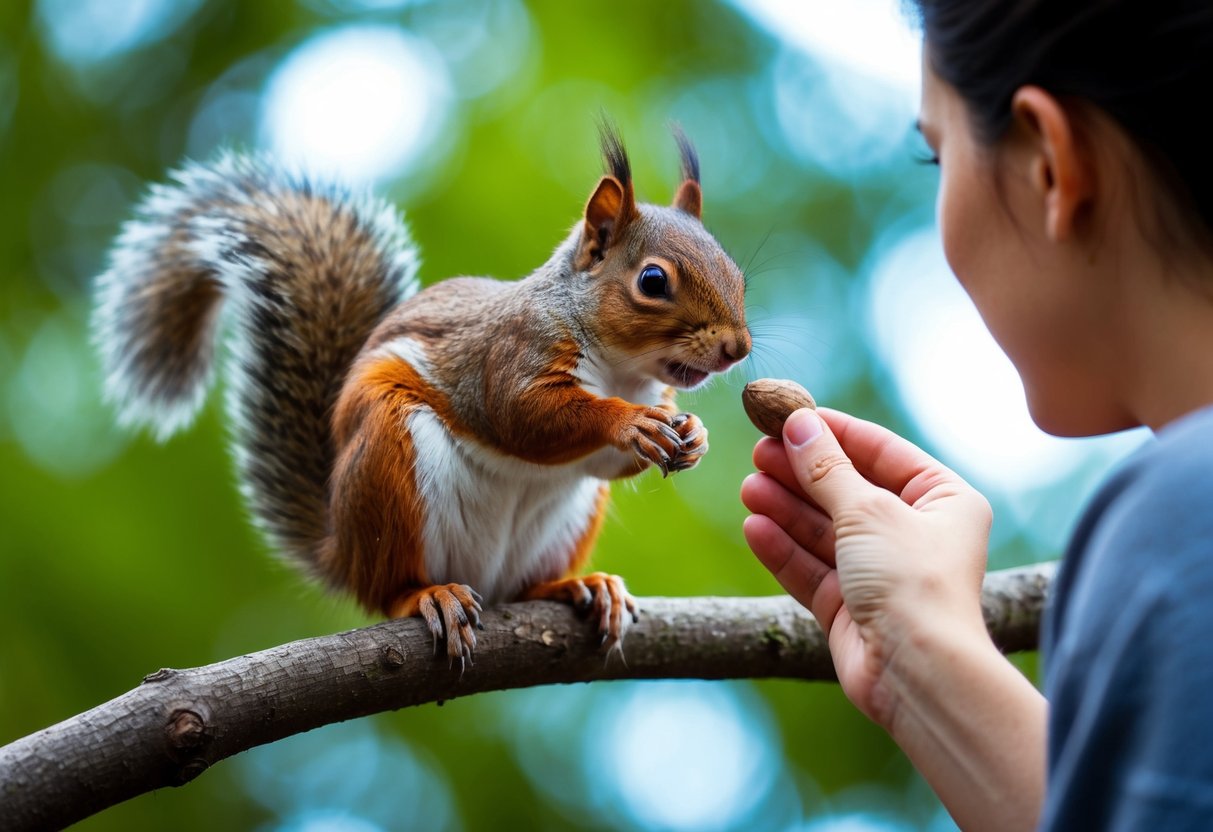
In urban areas, squirrels might become more accustomed to human presence. You might notice them approaching when they sense food is nearby. This friendliness can be charming, but it’s also important to recognize their role in the ecosystem. Squirrels help with seed dispersal, which supports plant growth and contributes to a healthy environment.
If you’ve ever wondered about their behavior, you’ll find it fascinating that squirrels can form connections with humans while still retaining their wild instincts. Understanding these animals can enhance your appreciation of nature and the creatures that share our spaces.
Understanding Squirrel Behavior
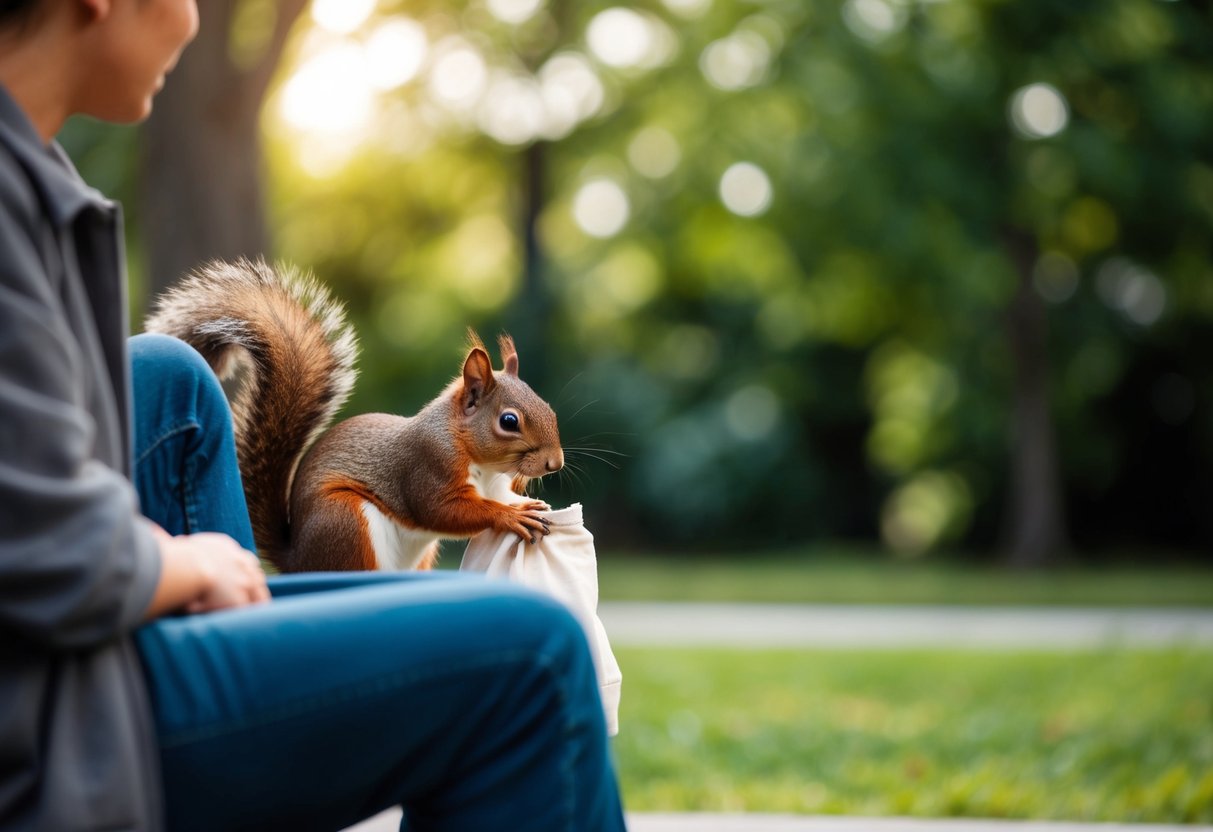
Squirrels are fascinating creatures with unique traits and behaviors. They can show friendly or curious interactions with humans but remain primarily wild animals. Learning about their behavior helps you understand how to interact with them safely and respectfully.
Inherent Traits and Intelligence
Squirrels belong to the Sciuridae family and are known for their agility and intelligence. They are quick learners and can solve simple problems to access food. Their intelligence allows them to adapt to different environments, including urban areas.
In addition, these critters are adorable and cute, especially baby squirrels. They can form some degree of recognition toward humans. For example, if you often feed them, they may start to recognize you. This recognition, however, isn’t the same as forming an emotional bond like pets do.
Interactions With Humans
In urban settings, squirrels often become accustomed to human presence. They may approach people looking for food, which can make them seem friendly. Many people enjoy watching them and even feed them.
You might wonder, “Do squirrels get attached to humans?” While they may not form deep connections, squirrels can recognize individuals who regularly interact with them. Some wild squirrels even remember where they’ve found food in the past, indicating a level of intelligence.
Squirrels in the Wild Versus as Pets
Keeping squirrels as pets is generally not recommended and often illegal in many areas. Wild squirrels thrive in their natural habitat where they can engage in essential behaviors like foraging and nesting.
Unlike domesticated animals, squirrels do not adjust well to life in captivity. Experts advise against trying to adopt them. If you find an injured squirrel, it’s best to consult wildlife experts for help. While feeding squirrels can create friendly interactions, remember that wild squirrels should remain in the wild to live happy, healthy lives.
Caring for Squirrels
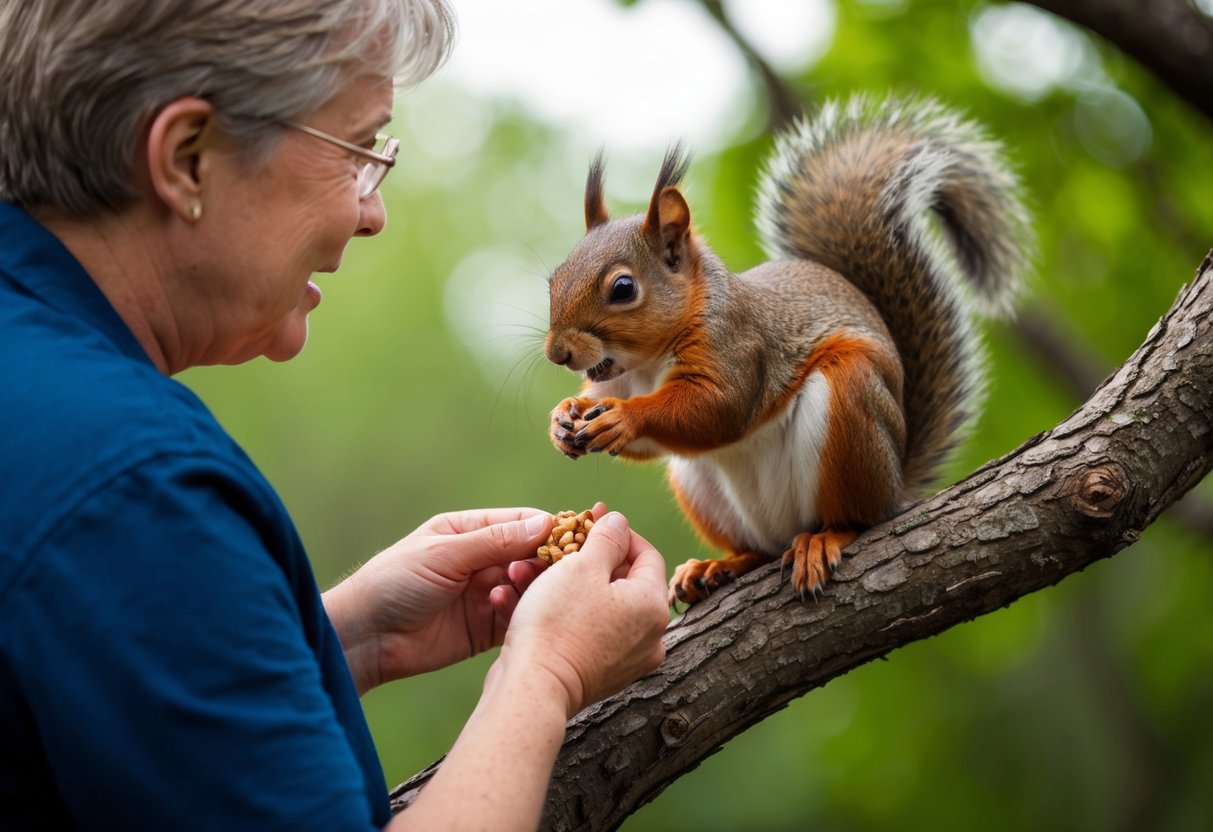
Caring for squirrels involves understanding how to help them, especially if they are orphaned or injured. It’s important to know the specific needs of different squirrel species as well.
Rescuing Orphaned and Injured Squirrels
If you come across an orphaned or injured squirrel, your first step is to assess the situation. Look for signs of injury, such as bleeding or difficulty moving.
For orphaned squirrels, especially baby ones, keep them warm and in a safe place. A small box with soft towels can provide a cozy environment. Do not feed them human food; instead, contact a wildlife rehabilitation center for guidance.
When you find injured squirrels, avoid handling them too much. They can be scared and might bite. If safe to do so, gently place them in a container and seek help from professionals. Remember, managing rehabilitated squirrels requires patience.
Species-Specific Considerations
Different species of squirrels, like red squirrels and gray squirrels, have unique care needs. Gray squirrels are more common and may adapt better to human interaction. They might even exhibit friendly behavior if raised from a young age.
In contrast, red squirrels are less social and tend to be more territorial. This may affect how you interact with them, especially during rehabilitation. Each species benefits from tailored care, so knowing their habits can make a significant difference.
If you are considering bringing a squirrel into your home, research their specific needs. Ensure you are ready for the responsibilities of caring for a wild animal, as they may not always be friendly in their natural state.


