
You might picture seahorses as gentle and shy, but honestly, they can get pretty competitive when it comes to food or finding a mate. They don’t usually hurt others, but they’ll defend their turf and battle for meals or partners if they have to.
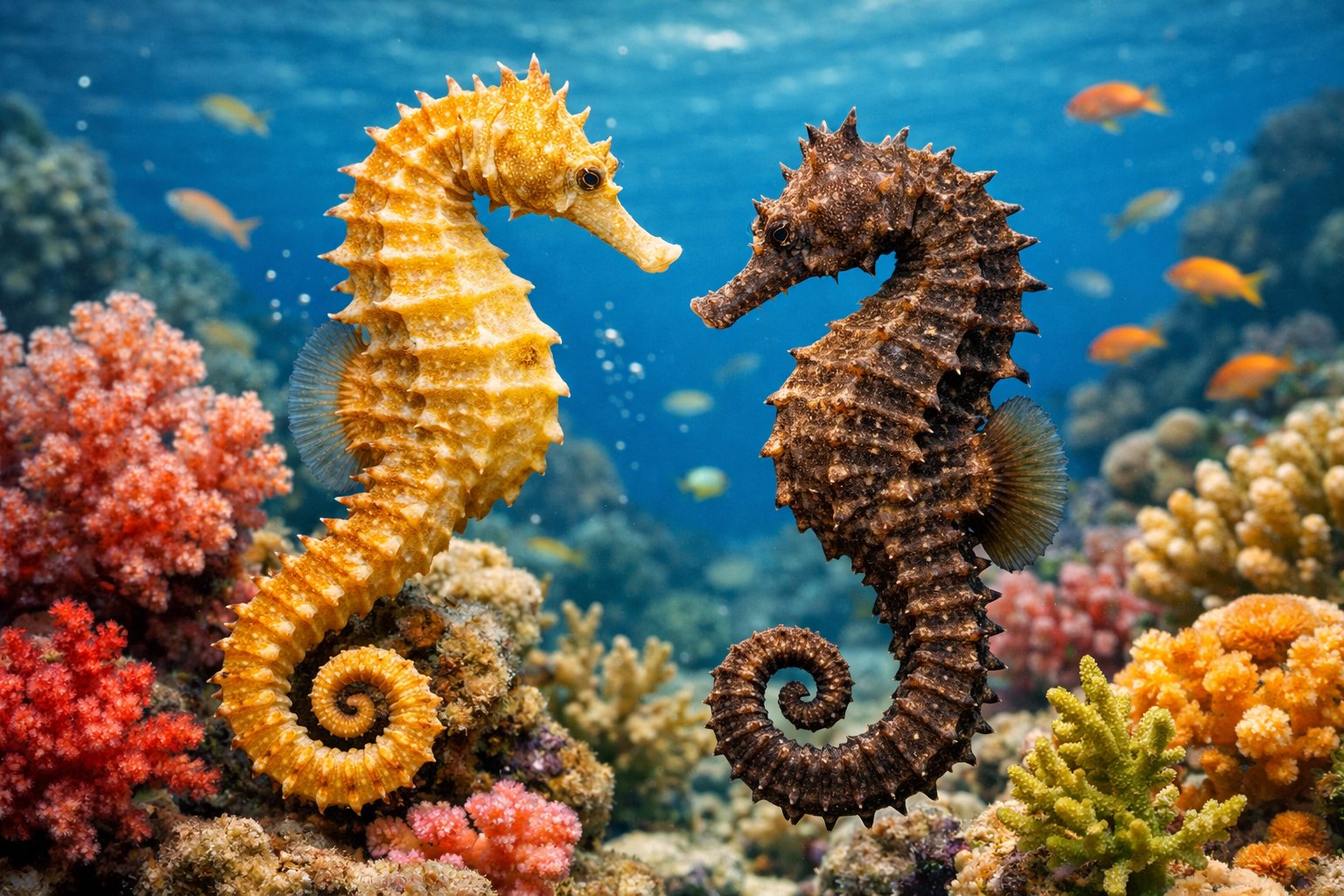
Their hunting style, bony bodies, and odd mating rituals all play a part in how they handle those confrontations. Most of the time, their clashes end with a quick display or a short-lived tussle.
Let’s dig into what actually counts as violence for seahorses and what’s just part of their social life. Human activity can even nudge them into more conflict than usual.
Are Seahorses Violent Predators?

Seahorses hunt tiny prey with stealth and suction, not brute force. They go after small animals like copepods, blending in and then snapping them up fast.
Seahorse Hunting Behavior
You’ll usually spot seahorses just hanging out in seagrass or on coral, motionless, waiting for something edible to wander close. Their upright pose and shifting skin patterns help them disappear into the background.
They eat mostly copepods, mysid shrimp, and other little crustaceans. You might see them sipping prey, one tiny mouthful at a time.
Since their menu is so small, they don’t need big jaws or wild speed like other fish. Seahorses hunt at different times, day or night, depending on what’s happening around them.
You’ll often find them where the current brings in a buffet of plankton.
How Seahorses Catch Their Prey
Seahorses use ambush suction feeding. They line up with their prey, then snap open their snout and suck it in like a vacuum.
Their snout works like a straw, and their eyes move separately, so they can track prey without moving their heads. No teeth—just swallow and repeat.
That tail of theirs? It anchors them to seagrass so they don’t drift away while they’re eating. It’s a clever trick—staying steady while they strike.
Aggression Toward Other Marine Species
Seahorses don’t really go looking for fights. When they do get aggressive, it’s usually two males showing off during courtship or squabbling over space.
You’ll see snapping, maybe some tail wrestling, but serious injuries are rare. They’re not hunting bigger animals, and they’re definitely not a threat to people.
With their armor and small size, seahorses usually end up as prey themselves. When they feed near other small fish, they might compete a bit, but they tend to avoid outright brawls.
If a crab or bigger fish comes close, they’re more likely to try and slip away than start a fight.
Unique Seahorse Adaptations and Interactions
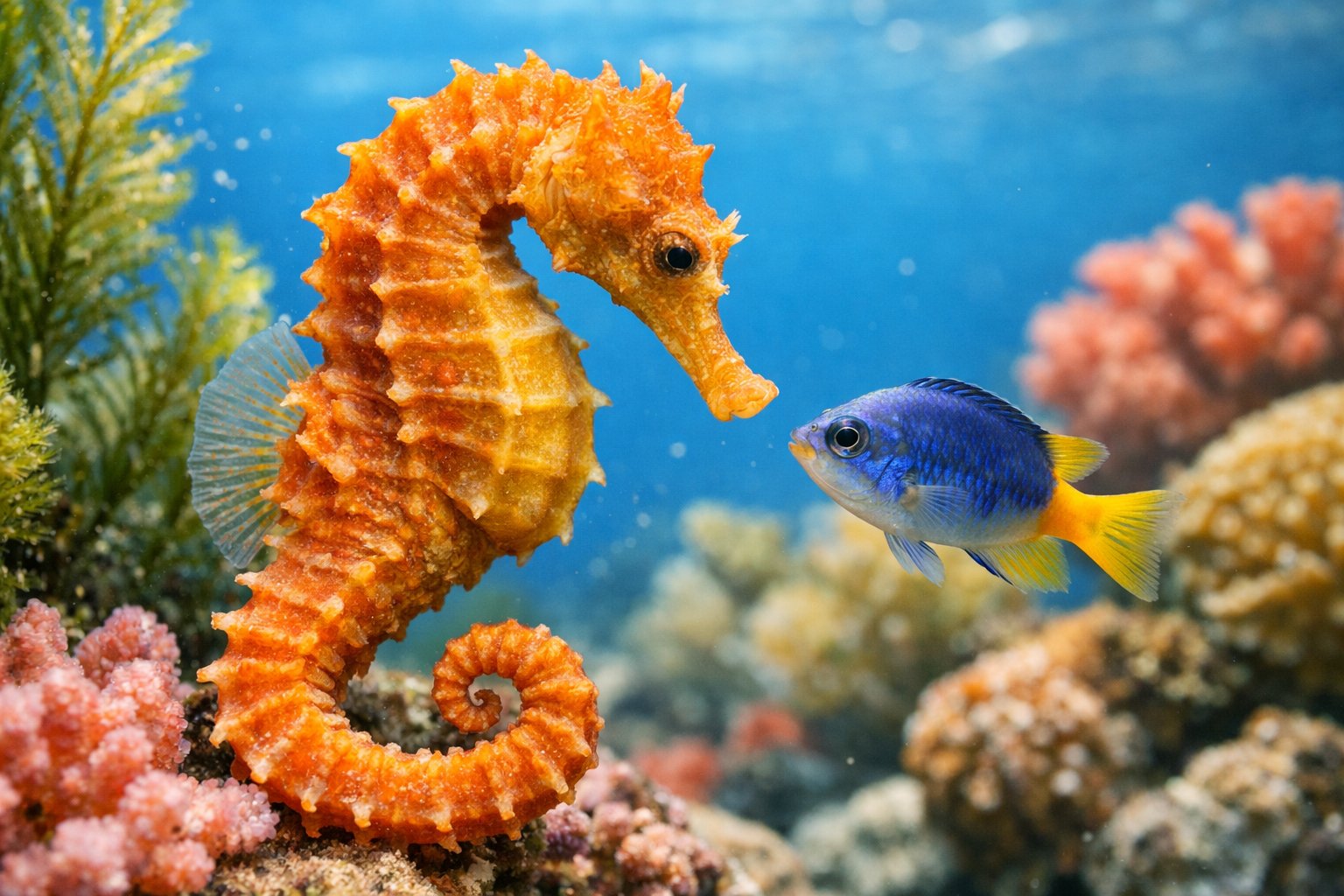
A seahorse’s shape, tail, and the differences between species all help them hide, grab onto things, and survive in choppy coastal waters. Their head, tail, and species quirks change how they eat, cling, and dodge danger.
Head Morphology and Stealth
The seahorse’s head sits on top of a long, tube-like snout that’s basically a built-in straw. They use it to suck in tiny prey—plankton, copepods, little shrimp—without making much of a splash.
That stealthy approach lets them ambush food while holding onto seagrass or coral. Their eyes can swivel independently, so they keep an eye out for trouble while they hunt.
Bony rings and armored plates shield their heads from bumps and little bites. Their skin can change color, and sometimes they grow wispy filaments, making them even harder to spot in the weeds or reefs.
Role of the Prehensile Tail
A seahorse’s tail is like an extra limb. They wrap it around seagrass, coral, or gorgonians to anchor themselves against the flow and stay put for feeding.
This trick saves energy—they don’t have to swim just to hold their spot. The tail also comes in handy during mating dances and the occasional scuffle.
Males sometimes use their tails to hold onto a partner during those weird courtship moves. When they’re fighting over territory, you might see them wrap tails and push each other instead of biting.
For pygmy seahorses, their smaller, flexible tails help them cling tight to tiny coral branches.
Variation Among Seahorse Species
Seahorses come in all sorts of shapes and sizes. Their colors and favorite places to live change a lot from one species to another. These differences really shape how each seahorse interacts with its environment.
Large species like Hippocampus comes and Hippocampus erectus usually grab onto seagrass or soft corals. In contrast, pygmy seahorses stick to gorgonian corals and do a surprisingly good job of copying both the texture and color of their hosts.
If a seahorse lives in strong currents, you’ll notice it has a thicker tail and a much firmer grip. Forest-dwelling or coral-loving species stand out with their elaborate skin appendages, which help them blend in with their favorite corals.
These quirks can affect how vulnerable they are, what they eat, and even how they behave socially. So, if you know which species you’re looking at, you can get a pretty good idea of how it might act out in the wild.
Relevant reading: learn more about seahorse interactions with habitat and camouflage on this article about how they interact with their environment (https://iere.org/how-do-seahorses-interact-with-their-environment/).


