
You can bond with seahorses, but honestly, they’re friendly on their own terms. Captive-bred seahorses can become tame, and sometimes they’ll interact with you—especially if they learn to eat from your hand or recognize you coming by.
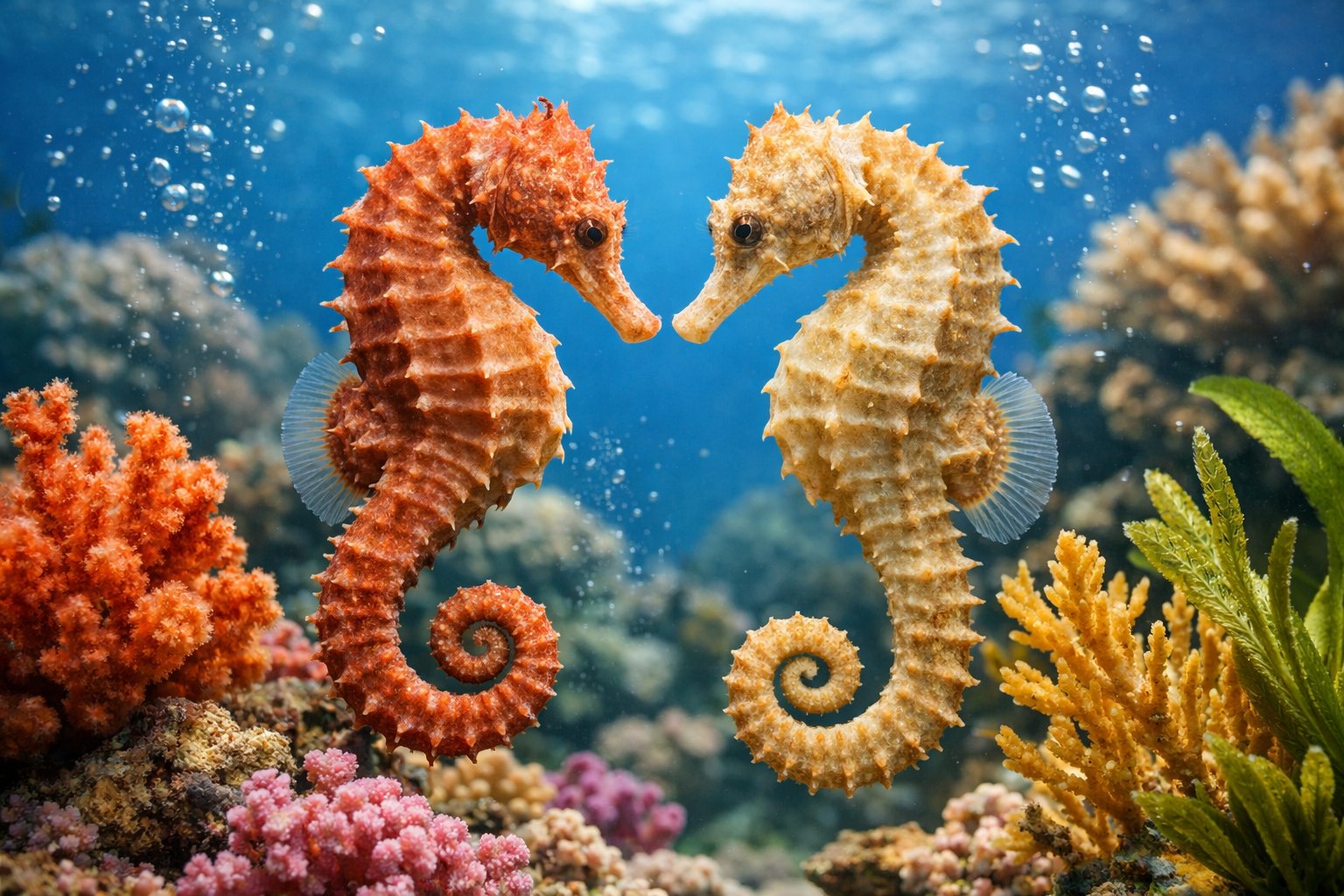
If you’re hoping for a gentle, interactive pet, you’ll need the right species, a calm tank, and a lot of patience. Let’s get into how seahorse behavior and social needs shape their friendliness—and what you can do to make your aquarium feel welcoming for them.
Are Seahorses Friendly? Social Nature and Behavior

Seahorses show calm, curious traits and usually prefer stable company. They love habitat features that let them cling, hide, and feed.
They move slowly and deliberately, form bonds with their mates, and need careful choices in both tanks and human interactions.
How Seahorses Interact With Humans
You can only interact with wild seahorses by watching them. They won’t seek people out, and if you move suddenly or try to touch them, you’ll just stress them out.
Divers who move slowly and don’t touch stand the best chance of seeing natural behaviors—like color changes or a seahorse gripping with its tail.
In captivity, seahorses tolerate gentle, predictable care. If you feed by hand or use small cups, you can teach them to come near you for food.
Don’t chase them or tap on the glass, though. That just stresses them.
Males carry the young in a brood pouch, so breeding tanks need quiet, steady conditions during pregnancy.
If you’re working with seahorses for research or as a hobbyist, stick to best practices from groups like the Seadragon Specialist Group to keep handling minimal.
Seahorse Compatibility With Other Aquarium Species
Pick tank mates that move slowly and won’t nip or outcompete your seahorses. Good companions include pipefish, small gobies, harmless blennies, and invertebrates like snails and shrimp.
These animals share slow feeding habits and won’t bother a seahorse’s prehensile tail.
Stay away from fast, aggressive fish like angelfish and tangs. They’ll just stress out your seahorses, steal food, or bite fins.
Skip fin-nippers and big predators that eat the small crustaceans seahorses rely on.
Set up live rock and seagrass-style décor so your seahorses have places to anchor and hide.
For pet seahorse tanks, keep water flow low. Feed small amounts of live or frozen copepods and mysis often, and set up separate feeding zones if you’ve got mixed species.
That way, your seahorses don’t have to fight for food and can grow steadily.
Courtship, Pair Bonding, and Social Group Dynamics
You’ll notice courtship displays: vertical dances, color flashes, and synchronized swimming. Many seahorse species form pair bonds for at least a breeding season; some stick together even longer.
Courtship helps time the egg transfer into the male’s brood pouch.
Group behavior really depends on the species. Juveniles often float together after birth.
Adults might live alone on small territories or sometimes in loose social groups.
Species like H. abdominalis occasionally breed in groups and don’t always stick with one mate.
Pipefish relatives show similar courtship moves but space themselves differently.
If you keep breeding pairs, give them stable perches, privacy, and regular feeding. During pregnancy, male seahorses need a quiet, steady environment to avoid releasing fry too early.
Caring for Seahorses: Creating a Friendly Aquarium Environment

You’ll need a stable, tall tank with gentle water flow, plenty of hitching spots, and strict water testing. Keep temperature, salinity, and cleanliness steady so your seahorses can eat, rest, and maybe even breed without stress.
Specialized Tank Setup and Maintenance
Go for a tall tank—at least 18 inches high—so seahorses can swim up and down. For a pair, 30 gallons works; add 10 gallons for each extra pair.
Use a reliable heater and keep the temperature between 72–78°F. Keep salinity at a specific gravity of about 1.020–1.025, and test it every week.
Set up gentle filtration for biological and mechanical cleaning, but avoid strong currents. A protein skimmer and live rock help with biological filtration.
Do partial water changes (20–25%) every week or two, and vacuum up detritus from the substrate.
Test ammonia, nitrite, nitrate, pH, and salinity regularly. Quarantine new additions for two to four weeks to cut down on parasites and disease.
Give your seahorses lots of hitching posts—artificial plants, macroalgae, gorgonians, and live rock all work. Secure decorations so they don’t fall.
A refugium or mature live rock helps keep copepod populations up for natural food and better water quality.
Feeding Practices and Food Choices
Feed high-quality frozen mysis shrimp as the main food—it’s easy and covers most nutritional needs. Offer two or three small meals a day for adults.
For picky eaters or fry, add live copepods or newly hatched brine shrimp as a supplement. Don’t rely only on baby brine shrimp for adults—they’re missing some nutrients.
Set up a feeding station or pick a corner for feeding, so your seahorses know where to find food. Hand-feeding is great for training or for weaker animals.
Use long tweezers or a pipette to help. Thaw and rinse frozen food to get rid of preservatives and reduce nitrate buildup.
Rotate in supplements like enriched mysis or small feeder shrimp to avoid nutritional gaps.
Watch for signs like rapid breathing, loss of appetite, or weight loss—these can mean disease or poor water quality.
If you notice uneaten food piling up, cut back feeding amounts. Too much leftover food raises nitrates and can cause bacterial or fungal problems.
Preventing Stress and Promoting Seahorse Health
Keep water conditions steady—seahorses really don’t handle sudden changes in temperature, salinity, or ammonia well.
Use a reliable heater and check the temperature daily. Keep nitrate levels low with regular water changes and good filtration.
That helps prevent Vibrio and other bacterial infections.
Watch your seahorses’ behavior and bodies. Rapid breathing, lesions, or white fuzz can mean disease, parasites, fungal infections, or gas bubble disease.
Quarantine and treat sick animals quickly. Go for captive-bred seahorses if you can; they adjust better to frozen food and usually have fewer parasites.
Avoid sudden lighting changes and noisy, vibrating equipment. Give your seahorses hiding spots and calm flow so they can hitch and rest.
Handle them as little as possible. When you have to move them, use a container with tank water to keep stress down.
Choosing and Managing Tank Mates
Go for peaceful, slow-moving tank mates—ones that won’t outcompete seahorses when it’s time to eat. I’ve had the best luck with small gobies, a few kinds of pipefish, and those gentle cardinalfish.
Skip aggressive fish, fast feeders, and big wrasses. They’ll just harass or steal food from your seahorses.
Try adding reef-safe invertebrates like small cleaner shrimp or snails to help with algae. But crabs and bigger shrimp? Honestly, they can nip at or stress out seahorses, so I’d be careful.
If you keep dwarf seahorses, stick with smaller tankmates and keep the group size down. Dwarf species get bullied pretty easily.
Let the seahorses settle in first, and make sure the tank’s mature before bringing in new friends. At feeding time, watch to see if the seahorses actually get their food—sometimes you’ll need to use targeted feedings or even a feeding station.
If you spot any animal acting aggressive or stressing everyone out, just remove it. A calm tank makes all the difference.


