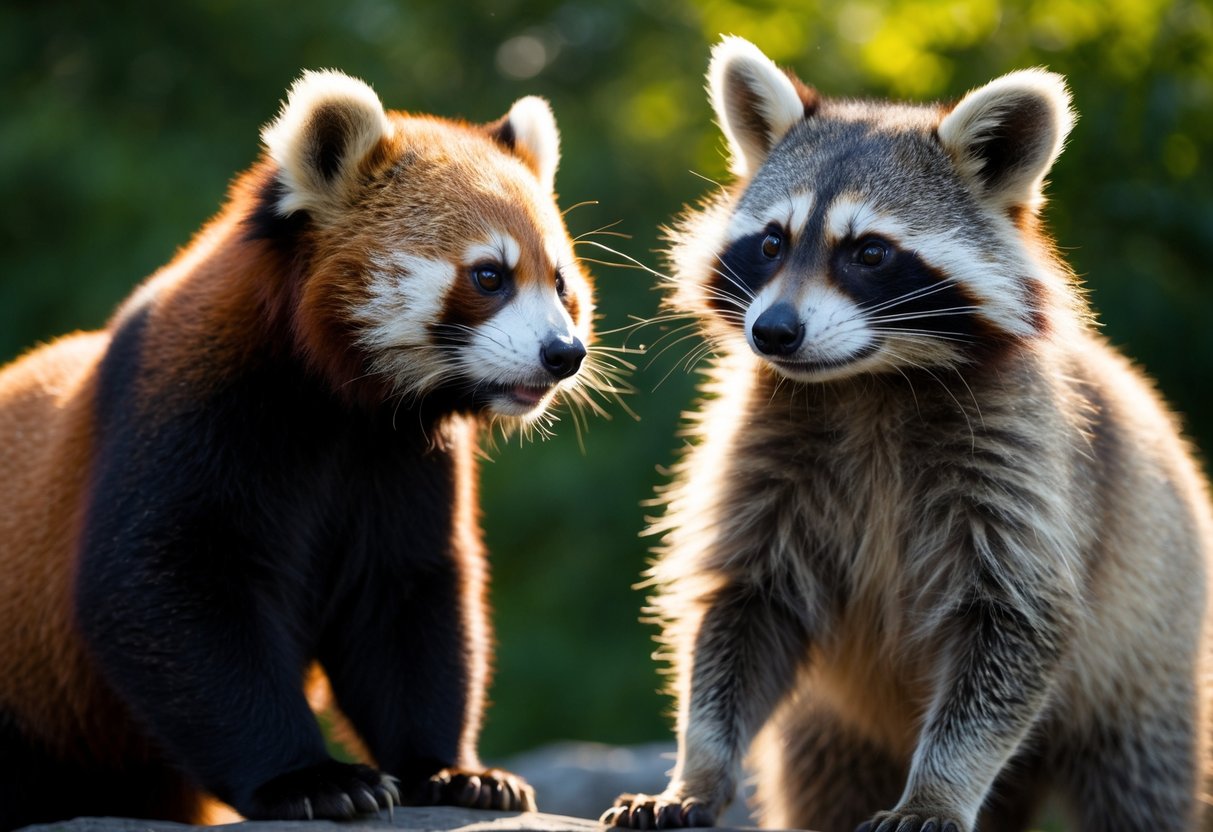
Red pandas often spark curiosity, especially when people notice their cute features resembling those of raccoons. Despite some physical similarities and a shared name, red pandas are not closely related to raccoons at all. Instead, red pandas belong to a unique family called Ailuridae within the order Carnivora, which also includes bears but not raccoons.
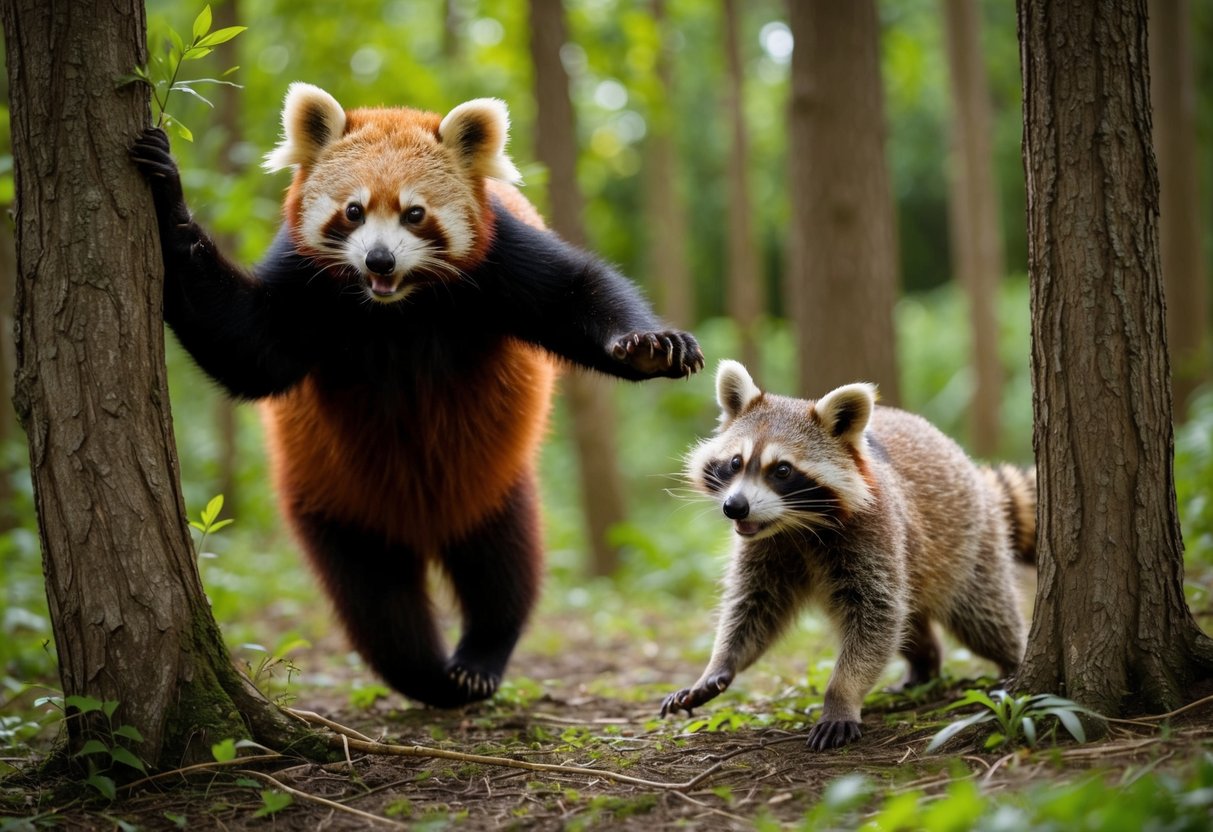
You might wonder how red pandas fit into the big picture of animal classification. While raccoons are members of the Procyonidae family, red pandas stand alone with a distinct evolutionary path. Understanding this can deepen your appreciation for the diversity within the animal kingdom and highlight how species can look similar yet be quite different.
As you explore this topic further, you’ll discover fascinating details about these charming animals and the world they inhabit. From their behavior to their habitat, each aspect reveals why red pandas are truly one of a kind in the carnival of life.
Taxonomy and Classification

The classification of red pandas reveals interesting facts about their family connections and genetic links. Understanding these connections helps clarify why red pandas are often mistakenly thought to be related to raccoons.
Family Connections and Genus
Red pandas belong to the family Ailuridae. This is the only living family that includes red pandas, making them quite unique. They were once thought to be part of the raccoon family, Procyonidae, due to physical similarities.
The genus name for red pandas is Ailurus. In the animal kingdom, red pandas share a distant relationship with both the giant panda and musteloids, which include weasels and otters. While red pandas may share some traits with the Ursidae family, which includes giant pandas and bears, they diverged long ago.
Genetic Links to Other Species
Recent genetic analysis reveals that red pandas are not close relatives of raccoons, despite their similar appearance. They are part of the order Carnivora, which encompasses a wide variety of carnivorous animals.
DNA studies show that red pandas are more closely related to animals like skunks and weasels than to raccoons. This places red pandas in a unique position among carnivores. Their lineage is distinct, showcasing important evolutionary traits that set them apart from other animal families within Musteloidea.
Physical Characteristics and Behaviors
Red pandas have some unique traits that set them apart from other mammals. Understanding these features helps you appreciate their behavior and lifestyle. Their adaptations are interesting and important for their survival in the wild.
Unique Features of Red Pandas
Red pandas, known scientifically as Ailurus fulgens, have several distinctive traits. They have a reddish-brown fur coat that provides excellent camouflage in their forest habitats. Their bushy tails are long and help them balance while climbing trees.
They also possess semi-retractable claws, which aid in climbing. While red pandas are small and weigh between 8 and 14 pounds, they are classified as carnivores but mostly eat bamboo. Their diet can include fruits, berries, and small mammals, making them omnivorous.
These animals reach sexual maturity around 18 months and usually live about 8 to 10 years in the wild. Cubs are born blind and rely heavily on their mothers for care and protection during their early weeks of life.
Differences from Raccoons and Bears
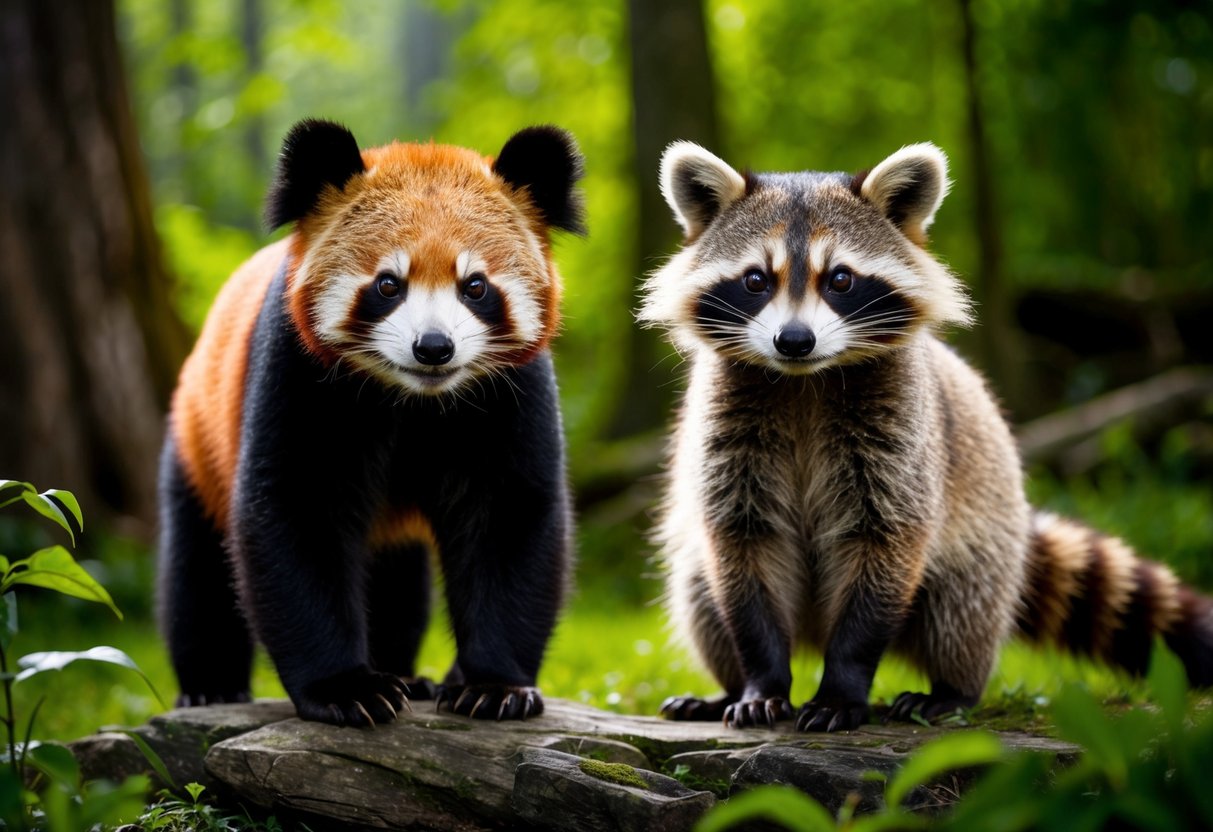
While red pandas may share some physical resemblances with raccoons, they are not closely related. Raccoons belong to the family Procyonidae, while red pandas are in the family Ailuridae.
Both red pandas and raccoons are known for their playful behavior. Yet, red pandas are more solitary and shy. Raccoons tend to be nocturnal scavengers, often foraging through urban areas.
Unlike bears, red pandas are not as large and have more specialized diets. Bears can be omnivores, but red pandas’ preference for bamboo makes their diet unique. These differences in behaviors and habits help establish their roles in the ecosystem.
Habitat and Conservation Status
Red pandas require specific habitats to thrive. Their living environments are vital for their survival and well-being. Their conservation status is a concern due to various threats that impact their populations.
Red Panda Habitats
Red pandas mainly live in temperate forests found in the Himalayas and certain regions of China. They prefer areas with a mix of coniferous trees and bamboo, which is their primary food source.
You may find them at elevations ranging from 4,500 to 10,000 feet. This environment offers the right temperature and shelter for the Himalayan red panda and the Chinese red panda.
These habitats are also rich in foliage, which helps them hide from predators. The dense underbrush is perfect for their nesting and resting spots, allowing them to communicate and socialize with others.
Threats and Conservation Efforts
Unfortunately, the IUCN Red List classifies red pandas as endangered. The main threats include habitat loss due to deforestation and poaching.
Their habitats are shrinking as humans develop land for agriculture and cities. This leads to isolated populations, making it difficult for them to breed and find food.
Conservation efforts involve various organizations, such as the Red Panda Network, focusing on protecting their habitats and raising awareness. They work on reforestation projects and help educate local communities.
You can support these initiatives by learning more about the challenges red pandas face and spreading awareness. Together, we can encourage actions that protect these amazing mammals.


