
Ever wondered if rats are truly afraid of cats? You’re definitely not the only one. A lot of folks assume that just having a cat around will scare off rats, but honestly, it’s not quite that simple.
Rats can act cautious near cats, but they aren’t always as terrified as people expect.
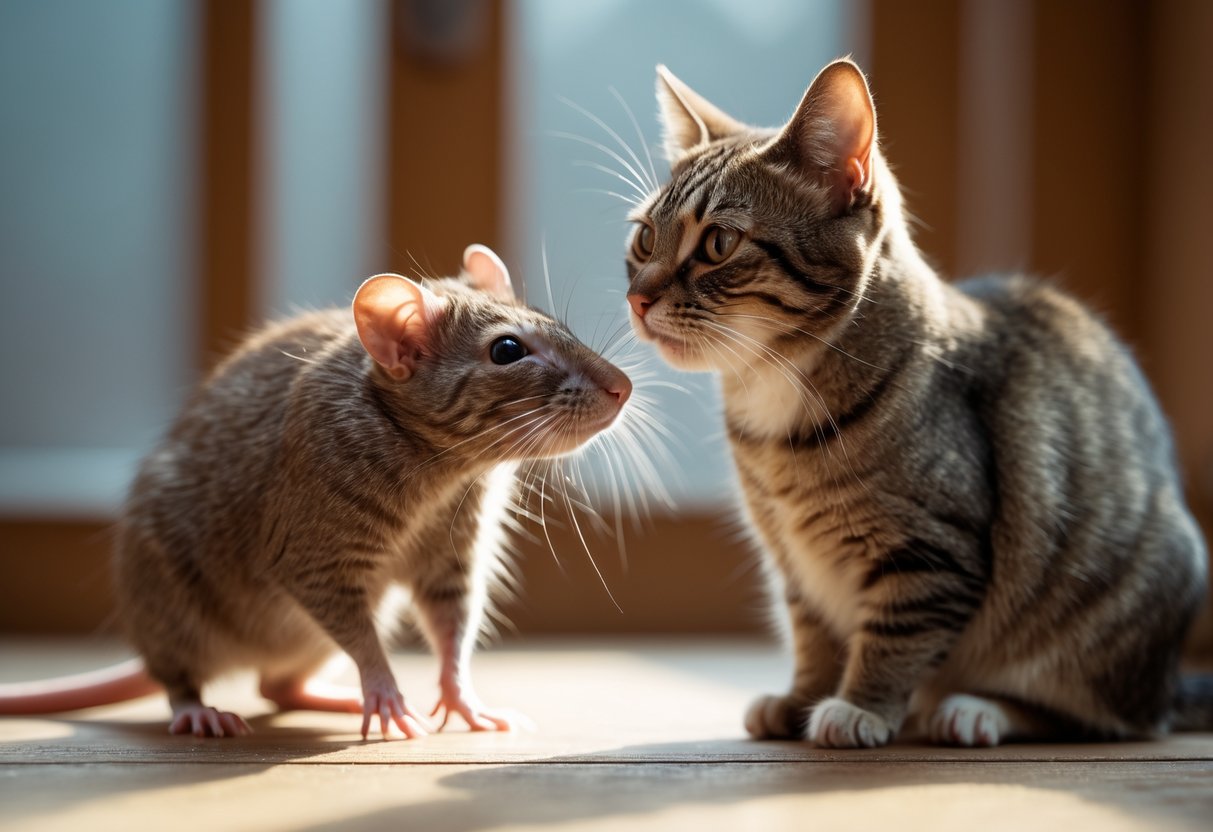
Rats rely on their sharp senses, especially smell, to notice when cats are nearby. That can make them more careful or push them to avoid certain spots.
But some rats adapt and end up living close to cats without much fear at all. Whether a rat is scared or not often comes down to its own experience and personality.
If you’re thinking about using a cat to keep rats away at home, it helps to know how these animals interact. Curious about how and when rats get spooked by cats? Let’s dig in.
Do Rats Instinctively Fear Cats?

Rats and cats go way back as predator and prey. This history shapes how rats behave to survive.
Rats don’t just spot cats by sight—they use their noses too. Where and how rats live, whether out in the wild or near people, really changes how they react to cats.
Predator-Prey Relationship Between Rats and Cats
Cats hunt, and rats try not to get caught. That’s the basic dynamic.
Rats pick up instincts that make them extra wary around cats. These instincts help rat colonies stick around by warning them about danger.
Not every rat reacts the same way. Some play it safe and avoid areas where cats hang out. Others take chances, especially if they’re hungry or think they can get away with it.
Your cat’s personality matters here—some cats are born hunters, and rats can sense that. When cats hunt more, rats usually stay away.
Because of this long history, rats have learned—both from their ancestors and their own experiences—to dodge cats whenever possible.
Olfactory Triggers: How Cat Scents Impact Rat Behavior
Rats pick up a ton of information through their sense of smell. The scent of a cat, especially urine, screams danger to a rat.
Rats often stop eating or steer clear of places where they pick up cat scent. Cat pheromones mark territory, and rats read that as a warning.
Just the smell, even if a cat isn’t around, can keep rats on edge. If you’re trying to keep rats away, this scent can actually work as a natural deterrent.
How Rats React to Cats in the Wild vs. Domestic Settings
In the wild, rats have more places to hide. Their fear of cats usually runs high, and they rely on quick escapes and hiding in thick plants or tunnels.
At home, things can shift. Some indoor rats get used to cats over time and don’t seem as afraid. If your cats and rats rarely cross paths, rats might not feel threatened every day.
Still, a lot of rats stay cautious around house cats because they know cats hunt. A pet cat’s hunting style can affect when and where rats show up.
So, rat behavior toward cats really depends on the setting and what the rats have been through.
Factors Influencing Rats’ Fear and The Role of Cats in Rat Control

Rats’ fear of cats comes down to a bunch of factors, like what they’ve learned and if cats are actually around. Knowing these details helps you figure out how cats and rats interact, and if cats might help with rat problems.
How Experiences and Environment Shape Rat Responses
Rats pick up fear from what they experience. When they smell or spot a cat, they usually get more alert and avoid that area.
This fear isn’t built-in for all rats. Some rats living around lots of cats become more careful. Others, in places without cats, might not even see cats as a threat.
Rats can pass on fear to each other too, using social signals. The environment matters a lot. If your yard or house has safe spaces that cats can’t reach, rats might not be scared at all.
The Impact of Feral Cats on Urban Rat Populations
Feral cats live in cities where rats thrive. It seems logical that more cats would mean fewer rats, but that doesn’t always happen.
Feral cats mostly hunt small rodents, but big or healthy rats can outsmart or outrun them. Rats are clever and know how to hide.
Cats might make rats more nervous, but this alone rarely wipes out a rat problem. If you’re dealing with rats in the city, relying just on feral cats probably won’t solve it.
Cats can keep rats alert or reduce some small pests, but they usually can’t handle a full-blown rat infestation on their own.
Are Cats Effective Against Rat Infestations?
Cats definitely influence rat behavior just by being around. When rats pick up on cat scents or pheromones, they tend to rethink where they go and what they eat.
So, you might notice fewer rats in certain spots if you’ve got a cat hanging out. That said, cats rarely wipe out a rat infestation on their own.
Rats are clever. They multiply fast, and honestly, they don’t scare off that easily if there’s plenty of food and shelter nearby.
If your place has lots of food scraps or cozy hiding spots, rats will probably stick around, cats or no cats.
For real pest control, you’ll need to team up cats with other tactics. Try sealing up holes, clearing out food, and setting traps.
Cats can help as part of a bigger plan, but relying on them alone probably won’t solve a major rat problem.
They might help keep smaller rat numbers in check, though, which is at least something.


