
You’ve probably heard that humans share a surprising amount of DNA with pigs. It’s a weird thought, right? Some of our biology does line up with pigs—especially when it comes to organs and how they work.
But if you’re wondering who we’re really related to, the answer points somewhere else entirely.

Humans are way closer to chimps than pigs. We share about 98-99% of our DNA with chimpanzees.
That means we split from a common ancestor with chimps pretty recently, evolution-wise. You can actually see this in a lot of our body features and even in how we act.
If you’re curious about what makes us human, studying chimps is a good place to start. Sure, pigs come up in medical research, but the family tree is pretty clear about who our closest relatives are.
Genetic Relationship Between Humans, Chimps, and Pigs

We share a lot of DNA with both chimps and pigs, but the details really matter. Our genetic connection to chimps runs deeper and gets more complicated than what we have with pigs.
Some genes and traits do overlap with pigs, but it’s not for the same reasons.
DNA Similarity With Chimps
You and chimpanzees share about 98-99% of your DNA. That’s a huge amount, making them our closest animal relatives.
This similarity covers genes for things like brain growth, behavior, and immune responses.
Still, even with numbers that close to 100%, some DNA sections are different enough to change how our bodies work. These little tweaks help explain why our brains do things theirs don’t.
Scientists have built detailed genetic maps comparing us to chimps. They focus on the DNA that shapes how we develop and function.
Our last shared ancestor with chimps lived about 5 to 7 million years ago.
DNA Comparison With Pigs
With pigs, the overlap drops to about 84%. That’s still a lot, but it’s a much older relationship.
Humans and pigs last shared an ancestor around 80 million years back.
Most of the DNA we share with pigs connects to organs and how our bodies process food and energy. That’s why doctors sometimes use pig heart valves in people.
But if you look at the bigger picture, pigs are way farther away from us than chimps. The similarities come from solving the same biological problems in different ways, not from being close family.
Genetic Markers and Shared Traits
Some genetic markers show up in both humans and chimps, especially those that affect brain growth and social skills. Maybe that’s why we’re both so clever compared to other animals.
With pigs, the shared genes usually have to do with metabolism or how our organs work. For example, both pigs and humans carry fat in similar spots on the body.
But these things come from convergent evolution—meaning we developed similar solutions, not because we’re close relatives.
If you look at these markers, it becomes clear where we fit in the animal family tree. Chimps help us understand where we came from, while pigs are more useful for medical research.
If you want to dive deeper, check out genetic connections between humans and apes or genetic similarity between humans and pigs.
Evolutionary Perspectives on Human Connections
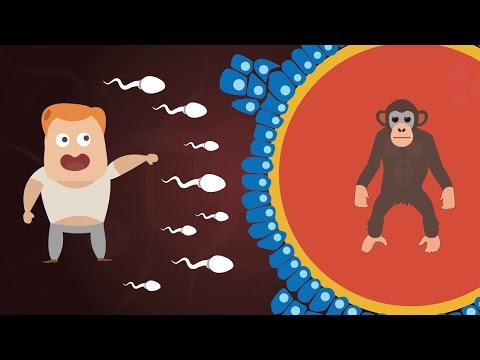
We connect to chimps and pigs in different ways, but if you want to understand where we fit on the tree of life, it helps to look at our evolutionary story.
You’ll see how common ancestors shape these connections. There are even some strange hybrid theories out there, and a handful of physical traits that show our evolutionary path.
Common Ancestors and Evolutionary Trees
You and chimps split from a common ancestor about 5 to 7 million years ago. That’s not long at all in evolutionary terms.
Because of this, our DNA matches up almost 98% with chimps. It’s a close split—same branch, just a little while back.
Pigs branched off much earlier. Our last shared ancestor with pigs lived tens of millions of years ago.
That bigger gap means less DNA overlap—about 84%—and we’ve been on separate evolutionary paths for a very long time.
We fit into the primate family alongside chimps, gorillas, and orangutans. That’s why we share so many traits with them, both in how we act and how our bodies work. You just won’t find those same connections with pigs.
Hybridization Theories
Some people have floated the idea that humans are hybrids between pigs and chimps. It sounds wild, right? They point to certain human features that seem to mix pig-like and ape-like traits.
But the evidence just isn’t there. Scientists have dug into the genetics and the fossil record, and nothing really supports the idea.
Instead, what’s happening is convergent evolution—different species come up with similar answers to the same problems, but they don’t have to be closely related.
Sure, humans and pigs share some traits because we’re both mammals, but when you trace our origins, all the real clues point to our ape relatives. The hybrid theory? It’s mostly a fringe idea that hasn’t found a place in mainstream science.
Physical and Anatomical Comparisons
If you look at bones, you’ll notice humans have a unique pelvic shape. Our bodies are just built for walking on two legs—no question about it.
Chimps? Their limb proportions look kind of similar, but their shoulders stay flexible for climbing. Pigs, on the other hand, walk around on all fours and their skeletons look pretty different.
Brain size is another story. Humans have much bigger brains compared to our body size than chimps or pigs do. That’s what lets us reason, use language, and build complicated social lives.
Pigs actually have fairly large brains for their bodies too, but what they do with them isn’t quite like us—or even chimps.
When you look at social and reproductive behaviors, the differences stand out. Humans form long-term bonds and build pretty complex societies.
Chimps live in close social groups and interact in all sorts of complicated ways. Pigs usually form herds, but they don’t really create lasting social bonds the way we do.


