
If you’re considering bringing a Boxer into your home, you might be wondering how easy they are to house train. These dogs are known for being loyal and obedient, which makes them great companions. The good news is that Boxers are generally easy to house train with the right approach and consistency.
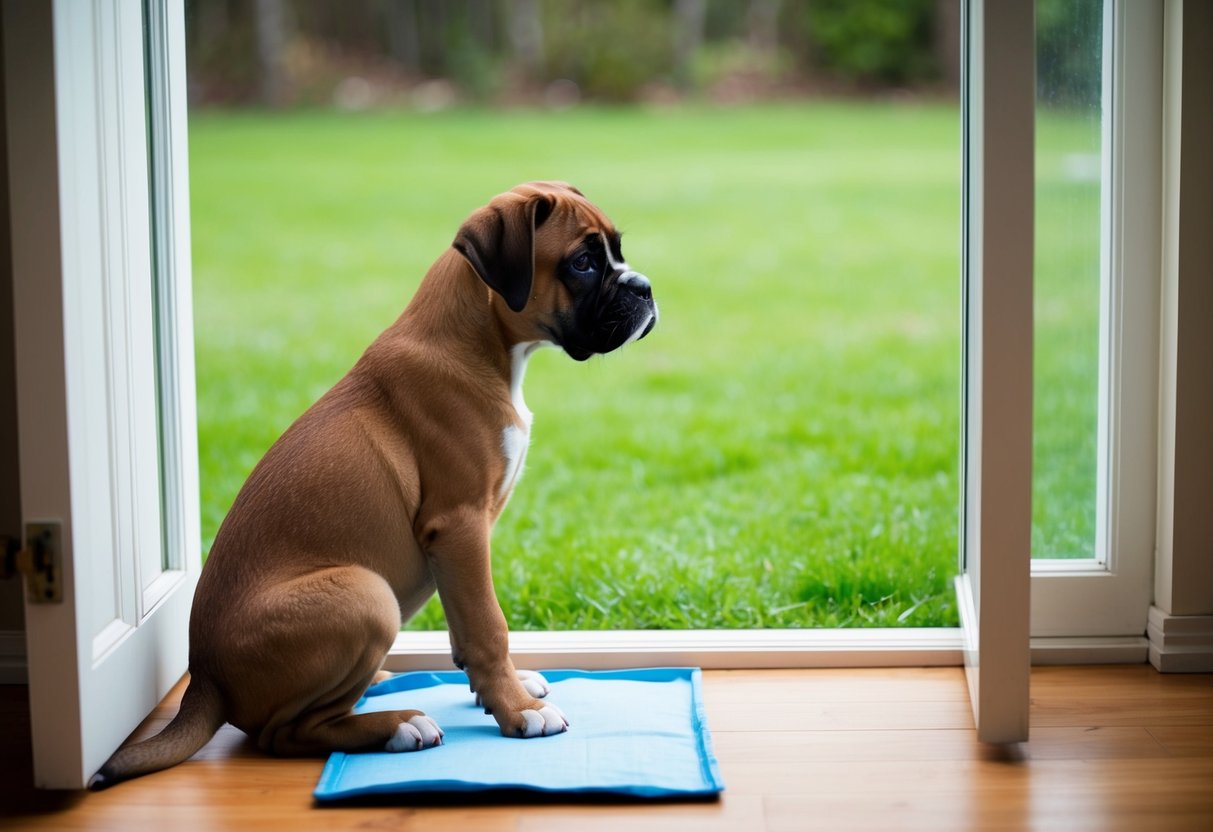
Starting the house training process early can lead to quicker success. Boxers often want to please their owners, which can make them more responsive to training.
With a few simple tips and some patience, you can help your Boxer learn the ropes of house training.
Many factors can influence how quickly a Boxer picks up house training, such as age and previous experiences. By understanding their behavior and setting a routine, you will find that your Boxer can become a well-trained member of your family in no time.
Understanding Boxers and House Training

Boxers are known for their friendly nature and strong desire to please their owners. Understanding their temperament and the basics of house training can make the process smoother for both you and your dog.
Boxer Temperament and Trainability
Boxers are energetic and playful dogs. Their affectionate personality makes them great companions. They thrive on attention and love to be involved in family activities.
When it comes to training, Boxers are generally eager learners. They enjoy positive reinforcement like treats and praise, which helps keep them motivated.
This breed is loyal but can be stubborn at times. Patience is key. You might face challenges, especially in the beginning, but consistency in your training methods will lead to success.
Socialization is also important for Boxers. Consider enrolling in classes to help your dog learn essential skills while interacting with other dogs.
The Basics of House Training
House training a Boxer requires a consistent routine. You should start by establishing regular feeding and potty schedules. For instance, a 2-month-old puppy might need to go out every two hours.
Use a designated outdoor spot for potty breaks. This helps your dog associate that area with bathroom needs. When they go outside, offer praise and treats to reinforce the behavior.
Keep your training sessions short, about 10-15 minutes. Frequent sessions will help your Boxer learn more effectively. Be sure to remain positive and patient throughout the process.
Should accidents happen inside, avoid scolding your dog. Instead, clean up thoroughly to remove any odors that might encourage them to return to that spot. Consistency and encouragement are essential to successful house training.
Effective Training Techniques for Boxers
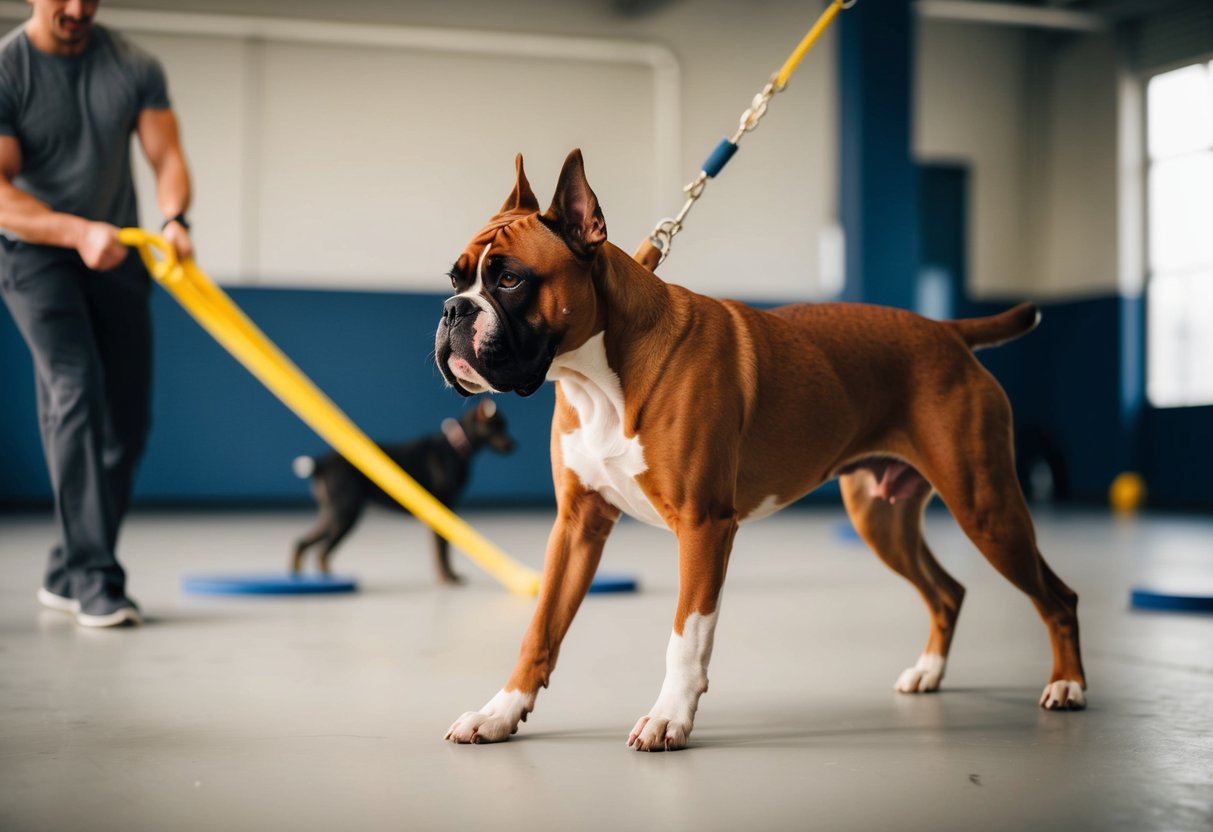
Training your Boxer can be a rewarding experience. Using specific techniques can help you succeed in house training. Focus on positive reinforcement, crate training, and creating a consistent schedule for the best results.
Positive Reinforcement and Rewards
Positive reinforcement is key to training your Boxer. This means rewarding good behavior with treats, praise, or playtime. For example, when your dog goes outside to relieve itself, immediately give a reward. This helps your dog associate the action with something positive.
Make sure to use small, tasty treats that your Boxer loves. Keep your praise genuine and enthusiastic. Your Boxer will feel motivated to repeat the desired behavior. Remember to stay consistent with your rewards. This encourages good habits.
Crate Training Essentials
Crate training is an effective way to help house train your Boxer. A crate gives your dog a safe space and helps with their instinct to keep their sleeping area clean.
Choose a crate that is comfortable but not too big. Too much space can lead to accidents.
When your Boxer shows signs of needing to go outside, take them to their designated potty spot right away. Use the crate for short periods, especially when you cannot supervise your dog. Gradually increase the time as your Boxer gets used to it. This technique helps create a routine.
Scheduling and Routine
Establishing a training schedule is vital for your Boxer. Feed your dog at the same times each day. This helps regulate their bathroom needs.
Puppies can usually hold their bladder for about one hour for every month of age.
Aim for bathroom breaks every 1-2 hours, especially right after meals or playtime. Consistency in your daily routine will make house training smoother.
Keep training sessions short but frequent—around 10-15 minutes multiple times a day. This will keep your Boxer engaged without overwhelming them.
Obedience Training and Socialization
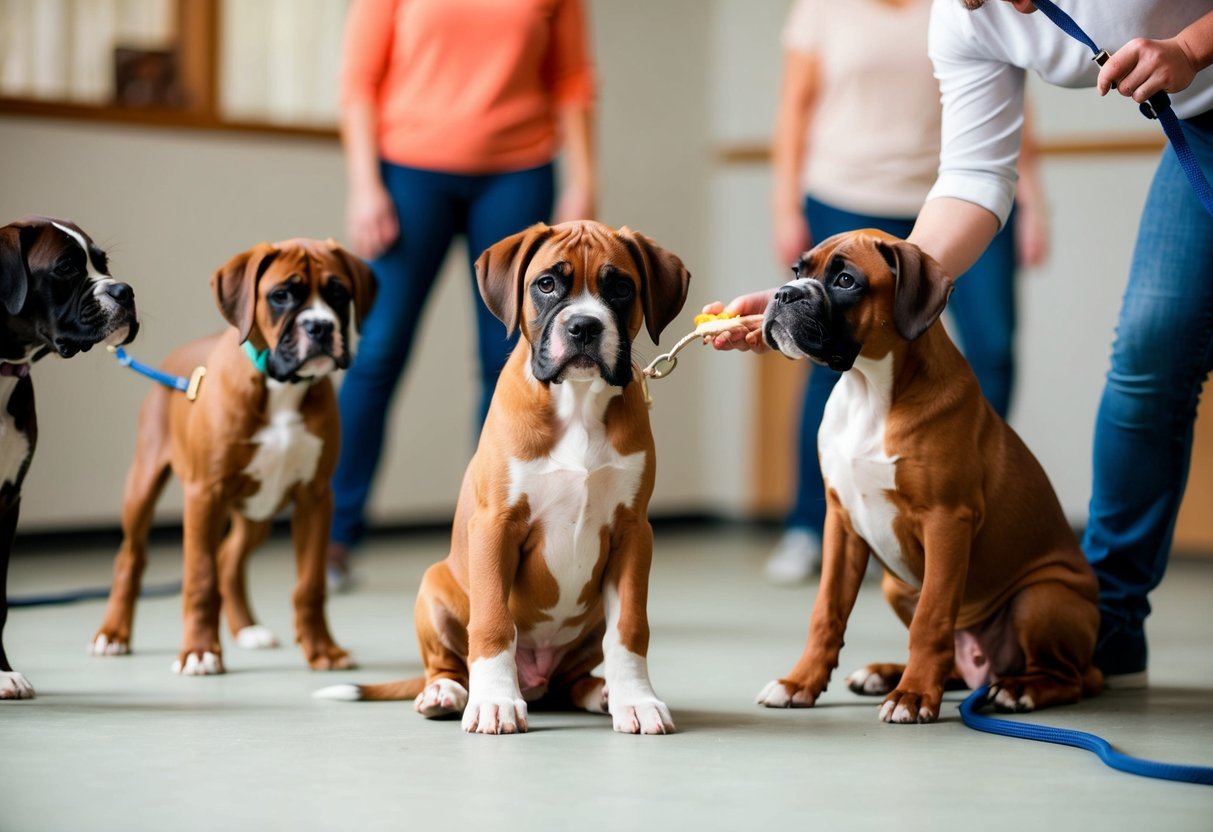
Teaching your Boxer obedience commands is essential for a well-behaved dog. Along with obedience, proper socialization helps your dog become friendly and confident in various settings. Both aspects work together to create a happy and balanced pet.
Mastering Basic Commands
To ensure your Boxer learns effective obedience, start with simple commands. Focus on essential commands like “sit,” “stay,” “come,” and “down.”
Use positive reinforcement techniques like treats, praise, and playtime to motivate your Boxer to learn. Be consistent with your commands and practice them daily. Short, focused training sessions work best. Aim for 5-10 minutes, several times a day.
Consider enrolling in a class with a professional dog trainer. They can help guide you through the training process. Your Boxer can also learn to interact with other dogs, enhancing their skills further.
The Role of Socialization in Training
Socialization is just as vital as obedience training. It helps your Boxer become comfortable in different environments.
Start socialization during puppyhood, ideally before 16 weeks. This is when they are most adaptable. Arrange playdates with other dogs and take your Boxer for walks in busy areas.
Dog trainers often recommend taking your Boxer to obedience classes. These classes provide a safe space for social interaction and learning. A well-socialized dog is less likely to develop fear or aggression. Plus, it makes outings more enjoyable for both of you.
Common Challenges and Solutions
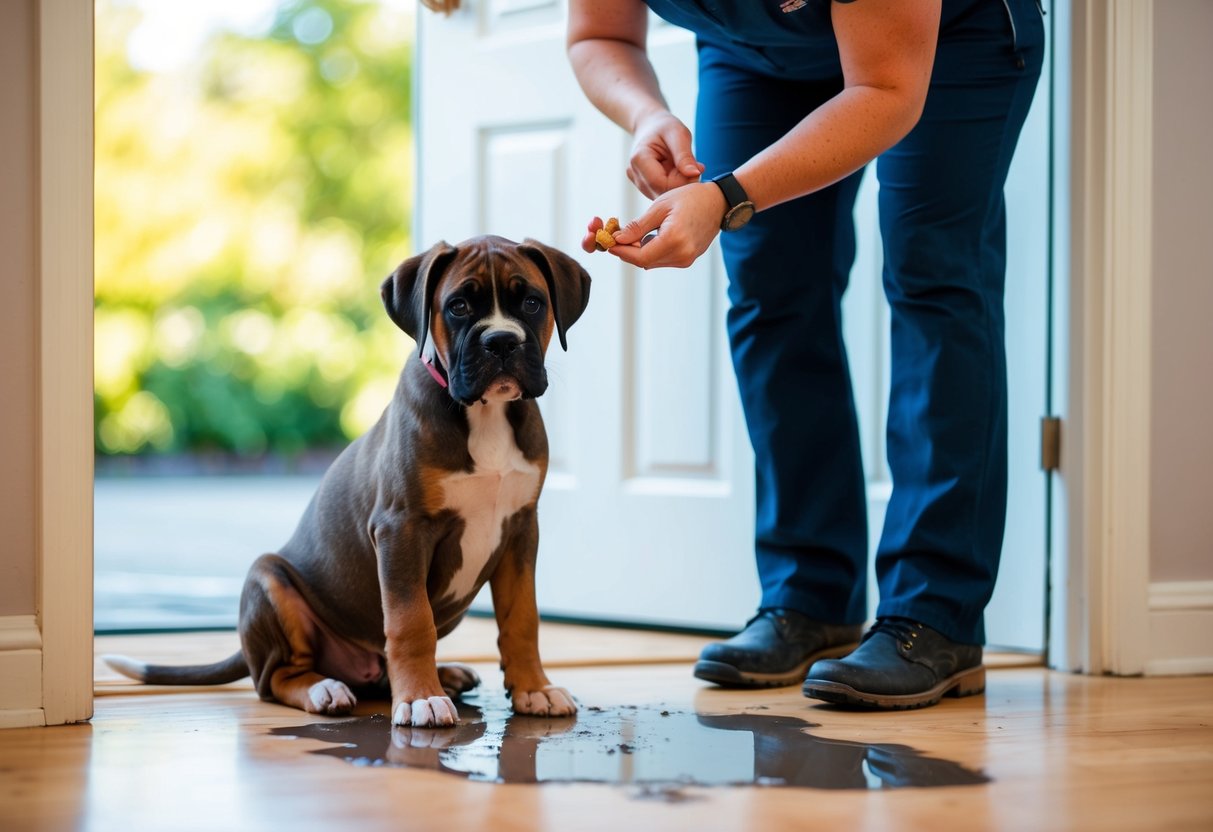
Training a Boxer can bring certain challenges, but being aware of them can help you manage the process effectively. Accidents may happen, and finding the right approach for behavior management is key. There may also be times when you should consider seeking help from a professional.
Dealing with Accidents and Setbacks
It is common for Boxers to have accidents during house training. Puppies, in particular, may not have full control over their bladders yet.
If you find an accident, it’s important to stay calm and avoid punishment. Instead, clean the area thoroughly to remove any scent that might prompt repeats.
Create a consistent routine to help your Boxer understand when it’s bathroom time. Take them outside frequently, especially after eating, drinking, or playing.
Praise them when they go outside to reinforce the right behavior. Remember, patience is crucial. Reassure your pup that mistakes are part of learning, and they will improve with time.
When to Seek Professional Help
If you’re struggling despite your best efforts, it might be time to seek help from a professional dog trainer. A trainer can offer personalized tips and solutions tailored to your Boxer’s specific behavior. They can help troubleshoot issues like excessive accidents or stubbornness.
Look for trainers who use positive reinforcement methods. These approaches create a positive learning environment, which is important for Boxers. Consider joining a training class where you can practice skills with your dog and learn from experts. With the right guidance and patience, you can turn challenges into successes.


