
In the wild, big cats often compete for resources. Understanding their behaviors can be fascinating. You might wonder about the relationship between two of Africa’s most iconic predators: the leopard and the cheetah. These animals have different hunting strategies, social behaviors, and physical traits that impact their interactions in the wild.
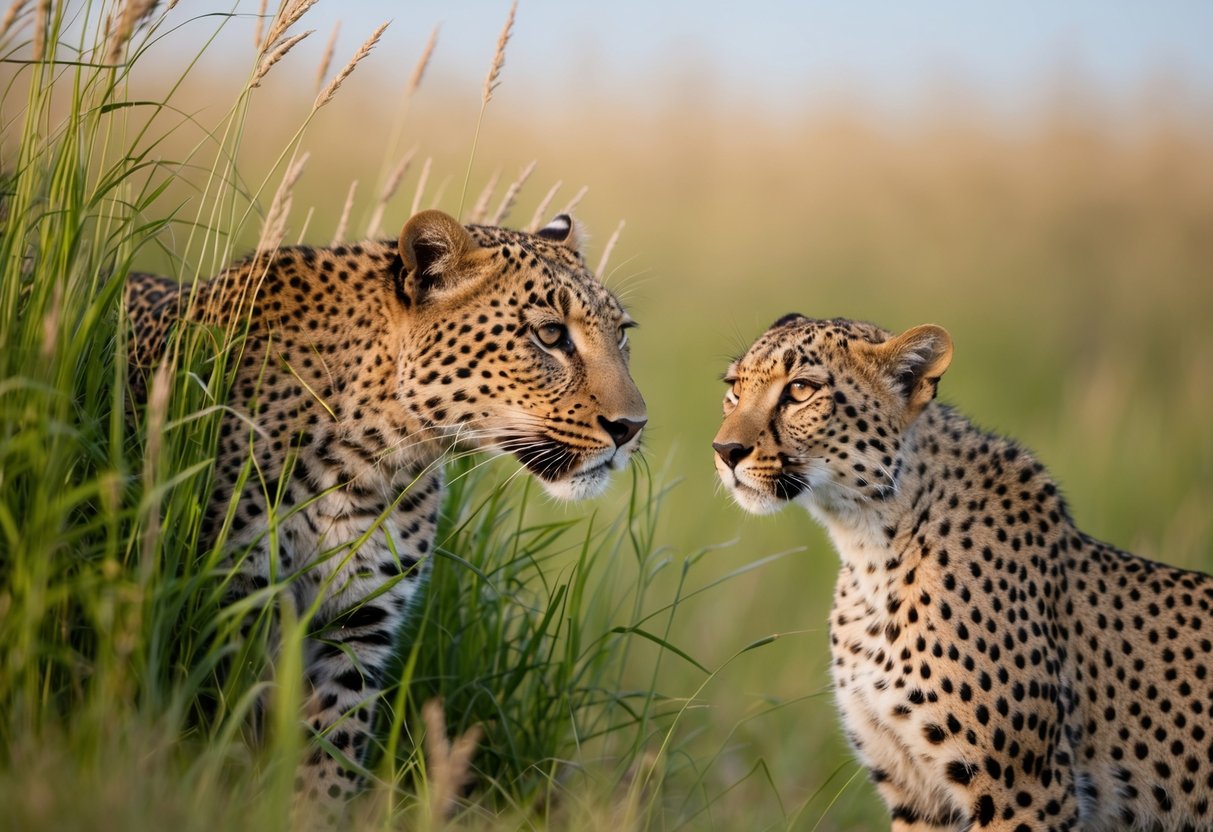
Leopards are unlikely to regularly hunt cheetahs as prey. Leopards are stronger and more powerful, but they typically go after larger animals. Cheetahs, on the other hand, excel in speed and often hunt smaller prey like gazelles. While a leopard could potentially overpower a cheetah, it is not a common occurrence in nature.
Learning about these differences helps you appreciate the role each animal plays in their ecosystem. Whether you’re a wildlife enthusiast or just curious, the dynamics between leopards and cheetahs offer amazing insights into the world of big cats.
Understanding the Predators

When exploring whether a leopard would eat a cheetah, it’s important to understand their unique traits and behaviors. By looking at their physical attributes, behavioral patterns, and habitats, you can better grasp how these two big cats interact in the wild.
Physical Attributes and Identification
Cheetahs and leopards belong to the family Felidae. The cheetah, scientifically known as Acinonyx jubatus, has a unique body shape built for speed. Cheetahs are lighter and more slender, reaching speeds of up to 70 miles per hour. They have distinctive black tear marks running from their eyes to their mouths, helping reduce sun glare.
On the other hand, leopards (Panthera pardus) are stockier and more muscular, allowing them to climb and carry prey into trees. Their strong, robust bodies enable them to take down larger animals. Leopards have beautiful rosettes on their fur, providing excellent camouflage in their environments.
Behavioral Characteristics
Cheetahs are primarily diurnal, meaning they hunt during the day. Their hunting style relies on speed and agility, often using quick bursts to chase down prey. They have a higher success rate when hunting compared to leopards, which are nocturnal hunters. Leopards tend to stalk their prey quietly and may rely more on strength and stealth.
Both species communicate using various vocalizations. Cheetahs have a unique chirping call, especially when calling to their cubs. Meanwhile, leopards produce growls and grunts, often to communicate presence or assert dominance.
Habitat and Distribution
Cheetahs prefer open grasslands and savannas where they can use their speed to chase prey. They thrive in areas with plenty of visibility to spot potential meals. Cheetahs are typically found in parts of Africa, with a small population in Iran.
Leopards are much more adaptable and can inhabit various environments, from rainforests to arid deserts. You can find leopards across Africa and parts of Asia. Their ability to climb trees makes them versatile, allowing them to evade other predators and store food safely away from ground threats.
Dietary Habits and Hunting Techniques
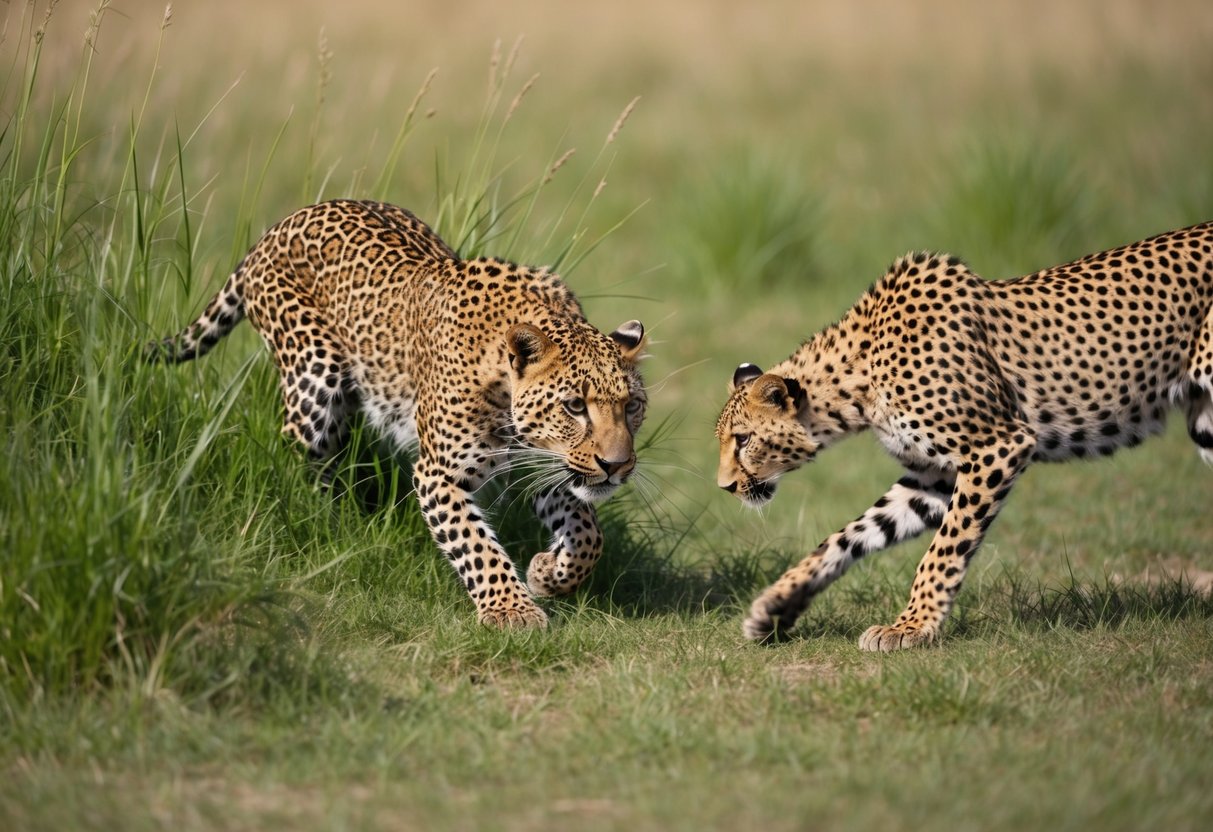
Understanding the dietary habits and hunting techniques of leopards and cheetahs gives insight into their survival in the wild. Each cat has unique adaptations that shape how they hunt and what they eat.
Cheetah’s Pursuit of Prey
Cheetahs are known for their incredible speed. They can reach up to 60 to 70 miles per hour during high-speed chases. This makes them excellent at catching swift prey like gazelles and impalas.
Cheetahs use a unique hunting method. They rely on stealth and typically stalk their target until they’re close enough. Once they spring into action, it’s a fast and powerful dash to capture their meal.
Cheetahs often tire quickly, so they rely on short bursts of energy. They are not endurance hunters, making them focus on quick, decisive strikes to capture their prey before it can escape.
Leopard’s Stealth and Strategy
Leopards are adaptable hunters. They rely on a combination of stealth and strength. Their hunting technique often involves stalking through bushes and trees, waiting silently to ambush their prey.
Leopards hunt a variety of animals, from small mammals to larger prey, which may include young gazelles and impalas. They can climb trees, allowing them to spot prey from a distance.
Leopards excel in both solitary and opportunistic hunting. Their strategy includes using their spotted coats for camouflage, blending into their surroundings. When they attack, they strike with both agility and power, making them effective predators in their habitat.
Conservation and Threats
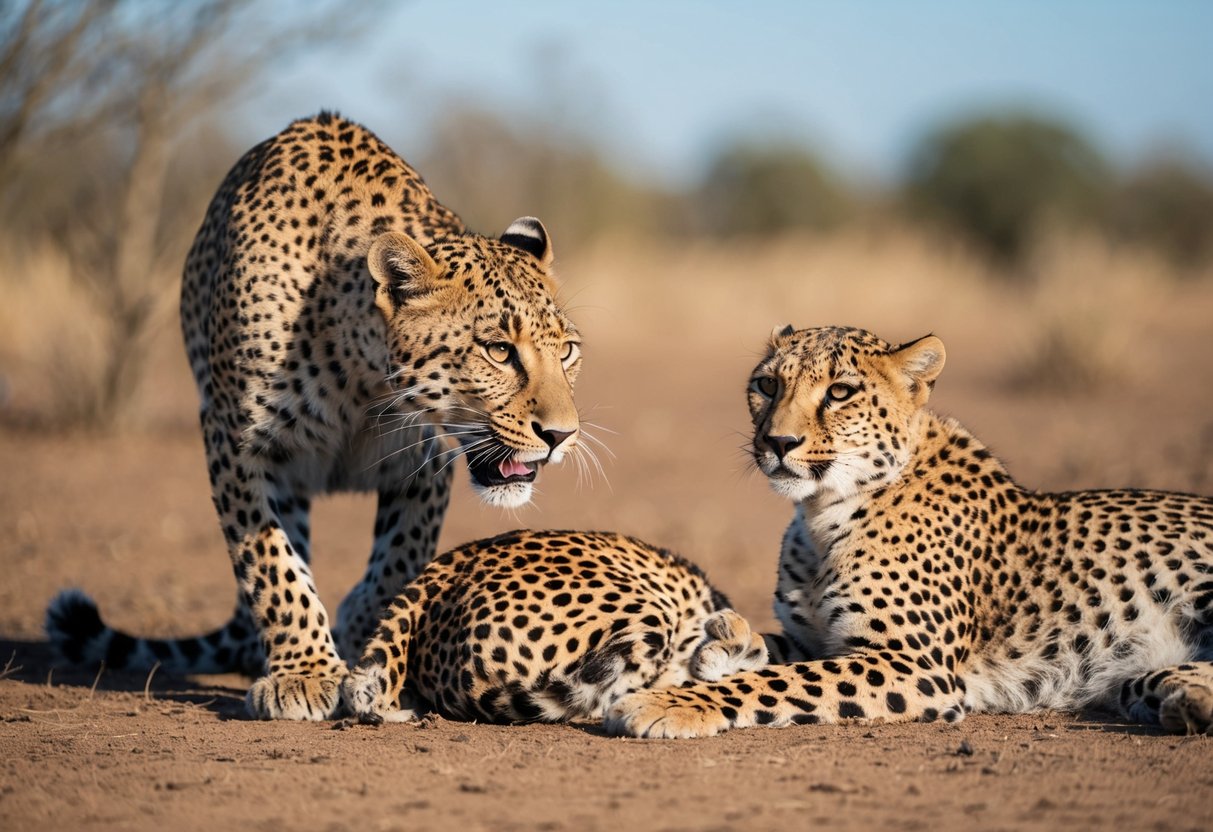
Understanding the conservation status and threats faced by leopards and cheetahs is crucial. These big cats are struggling against various challenges in their habitats.
Endangered Status and Efforts
Cheetahs are currently listed as vulnerable, with an estimated 7,100 individuals left in the wild. Certain subspecies, like the northeast African cheetah, face a more dire situation and are considered critically endangered. Conservation efforts are ongoing in regions like Namibia, Botswana, and South Africa. Various organizations work to protect these magnificent animals through habitat preservation and monitoring populations.
Leopards, on the other hand, have a broader range. They are classified as least concern, but specific populations, such as the Amur leopard, are critically endangered. Conservation efforts focus on protecting genetic diversity and ensuring sustainable habitats across sub-Saharan Africa, including parts of Zambia.
Loss of Habitat and Human-Wildlife Conflict
Both leopards and cheetahs face significant threats from habitat loss and human-wildlife conflict. As human populations grow, they expand into the African savanna, leading to further habitat destruction. This forces these big cats into smaller areas, reducing their chances for survival.
Human-wildlife conflict occurs when big cats prey on livestock. Farmers often retaliate, resulting in a decline in both leopard and cheetah populations. In place of conflict, increasing awareness about wildlife protection is essential.
Educating local communities can help foster coexistence, ensuring that both species have a fighting chance in their natural habitats.


